
Once upon the early 20th century, a machine with a QWERTY keyboard created characters on a page by striking a type slug on an inked ribbon over paper. This writing tool, the traditional typewriter, became an office staple, revolutionizing business correspondence and creating millions of clerical jobs worldwide. Over time, it became electric and was eventually overtaken by computers.
Today, these mechanical machines have become artifacts that fill museums and artist exhibits, if not scrapped. While Gen X and those older remember this machine very well, today’s generation has overlooked how the typewriter professionalized the modern office.
ROKR To The Rescue
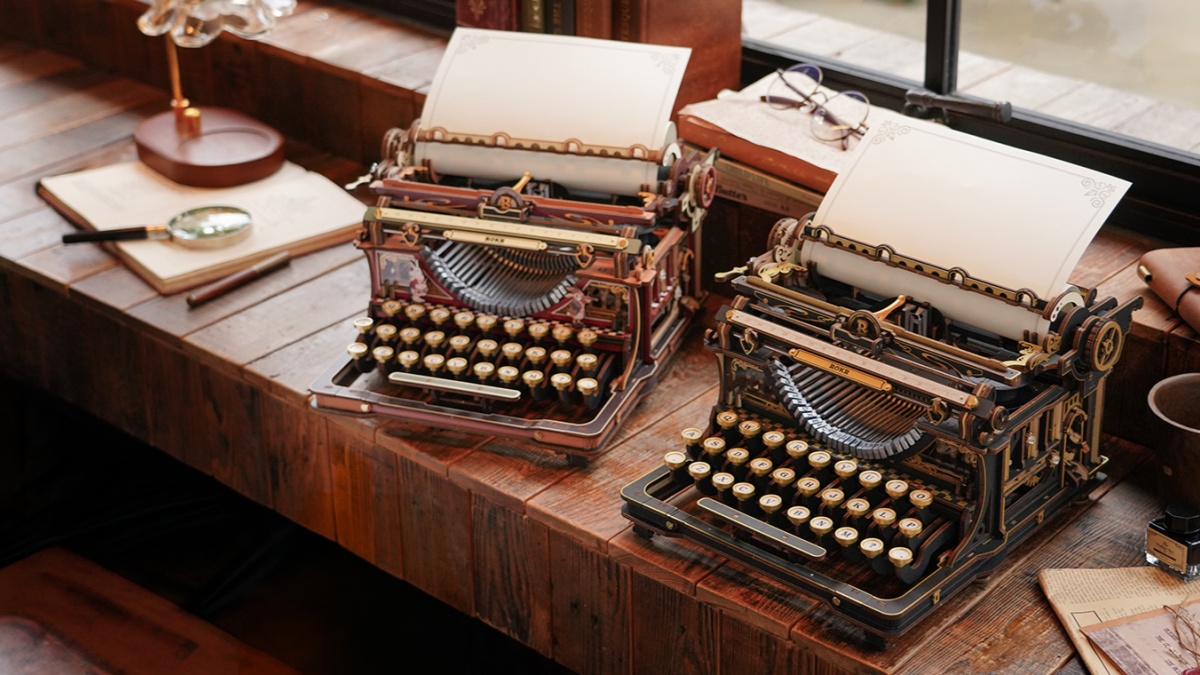
ROKR revives the beloved writing machine with the Mechanical Typewriter, a DIY 3D model that recreates a functional traditional typewriter using wooden and metal interlocking parts.
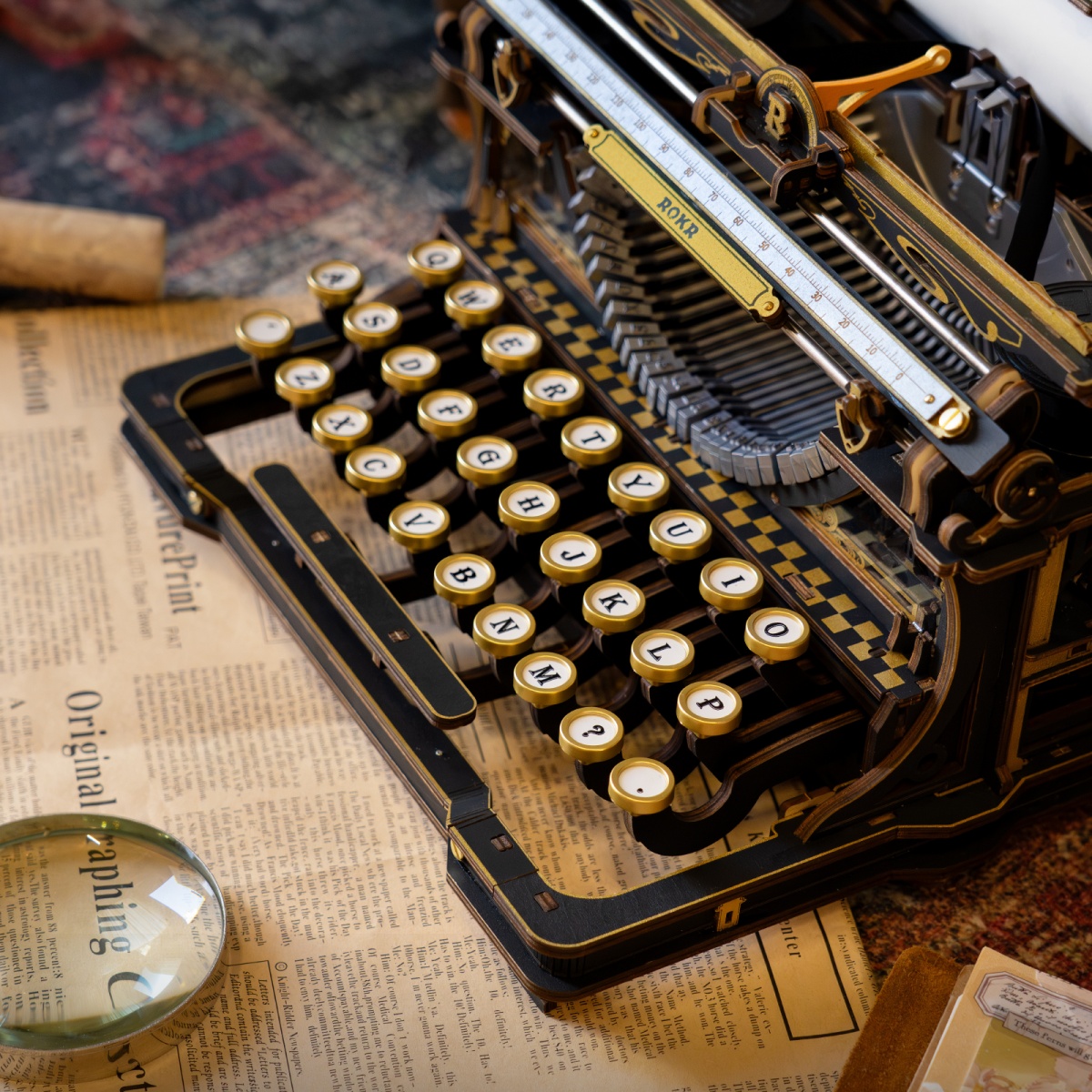
While it is slightly smaller than a portable typewriter, ROKR’s version includes working components that allow it to produce typewritten text on paper. It features a QWERTY keyboard, a roller, and even the signature “ding” at the end of each line. The design stays true to a traditional typewriter, combining realistic function with a lighter, more compact build.
What’s more exciting about this model is that it comes in two distinct versions, the traditional typewriter that resembles the office clunker we know (LK703B), and the more theatrical fairy tale version (LK703C).
Two Personalities
The force that brought the Mechanical Typewriter to life seems to have used a magic mirror, with the machine staring back at its reflection and seeing a different identity from a parallel universe.
Mechanical Typewriter Classic Version (LK703B)
.jpg?w=1200&h=1200)
The first one, clad in black and gold, is focused on historical realism. It’s modeled after the original identity of the typewriter, with a clean, machine-centered layout and early industrial aesthetic. It’s patterned after the traditional word processor, built to last and designed with quiet confidence.
Product Specifications
- Model: LK703B
- Pieces: 320
- Assembly Time: 10 hours
- Difficulty Level: ★★★★★★
- Assembled Size: 291 × 285 × 175 mm
- Design Focus: Vintage realism with black and gold finish
- Key Components: Type bar, keys, paper guide scale, type basket
Mechanical Typewriter Magic Version (LK703C)
.jpg?w=1200&h=1200)
The reflection looking back at it showcases a grand theater stage, with side panels resembling red curtains, and gold trim acting as gilded ornaments. Seemingly performing for an invisible audience are magical fairy rabbits on each side, both characters in an adventure-laden fable.
The structure still supports full typing functionality, including the moving ribbon spool and paper feed mechanism, but the warmer tones feel more like a storytelling piece, like it’s part of a bigger scene.
Product Specifications
- Model: LK703C
- Pieces: 324
- Assembly Time: 10 hours
- Difficulty Level: ★★★★★★
- Assembled Size: 291 × 285 × 175 mm
- Design Focus: Storybook-inspired structure with theatrical elements
- Key Components: Type bar, keys, decorated stage, paper guide scale, type basket
Are They The Same?
| Feature | Classic Version (LK703B) | Magic Version (LK703C) |
|---|---|---|
| Design Style | Vintage, industrial, realistic | Storybook, theatrical, decorative |
| Color | Black & gold | Warm tones with red curtain elements |
| Visual Feel | Classic office typewriter | Fantasy stage scene |
| Functionality | Fully functional typing | Same full functionality |
| Best For | History lovers, collectors, minimalists | Gift buyers, creative users, display lovers |
| Display Style | Study room, office desk | Living room, bookshelf, gift display |
| Emotional Appeal | Nostalgia & authenticity | Imagination & storytelling |
| Shop Now | Get Classic | Get Magic |
Both versions share a common soul: a mechanical core with a typing mechanism, gear interactions, and a structural framework. Both are fully functional, with an internal system that starts with a key press. The chain reaction starts with the gears rotating in sequence, the type bars lifting and striking, and the ribbon transferring ink onto real paper. The carriage moves as you type, and when you reach the end of a line, you get that unmistakable “ding” before manually returning the carriage using the lever.
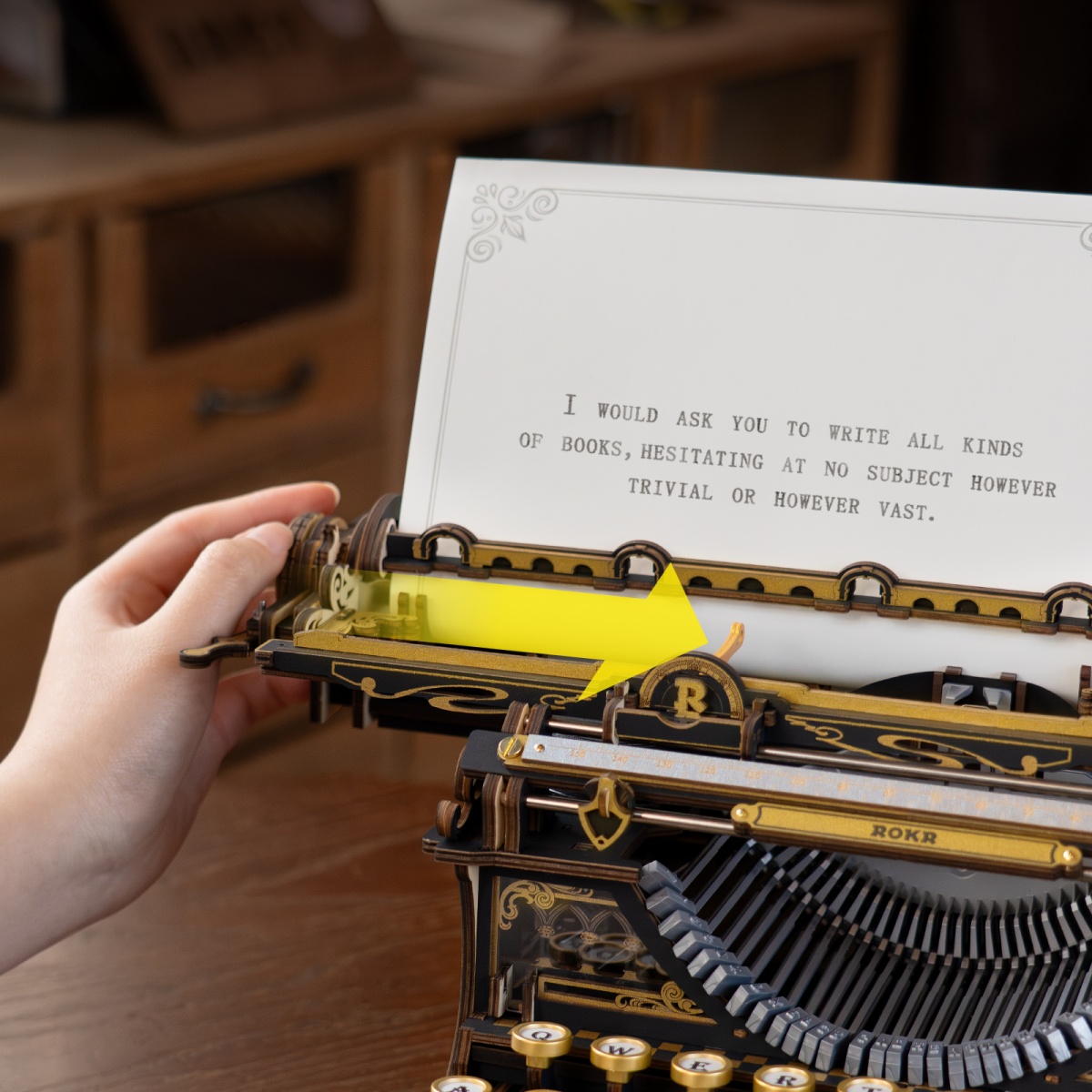
The mechanism uses rulers and paper guide scales to ensure accurate alignment, while the roller system allows users to load and secure an A4 sheet. It’s operational and a complete mechanical cycle.
With over 300 pieces and a build time of around 10 hours, both models are focus-driven but not overwhelming. The no-glue assembly keeps everything precise, while the layered construction helps builders understand how each section connects to the next.
Once fully assembled, you can load paper, type a line, hear the mechanical response, and reset for the next. The only difference seems to be how they’re dressed.
Why the Magic Chose the Machine
The typewriter was a historical catalyst that transformed the nature of work and the speed of modern life. As a machine, it industrialized writing, even allowing for more women to enter the workforce.
As a tool, it fundamentally altered the writer's psychological relationship with their craft. Ernest Hemingway, Agatha Christie, Mark Twain, George Orwell, Danielle Steel, and other famous authors of the past century weaved stories and composed treatises on the typewriter.
Some great works may have come from the slower, more controlled, and less distracting experience of using this clickety clackety word mill. It’s not just about fast typing, but about writing with intention, guided by the keys’ steady rhythm. This sound acts as an audible loop that helps writers stay focused, while each “ding” at the end of a line is a hit of dopamine reward.
And that same rhythmic percussion is what the magical fairy rabbits are playing music to.
Indeed, the Mechanical Typewriter has magic of its own; ROKR just used it to bring it back to the limelight. And with these twin models, the typewriter turned into something this generation can understand, build, and interact with again. Crafters get to see its inner workings and hear that same creativity-inducing rhythm.
Witness the Performance
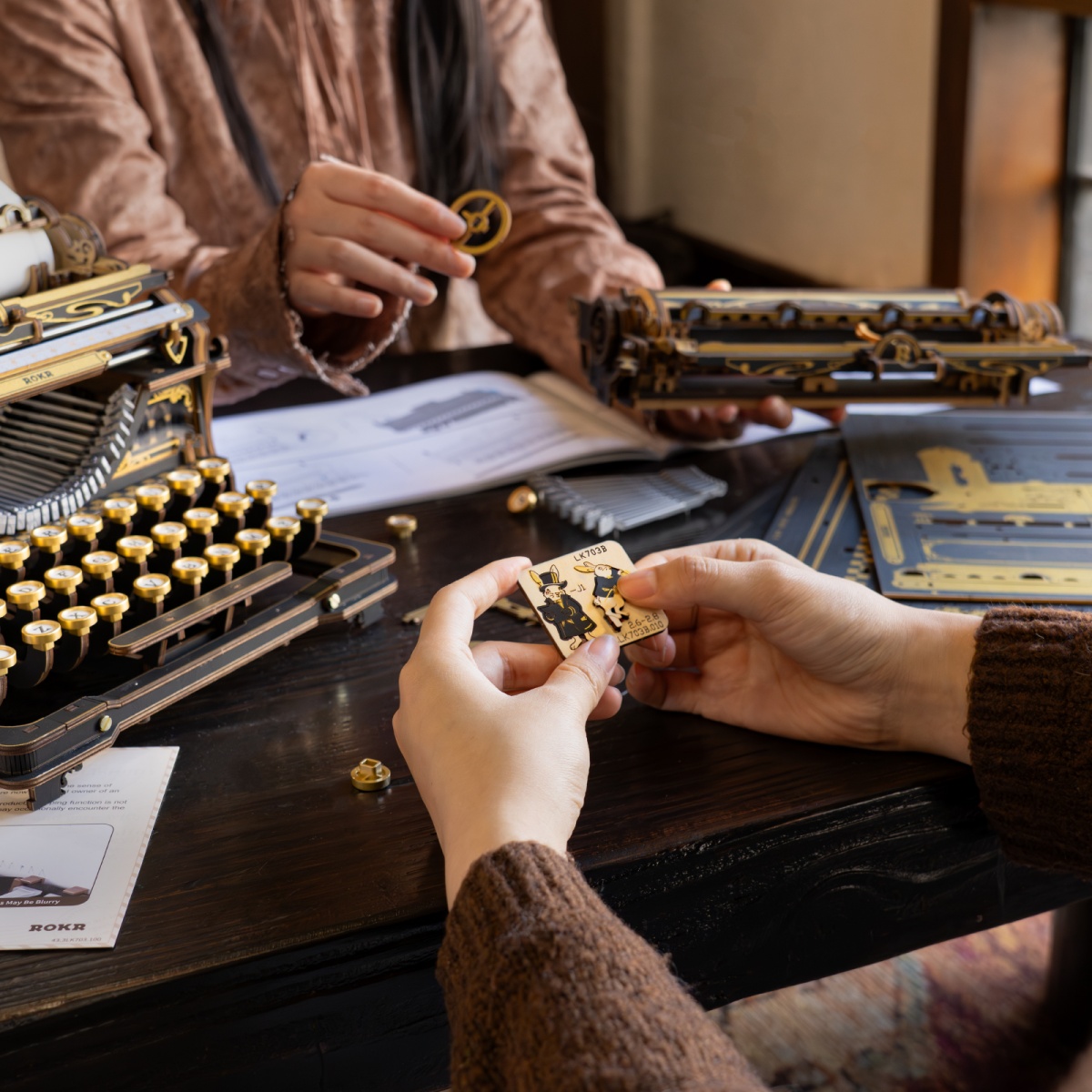
ROKR invites you to experience the Mechanical Typewriter, whether you prefer the one with historical design and mechanical accuracy, or the expressive build that displays character. They’re great in a historical collection, a STEM classroom, a private study, a living room, or a gift box.
Both versions appeal to anyone interested in how things work. Writers and creatives are a natural fit because the models aren’t just decorative, but functional machines that contrast with today’s digital tools. Hobbyists and collectors will be attracted to the mechanical and theatrical side, and can experience the magic of the story from different perspectives.
Own the Magic
The wand has been waved, and the choice is yours.
The Mechanical Typewriter carries the history of how people once wrote, the patience built into every line, and the mechanical logic that turns a simple key press into something visible, physical, and real. Whether it’s in its classic form or as a stage-like scene filled with character, it will always be alive through gears, rhythm, and response.
Wherever you display it, however you use it, and whoever you give it to, the Mechanical Typewriter lives happily ever after, thanks to ROKR.
FAQs
1. Does the ROKR Mechanical Typewriter really type on paper?
Yes, it does. Both versions are fully functional and can produce real typed text on paper using an ink ribbon system, just like a traditional typewriter.
2. What’s the difference between the Classic and Magic versions?
The main difference lies in the design and visual style.
The Classic Version focuses on vintage realism, while the Magic Version features a more creative, theatrical look.
Functionally, both models work exactly the same.
3. Is this DIY typewriter kit difficult to build?
The model is rated at a higher difficulty level, with over 300 pieces and an estimated build time of around 10 hours.
However, the snap-fit design (no glue required) and step-by-step instructions make it manageable for most DIY enthusiasts.
4. How long does it take to assemble?
On average, it takes about 8–10 hours to complete, depending on your pace and experience with DIY model kits.
5. Who is this typewriter model best for?
It’s ideal for:
- DIY hobby lovers
- Writers and creatives
- Vintage collectors
- Anyone looking for a unique and meaningful gift
6. Is it suitable as a gift?
Absolutely. The Mechanical Typewriter is both functional and visually impressive, making it a great gift for birthdays, Father’s Day, or anyone who appreciates retro design and hands-on creativity.