
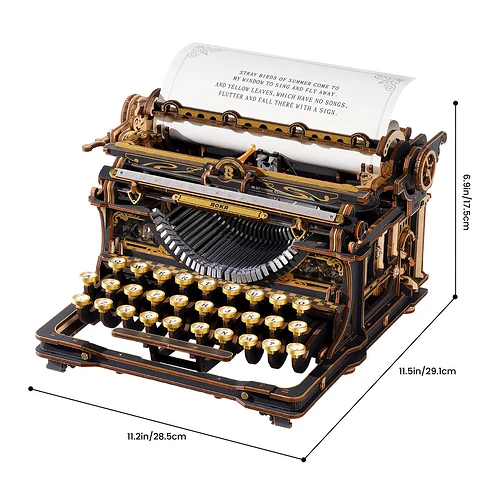
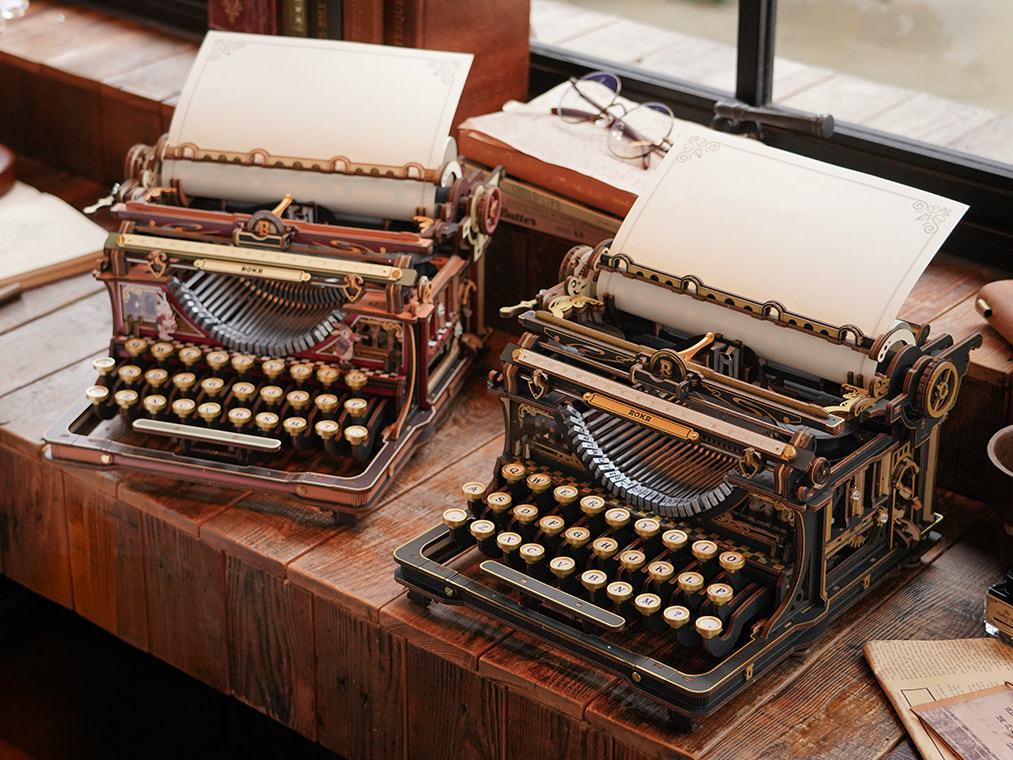
The Robotime Community does not talk about the ROKR Mechanical Typewriter like an ordinary display model. Builders keep circling back to one practical question: after all the rods, gears, ribbon movement, and carriage work, does it actually type?
The answer in the community is yes, but with an important condition. The typing is not a casual bonus. It is the reward for careful alignment, repeated testing, and a willingness to slow down. That is the real article theme hiding in the posts: every keystroke has to be earned.
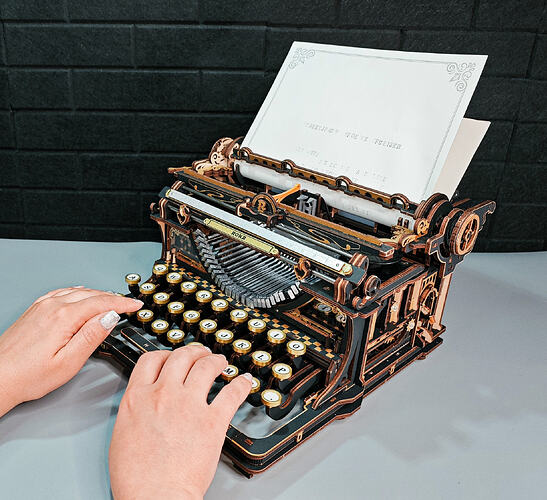
The First Surprise: It Really Types
Martins_Assembly_H set the tone when he introduced the model to other builders. His excitement was not only about the look of a vintage typewriter. It was about confirming that the wooden machine could produce real typing motion after assembly.
Yes, it actually works.
Martins_Assembly_H, Robotime Community
That short line matters because it changes the way shoppers read the kit. This is not simply a nostalgic shell with decorative keys. Community builders are responding to the strange pleasure of seeing a wooden puzzle become a machine you can press, test, and use.
It might not type perfectly, but oh my it's fun to just be able to type up anything at all.
Martins_Assembly_H, Robotime Community
The Build Is A Chain Reaction
The same community voice is very clear about the cost of that function: precision. Martins described the kit as a 6-star master difficulty build and warned that small errors can affect the typewriter mechanics or functions. His step-by-step posts break the build into the keyboard, rear rods, main base, ribbon vibrator, mainspring, bell, gear train, side panels, carriage, and final testing.
This one really needs your full focus and attention to detail.
Martins_Assembly_H, Robotime Community
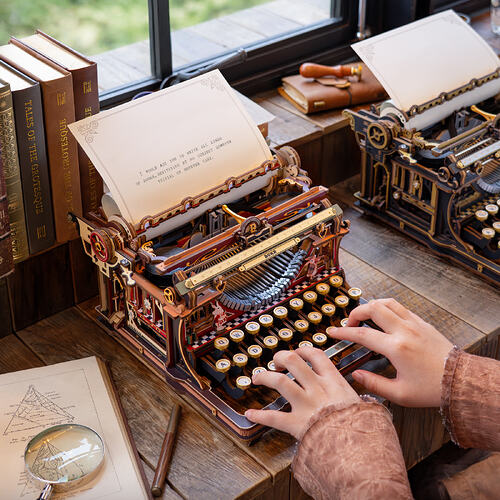
Part 2 of his build journey is especially revealing. Aligning rods at the rear of the keyboard is not glamorous, but it is where the later typing behavior begins to form. Martins wrote that this stage would test focus and patience, then pay back builders when the keyboard mechanics start coming together.
Once you've passed this stage, the keyboard mechanics will really start to come together.
Martins_Assembly_H, Robotime Community
Check, Recheck, Then Let The Magic Happen
Dmitriy_Nazin's early build post pushes the same idea even harder. He called the Mechanical Typewriter one of ROKR's most ambitious projects and described the model as extremely complex. The emotional center of his review is not perfection; it is the pressure of connecting tiny movements so the final typing effect can happen.
You must constantly check and recheck everything, otherwise the magic won't happen.
Dmitriy_Nazin, Robotime Community
That is probably the most useful sentence in the whole community batch. It tells future builders how to approach the kit: do not save testing for the end. If the rods, type head, ink ribbon, or gear train feel slightly off, the community lesson is to stop, inspect, and correct while access is still open.
Dmitriy also shared a small but memorable practical note about the ink ribbon: wear gloves because the ink can be hard to clean from your fingers. It is the kind of tiny, lived-in detail that only appears when someone has actually handled the mechanism.
Where The Machine Starts To Feel Alive
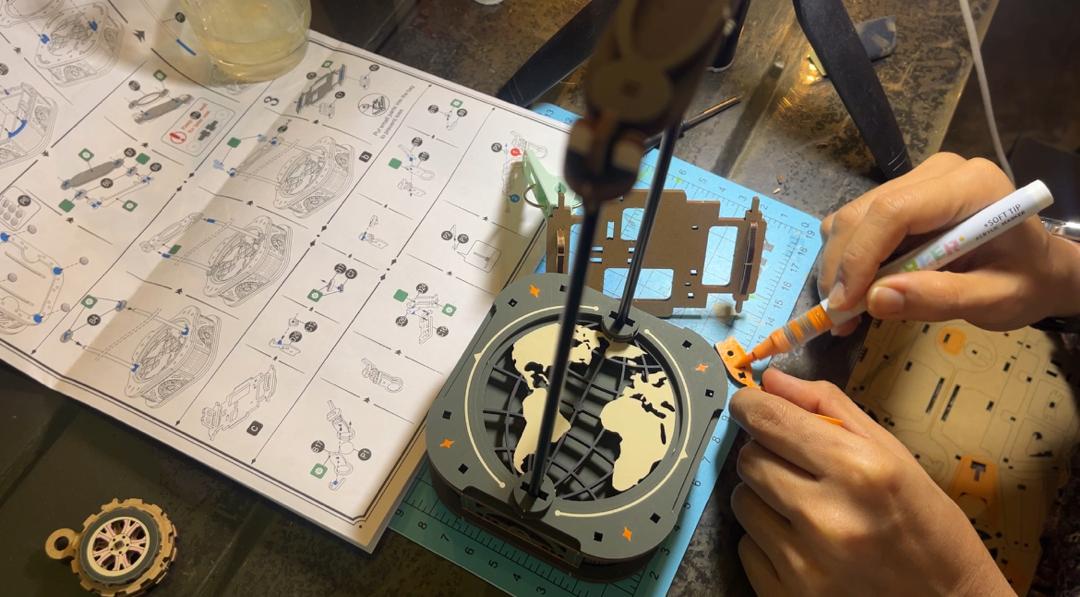
The middle stages are where the typewriter stops feeling like a pile of parts. In Part 3, Martins focused on the main base, ribbon vibrator, mainspring, bell mechanism, and testing. In Part 4, he turned to side panels, cosmetic finishing, and fine-tuning the internal mechanisms, especially the gear train and ink spool.
A key focus here is the gear train system, making sure everything is aligned and running perfectly so the ink spool rotates correctly.
Martins_Assembly_H, Robotime Community
That line is a useful bridge between the technical and emotional sides of the kit. The visible beauty of the typewriter is built on hidden reliability. When the ink spool rotates, the bell responds, and the carriage test works, the model begins to feel alive because many small decisions are finally moving as one system.
Vintage Is Not Only How It Looks
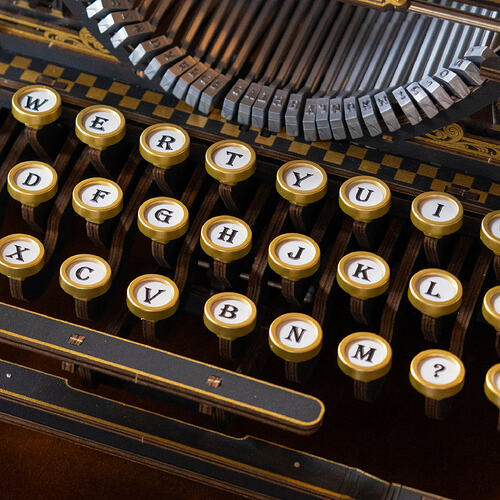
The official community challenge around the typewriter asked people how they recreate a vintage feeling in everyday life. The best replies show why this kit resonates beyond the mechanics. For many builders, vintage is not costume or decoration. It is a slower relationship with objects, writing, sound, family memory, and attention.
I still prefer writing quick notes on paper instead of my phone.
Cydia, Robotime Community
Cydia connected the model to simple desk habits: a notebook, a pen, older music, less screen time, and writing that feels more real because it is physical. Zoe_Lau made a similar point, saying the mechanical movement and each key physically pressing onto paper felt satisfying to imagine.
The mechanical movement and the way each key physically presses onto paper is really satisfying to think about.
Zoe_Lau, Robotime Community
Why The Typewriter Belongs On A Real Desk
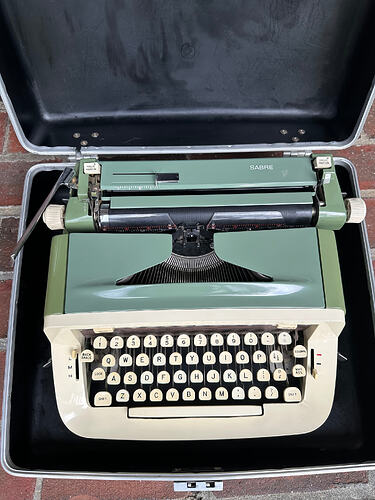
NoodleSalad's comment adds another layer. Her parents were journalism majors and early-career reporters, and her family still owns old typewriters as vintage decoration pieces. One is a manual Royal Sable from 1963 that still works. That personal history explains the appeal of a functional model: it is not just a shape from the past, but a working object that can carry memory.
I love that both are functional!
NoodleSalad, Robotime Community
Kim_Kieffer framed the same desire through crafting. For her, slowing down and working with hands felt like a quiet pushback against modern speed. The Mechanical Typewriter appealed because it looked like the next serious challenge: visible gears, intentional design, and something that actually does something when finished.
The ROKR Mechanical Typewriter feels like the next mountain to climb.
Kim_Kieffer, Robotime Community
What Builders Really Say About The Typewriter
The community voice is not simply that the ROKR Mechanical Typewriter is beautiful or difficult. It is more specific than that:
- It feels special because it works. Builders react strongly to the fact that a wooden model can actually type.
- It demands precision early. Rods, gears, ribbon movement, and the carriage are connected, so small errors travel through the machine.
- Testing is part of the build, not an afterthought. Several posts point back to checking, rechecking, and adjusting before the next layer goes on.
- The vintage appeal is emotional. Users connect the typewriter with paper notes, old writing tools, family memory, and the pleasure of slowing down.
Before You Start
Approach this kit like a machine, not a decoration. Keep your pace slow during the keyboard rods and gear train. Test each functional section before hiding it behind cosmetic panels. If you install the ink ribbon, consider gloves. And when the first letters finally move through the type head, remember what the community material makes clear: the delight of this model comes from knowing exactly how much care went into that keystroke.