There are hobby builds, and then there are journeys—the kind that change something inside you. For Dasabucket, the decision to take on the ROKR Magic Harp AMK71 was one of those rare projects that blended challenge, creativity, and calm into a single wooden masterpiece.
Open Box, Open Heart: The First Step
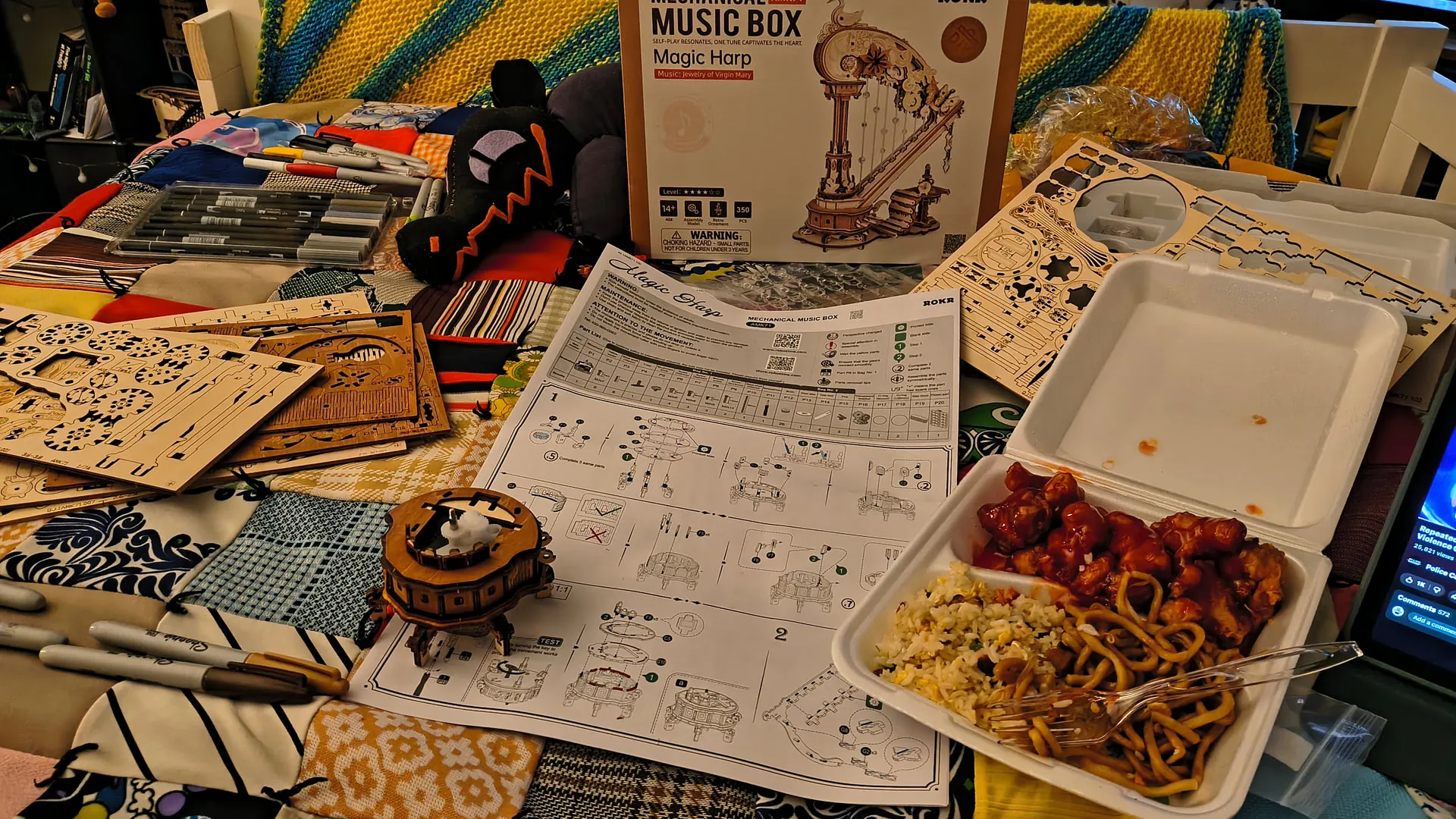
When the kit first arrived, Dasabucket was brimming with anticipation. In his first community update, he said, “This is gonna be the first time coloring a building.” The package was heavy with promise—sheets of precisely laser-cut wood, tiny gears in organized rows, and a set of beautifully illustrated instructions that felt less like a manual and more like a treasure map.
The intricate details are part of what makes ROKR builds so rewarding—every step taught patience, focus, and the quiet joy of creation.
Piece by Piece: Learning Through the Build
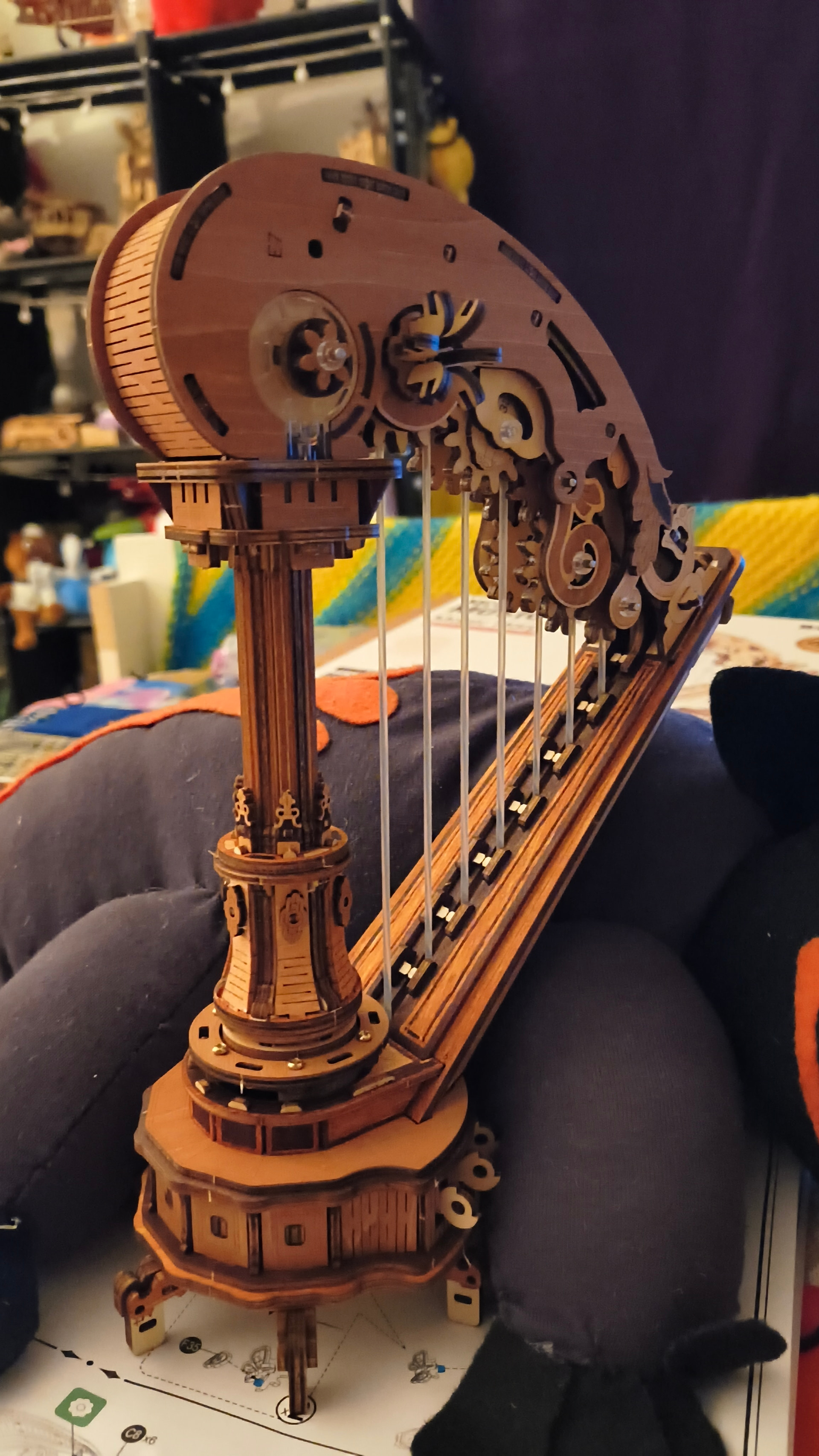
When Dasabucket started building, he was deep into the assembly. He had his tools ready. He related, “I’m using Sharpies though, so it’ll probably not look as clean, but it’s smooth sailing so far.”
He admitted that the coloring didn’t go the way he expected. In his second update, he said, “Kinda messed up on the neck of the harp, for the coloring should’ve used another color, but it’s well so far!”
A first-time coloring lesson: Dasabucket later explained that Sharpie ink can bleed into the wood and leave a lingering scent. He colored the pieces before assembly because reaching small areas becomes harder once the model is complete.
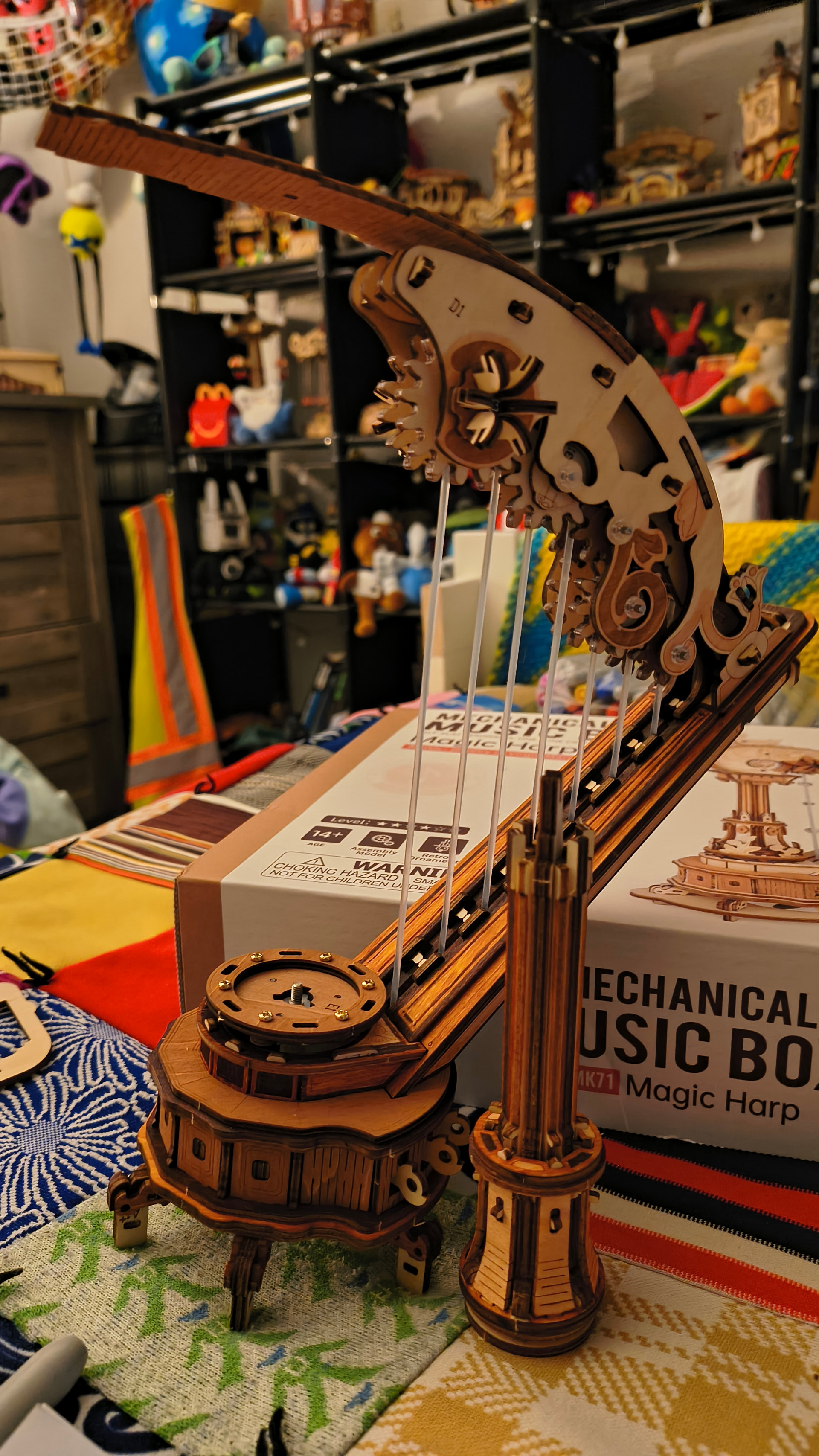
New builders will resonate with this. Your DIY building doesn’t have to be perfect. As long as you follow the instructions and give your project careful attention, you can breathe life into a static model. In fact, the imperfections are what make your mechanical model a unique kit.
Midway through the journey, he saw that the kit was starting to take form. The pieces he had clicked in place had slowly begun taking shape. What had been silent wood immediately turned into an engaging model. And the best part? It wasn’t as difficult as it seemed.
In the third update, he related, “The mechanical part doesn’t seem complicated at all. I think it’s coming together great so far!”
Final Reveal: More Than Just a Model
In the final update, what stood on the desk was more than wood and springs—it was art. He said, “After a ton of Sharpie, a bit of white pen, and pulling an all-nighter, it’s finished! Really glad how it came out!”
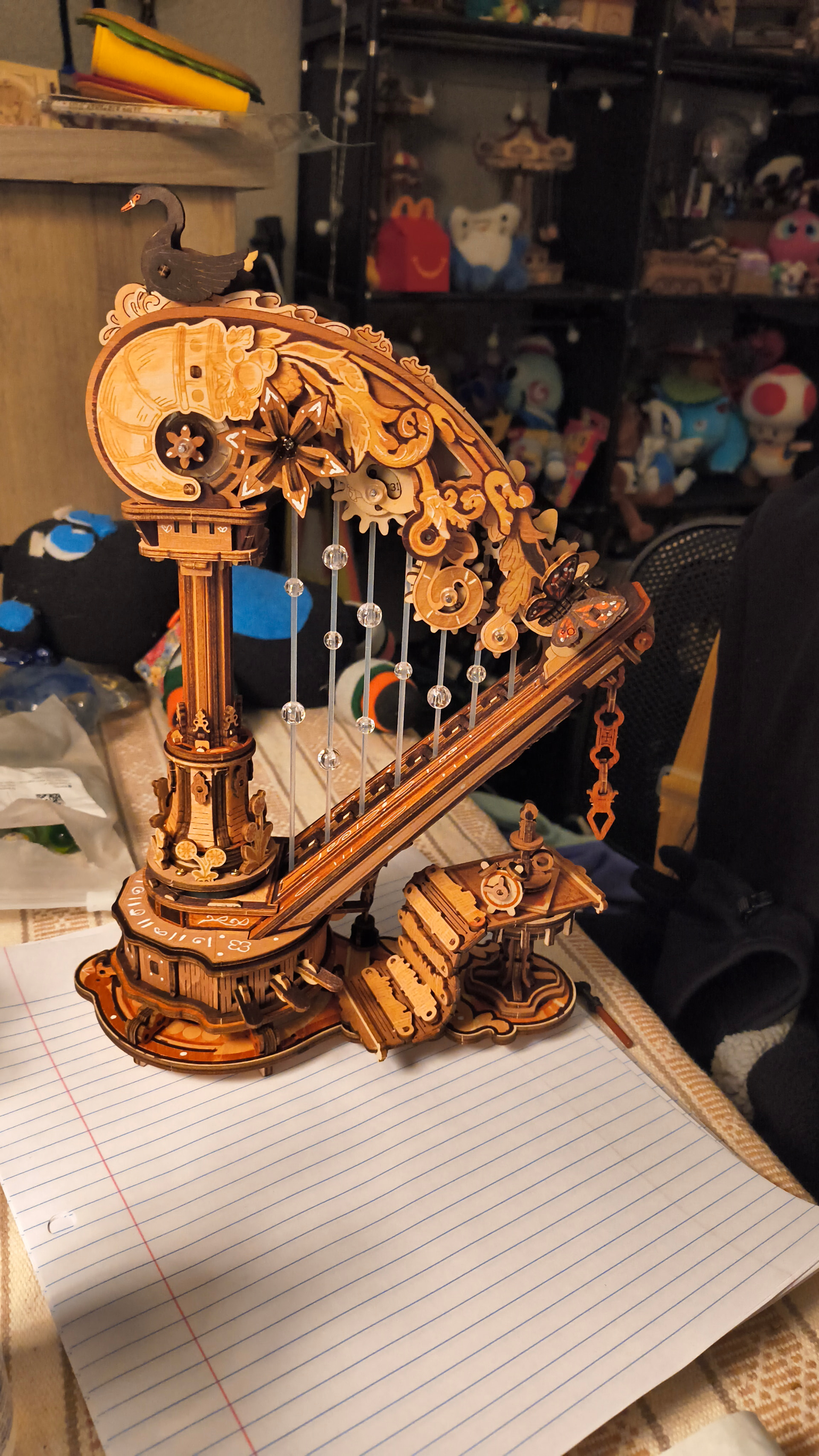
Dasabucket shared photos of all the pieces synchronized in harmony. What was once a box of parts had become a centerpiece of beauty and soft song. For new hobbyists considering this kit, that moment—when structure becomes soul—is everything. It’s what turns skeptics into DIY collectors and curiosity into passion.
Words of Wisdom for New Builders
From Dasabucket’s journey, a few lessons stand out—and will help any new builder succeed:
- Take your time. The Magic Harp isn’t a race; it’s a deliberate craft that teaches focus.
- Trust the build. Parts are designed to fit together thoughtfully, and careful alignment rewards patience.
- Enjoy the unfolding. There’s genuine joy in watching complexity emerge from simplicity.
- It’s not just decoration. When finished, this model moves and plays music, making it a conversation piece, a gift, and a moment-maker.
Dasabucket’s practical caution: Be especially careful with the flexible pieces. In his set, he did not see extras for those parts.
A Community Spotlight Worth Celebrating
Through shared photos, hopeful comments, and supportive replies from other builders, Dasabucket’s journey became more than an individual project—it became a community celebration. That’s the magic of ROKR builds: they bring people together over wood, gears, and song.
If you’re thinking about your first ROKR kit, consider the Magic Harp not just for its elegant design, but for the mindful, rewarding journey it offers—the kind that stays with you long after the last piece clicks into place. You can also explore how the Magic Harp turns mechanics into a musical story.
Story and photos credited to Robotime Community member Dasabucket. The four original build updates are linked in chronological order above.