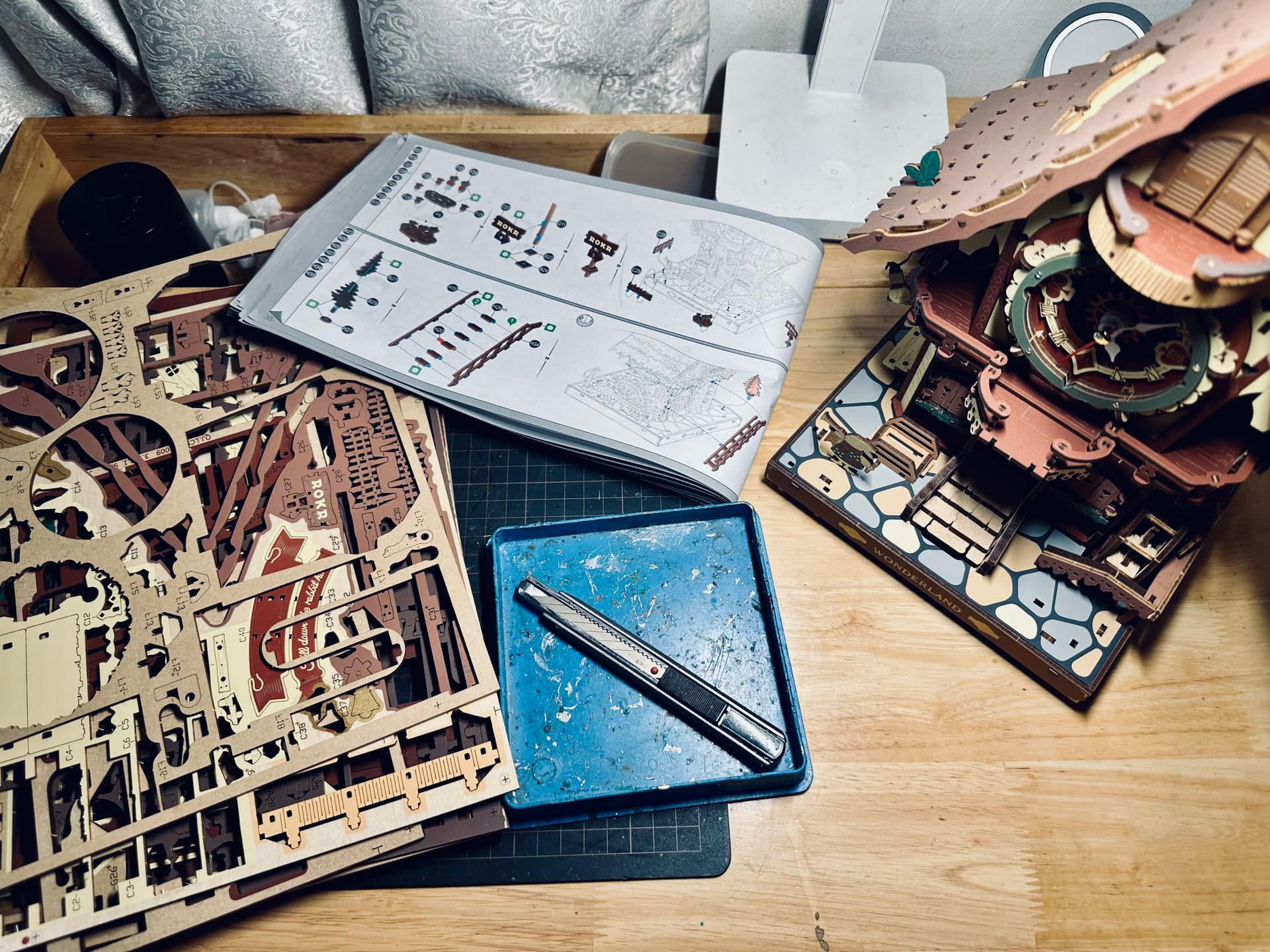
The community story around the ROKR Cuckoo Clock is not only about finishing a charming wooden house. It is about the moment the model starts acting like a tiny living clock: the light works, the pendulum swings, the bird appears, and the chime lands where it should.
That moment can take patience. Across Robotime Community threads, builders celebrate the finished clock, share family reactions, troubleshoot chimes, quiet a noisy pendulum, and even turn the same kit into a hand-painted gothic display. The strongest theme is simple: the Cuckoo Clock becomes lovable when builders tune it into life.
First, It Has To Become A Room Piece
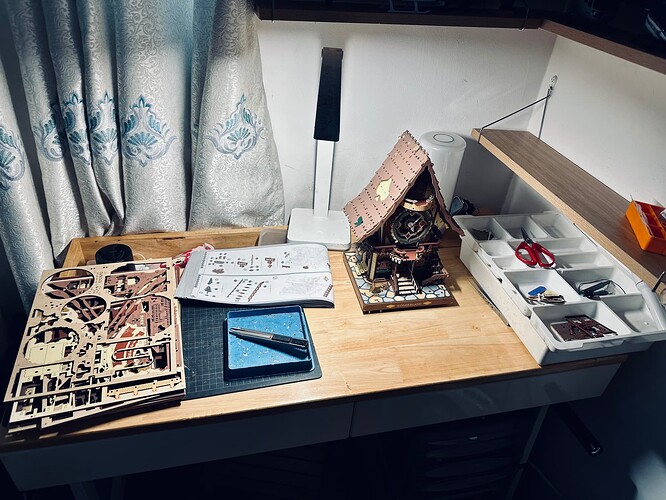
Several posts show why people keep returning to this model. Tank finished the clock after two late nights because his daughter loved cuckoos, then described the finished piece as something they both adored. Martins_Assembly_H shared that his little boy loved the model too. Those comments matter because a clock is not a model you put away after the last step; it is meant to live in a room.
The finished piece looks quite lovely overall, and both my daughter and I adore it.
Tank, Robotime Community
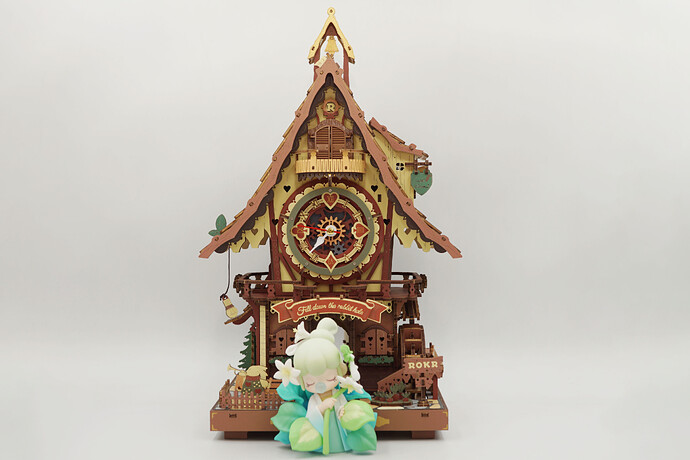
That warmth also appears in the build reactions. jeanneL encouraged people to try the kit and wrote that builders would be in constant awe as it came together. Liset called it her favorite build so far. The affection is real, but it is not separate from the mechanics. The charm comes from the fact that the little house does things.
This is my favorite build I've made so far.
Liset, Robotime Community
The Real Story Starts After It Works Once
The most useful Cuckoo Clock threads are not perfect-finish posts. They are the posts where a builder says, in effect, everything worked during the test stage, but now the cuckoo or chime is not behaving. Caroleheaton's thread is the clearest example.
The light works, the clock works and the pendulum works. But the cuckoo and chime is a different matter.
Caroleheaton, Robotime Community
Her clock worked briefly, then the bird and chime stopped landing correctly. After batteries, reset attempts, replacement parts, and community advice, she eventually took off the roof, adjusted the mechanism, and got the chime working on time.
I followed your advice and eventually got it working perfectly.
Caroleheaton, Robotime Community
That is a very different kind of review from a simple five-star sentence. It tells future builders that the finished clock may need post-assembly tuning, and that the community knowledge around timing and alignment is part of the product experience.
Sometimes The Fix Is Hidden In A Small Button
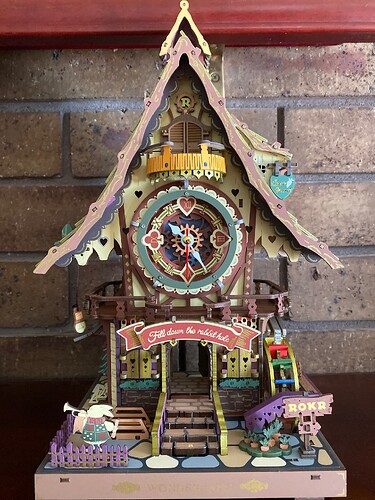
Tricia12 had a similar arc. Her clock had been working perfectly: the bird came out and chimed at the exact hour. Then the bird stopped appearing automatically, even though the lights and pendulum still worked. The solution turned out to be smaller than a full teardown.
Apparently the stair is the on/off button and I turn the chime off without realising.
Tricia12, Robotime Community
Her relief is useful because it captures something shoppers rarely see in product copy. A working clock is both decorative and interactive. That means learning the controls matters as much as placing the wooden parts. In Tricia12's case, once the button behavior was understood, the whole model changed back from worrying to delightful.
Now thinking, the design of this clock is very smart.
Tricia12, Robotime Community
The Pendulum Has Its Own Community Wisdom
The pendulum discussions are where the Cuckoo Clock most clearly becomes a lived object rather than a one-time build. Tricia12 noticed a loud clicking or tapping sound months after her clock had been working well. Her diagnosis was precise: the pendulum was swinging too hard and touching nearby parts.
Instead of trimming wood, she added small cushioning pieces so the contact would be quiet. The practical value is in the timing of the advice: if you can add the cushioning before full assembly, it is easier than reaching through the finished clock later.
The pendulum now swing freely without any noise at all.
Tricia12, Robotime Community
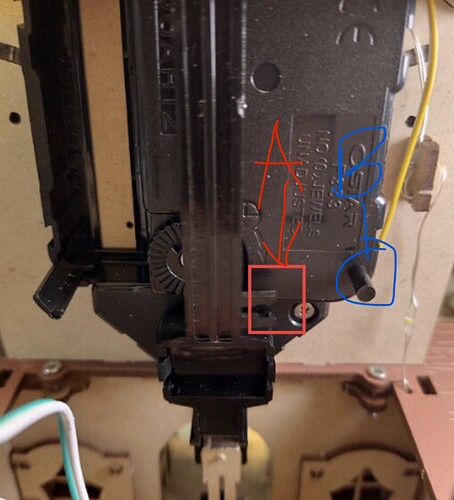
KMG's pendulum-weight thread adds another lesson: small parts can prompt big questions. After fitting a magnetic weight and finishing the clock, KMG reported that it worked well and kept good time. The thread shows how community builders reason through unclear pieces, compare what they see in their own instructions, and report back once the clock runs.
Clock finished and working fine. Also keeps good time.
KMG, Robotime Community
Custom Paint Turns The Clock Into A New Character
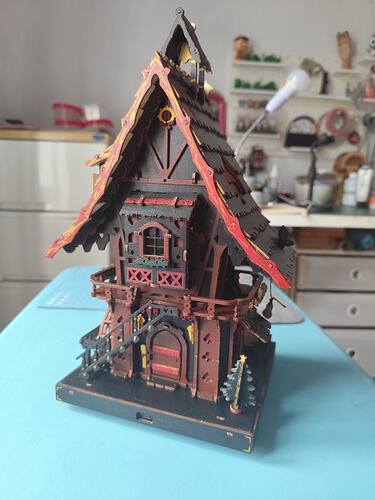
The Cuckoo Clock also has one of the strongest customization stories in the batch. Jackie0992 shared a hand-painted gothic version inspired by an antique German Black Forest clock. The painting process took 18 days and involved sanding, gesso, and varnishing each part or module individually.
It's definitely more complicated and tiring, but it results in a much smoother, neater, and more durable finish.
Jackie0992, Robotime Community
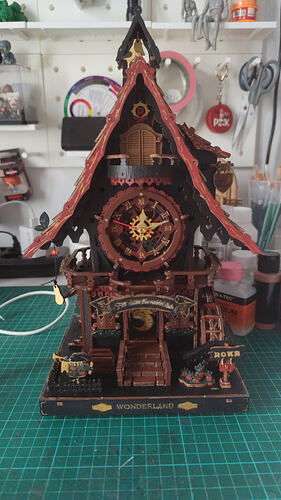
The photos make the point instantly: the same ROKR structure becomes a completely different object through color, surface prep, and detail work. Jackie later said she spent a lot of time on the cuckoo itself, sanding, priming, airbrushing, and hand-painting the details.
It's always fascinating how the same piece can transform into something completely different in each creator's hands.
Jackie0992, Robotime Community
What Builders Really Mean When The Clock Comes Alive
The user voice around the ROKR Cuckoo Clock is not one simple verdict. It is a shared map of how a decorative model becomes a daily object:
- It wins people through motion. Families and builders respond when the light, pendulum, bird, and chime feel coordinated.
- It rewards careful setup. Community posts repeatedly point to step-by-step reading, alignment, and patience.
- It may need tuning after assembly. Chime timing, button behavior, pendulum noise, and power checks all appear in real user threads.
- It invites personal style. Painted builds can shift the clock from storybook charm to gothic drama.
Before You Start
Build slowly, especially around moving and electronic sections. Test the cuckoo, chime, lights, and pendulum before closing areas that are hard to reach. Learn the step button behavior before assuming something has failed. If you plan to paint, prepare surfaces early and expect the project to take longer. Most of all, treat the final tuning as part of the build. In the community's words and photos, that is when the Cuckoo Clock stops being a pile of parts and starts feeling alive.