
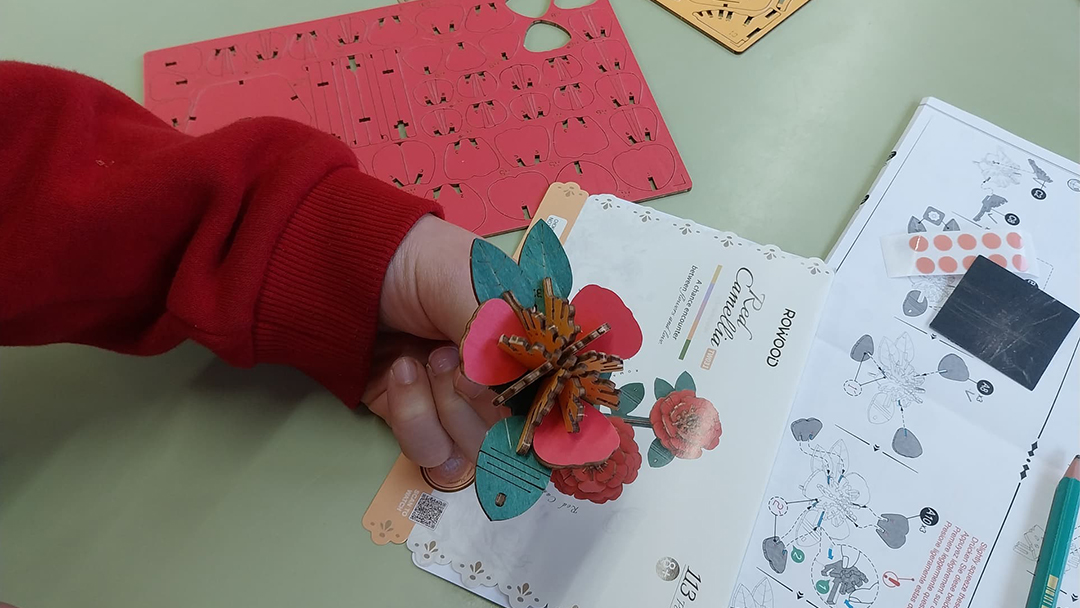
Since the time when the Rolife kit came, the Red Camelia was a classroom tale. Wenbare, a craft expert and Educator, went on to take this flower-making kit to class and what emerged was a tale of patience, teamwork and success.
The Excitement and Curiosity of Puzzle Building
The day the kit appeared, the students were over the moon. Wenbare recounts:
“Our students are still so excited! They couldn’t wait to continue, and as soon as they saw the box, their faces lit up again.”
She had brought two flower kits, the Red Camelia and a Sunflower. However, when the group decided to vote, they all said they would construct the Red Camelia. And without hesitation, they swung into action. Wenbare, on her part, was an eloquent speaker and displayed pride and sincere joy.
She observed how the students discovered that the instructions for building DIY crafts were more than just matching numbers.
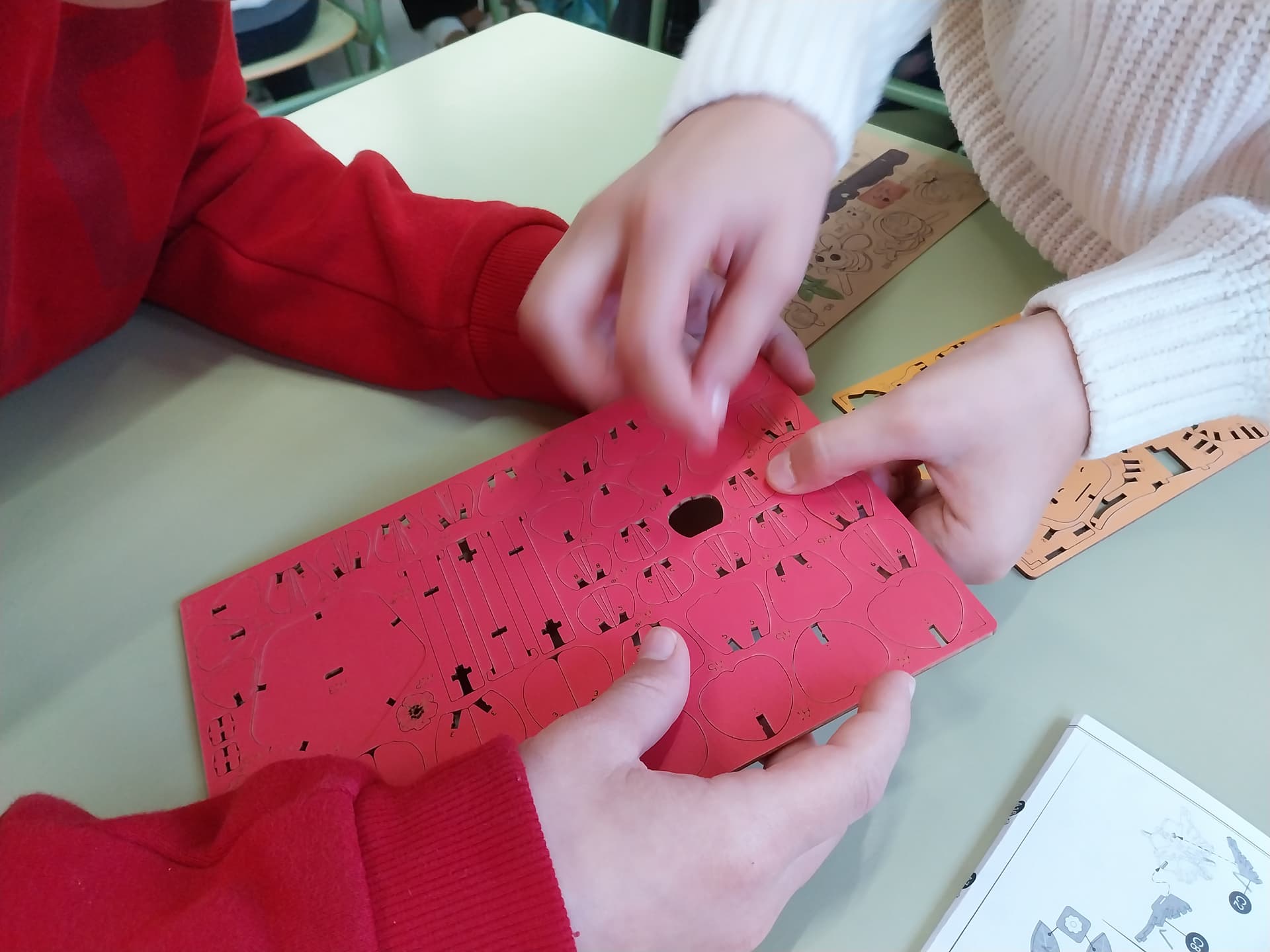
Photo by Wenbare
“They’ve discovered that building is not only about following numbers—even if a piece says ‘8’, if the instructions show ‘A8’, they need to check the arrows carefully to find the right ones!”
Her students also got to know that petals need to appear different on either side they are facing, either on the front or the back. A good number of the students worked with the frail wooden pieces with some nervousness. This was a natural feeling, because applying excess pressure to the petals might damage them. Therefore, extra care must be taken to bend it to achieve a natural curve.
In the midst of the building process, Wenbare found something intriguing. She relates:
“Step by step, they’re learning not just how to build, but also how to stay focused, collaborate, and be patient with each other. It’s turning into such a beautiful teamwork activity, and they already call it ‘our class flower.’
The building sessions became a brief moment during the week, each step revealing something more than just a craft. The act of building together became a way to focus, coordinate, and support each other.
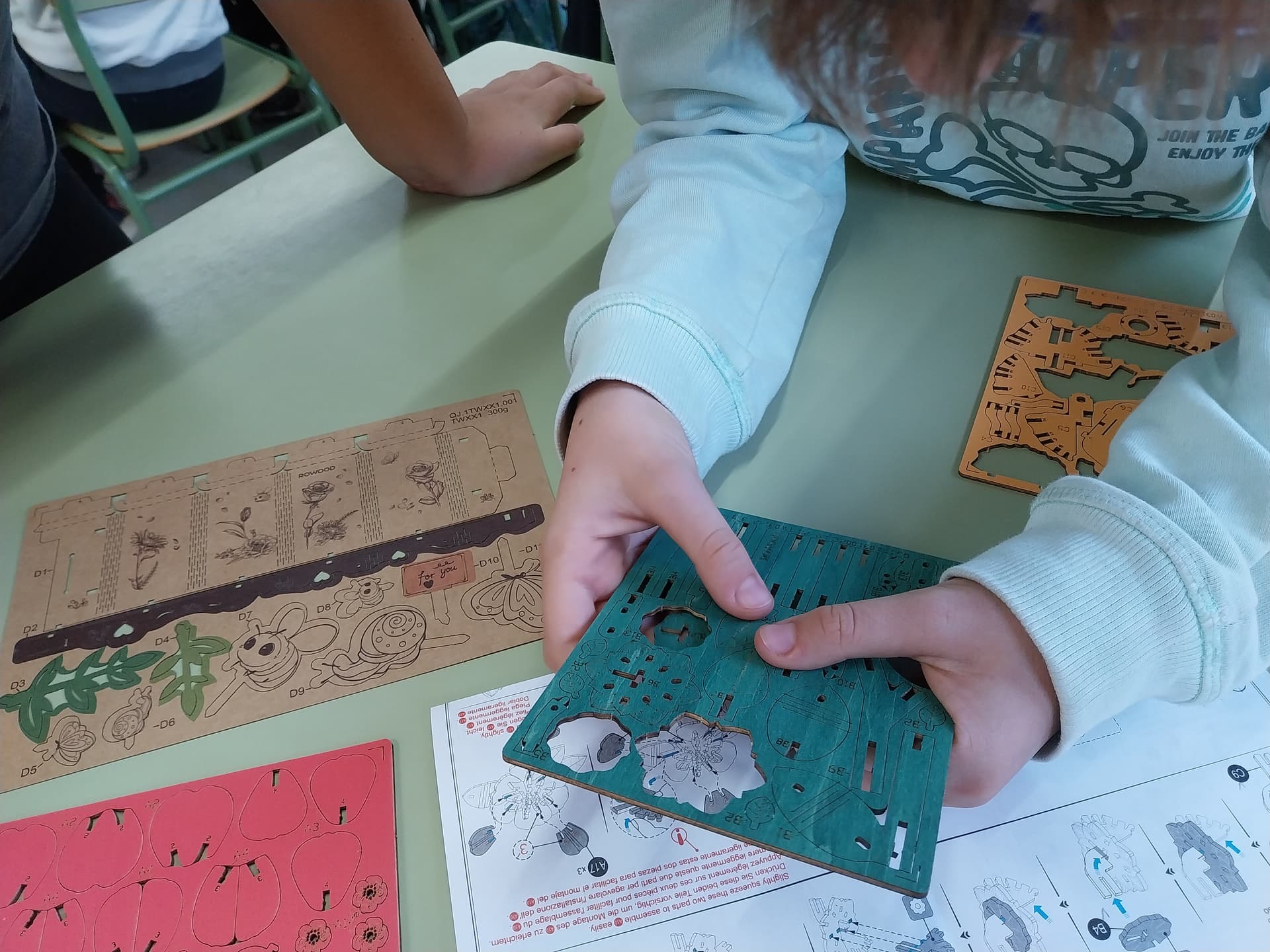
Photo by Wenbare
Teaching Patience with Petals
Wenbare goes on to say in a candid note:
“I’ve realized that I’m building very slowly because I have to explain every step I take… I’m really enjoying the experience — it’s very educational and it’s helping me discover things that had never happened when I built my kits on my own.”
Yes, this Rolife kit has transformed her and the kids in every way. The students are learning the craft, and she is learning from them. She slows down, pauses, and reflects. She highlights not only what to do but why it matters. And along that path, she finds that the kit is a classroom for building patience, for discovering joy in crafting, and for recognizing every small step of progress.
Here Comes a Blooming Outcome
Even before the kit is finished, Wenbare is already seeing positive results. She relates:
After hours and days of assembling this kit, it turned out to be something beautiful. Wenbare relates:
“It’s turning into such a beautiful teamwork activity, and they already call it “our class flower…I’m so proud of how they’re working together and can’t wait to show you more as it keeps blooming.”
Final Reflection
Wenbare’s story is proof that Rolife Kits are not just models; they can also be learning tools that teach vital skills needed to cope with daily living.
If you are on the fence about picking up this kit, don’t hesitate any further. Be confident, make the purchase, and craft a memory in the making. In the end, you too can share your story.
We love hearing what our builders think and seeing the amazing ways they enjoy our products. This story was originally shared in our Robotime Community. If you’d like to explore more details or join the conversation, you can visit the original post here and connect with fellow creators.