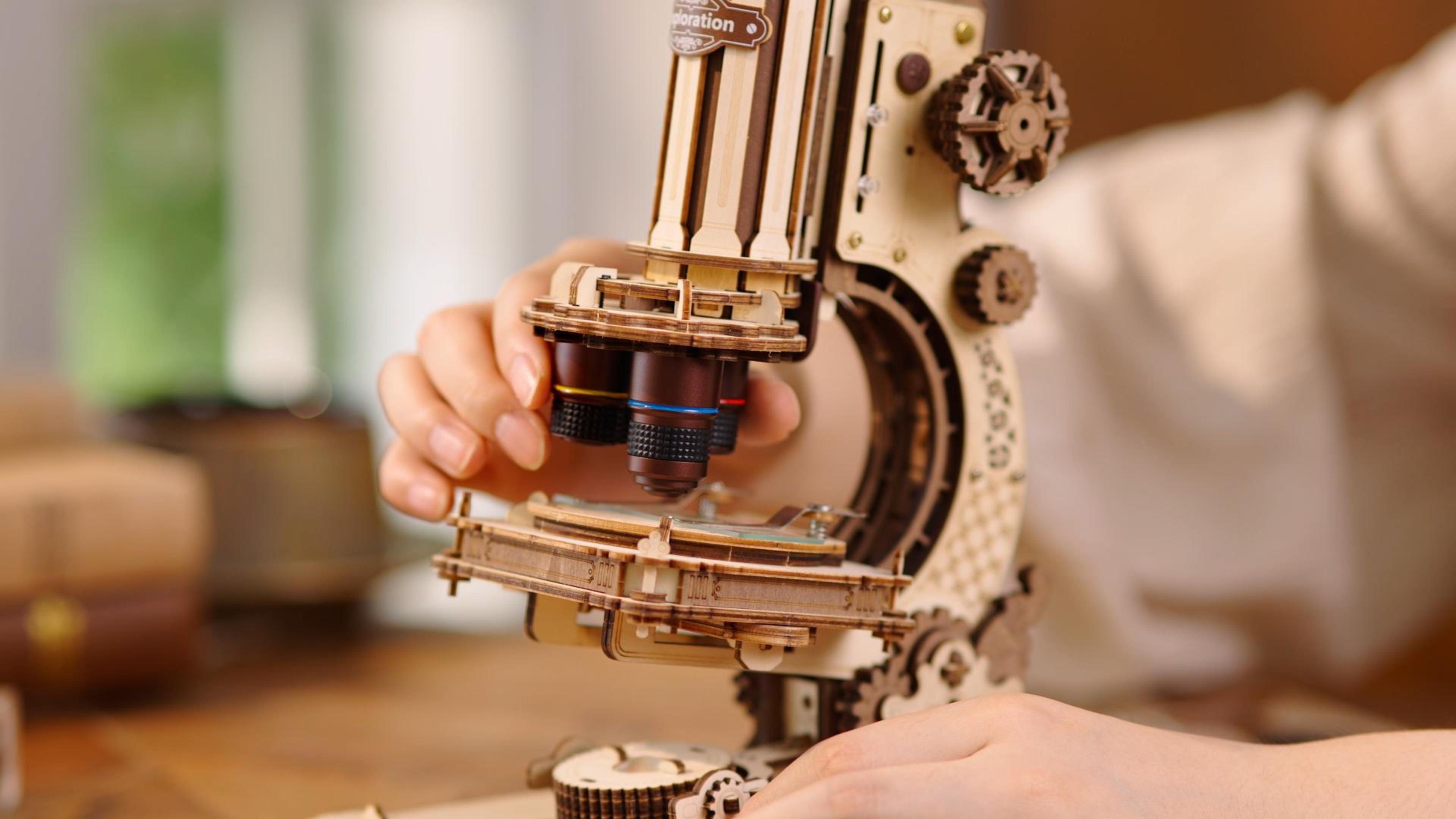

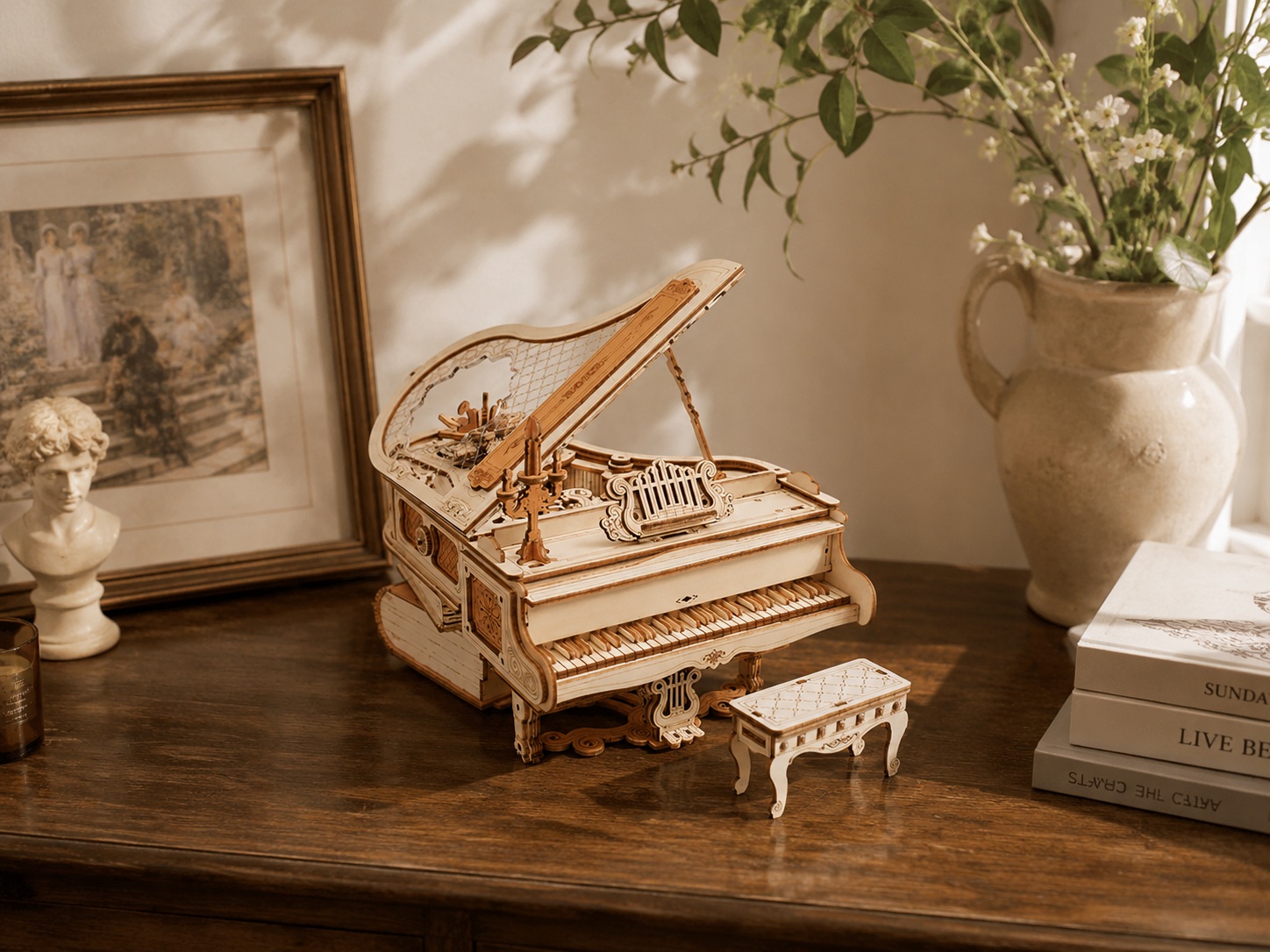
Interest in 3D wooden puzzle kits has skyrocketed over the past half-decade, leading top brands like ROKR to release a plethora of wooden models for people to choose from. If you’re looking to try out this hobby, we’re putting this wooden model kit buying guide out to help you choose your first few kits.
First Things First: What Are Wooden Model Kits?
We’re not entirely sure what you’ve heard of, but wooden model kits aren’t your basic building blocks or jigsaws; they’re sophisticated, intricate, interlocking structures that form static or fully functional 3D machines. Made of precisely cut wooden pieces, each kit blends puzzle-solving patience with the challenge of mechanical design.
Imagine receiving a box of flat wooden sheets you can transform into a living piece of kinetic art for your desk or shelf.
That all sounds exciting until you're faced with dozens of options and have no idea where to begin. Should you choose the smallest kit first, or is it okay to dive into the cute ones with spinning parts and flashing lights? Are the instructions easy to follow? And what is the deal with those star ratings?
Before you click “Add to Cart”, here are some tips.
Wooden Model Kit Buying Guide
There are certain things you need to consider when buying 3D wooden puzzle kits, and they are:
- Time and workspace Match the kit to the time you can actually give it and the space where it can stay undisturbed.
- Difficulty level Look beyond piece count and check how much alignment, movement, wiring, or fine-tuning the model needs.
- Materials and tools Know what comes in the kit and what extra repair or finishing tools another brand may require.
- Preferred theme Let the finished model’s subject, motion, and display style guide your choice.
- Purpose Decide whether you want relaxation, decor, STEM learning, a gift, or a more challenging hands-on project.
Time and Workspace
Making space for a hobby in your life includes allotting time and a suitable workspace for it.
Be realistic and ask yourself how much time you have for building, as a single kit can take anywhere from a single afternoon to several weeks, depending on the kit’s complexity and your own schedule. Keep in mind that the goal of the hobby is to find time to relax, so don’t be in a hurry to finish your project. You can actually break down your build into 30-minute afternoon or evening sessions, savoring the slow, therapeutic rhythm of hands-on, piece-by-piece assembly.
To really enjoy your crafting time, you’ll need a dedicated, flat workspace where your project can sit undisturbed. Choose a well-lit desk, craft table, or even a large portable tray that allows you to leave parts and tools exactly where you left them. Then you can jump back anytime without having to set up and clean up every time.
If you are choosing your first kit, favor a model you can leave safely on a desk or tray between sessions. That makes it easier to build slowly instead of rushing through the process.
Difficulty Levels
Determining how long a build takes isn’t solely dependent on the number of pieces it has, but a combination of piece count, its complexity, and your own level of patience and familiarity with 3D puzzles or mechanical design.
Advanced kits aren’t off-limits to beginners, but you do need to know what you’re getting into. ROKR categorizes kits as Easy, Medium, or Hard and includes the estimated build time. If you want to understand what those mean:
| Difficulty | What to Expect | Best Fit |
|---|---|---|
| Easy | Fewer pieces, shorter build times, simpler snap-fit assembly, and little to no fine-tuning needed post-build. | First-time builders or anyone who wants a relaxed start. |
| Medium | More detailed construction, some moving parts with gears and axles, longer assembly, and LEDs or lighting systems. | Builders who want more detail without jumping straight into the most demanding mechanisms. |
| High | Hundreds of pieces, mechanical systems, circuit boards, motors, and lighting systems, plus precise alignment requirements. | Patient builders who enjoy testing, adjusting, and learning how mechanical parts work together. |
Complexity affects difficulty. A 100-piece flower model can be easier than a 100-piece marble run. Likewise, a 500-piece static display can sometimes be simpler than a 300-piece mechanical machine.
Materials of the Kits and Tools You’ll Need
ROKR provides everything you need in each kit, including the tools, wax (not applicable for certain territories), and sandpaper. We use only premium, super-smooth basswood, laser-cut for easy popping out of the sheet with light finger pressure.
Other brands suggest you keep some PVA glue, super glue, and an X-Acto knife handy for cleaner cuts and repair of broken pieces. So purchase those before you leave the store.
Moving, interactive kits usually reward patience. Waxing, sanding, and careful alignment can make the difference between a smooth mechanism and a build that feels forced.
Preferred Theme
The photo of the finished piece might be what attracted you the most, but look closer and find out what it consists of. This will certainly help even if you’re just buying this kit as a gift for someone else.
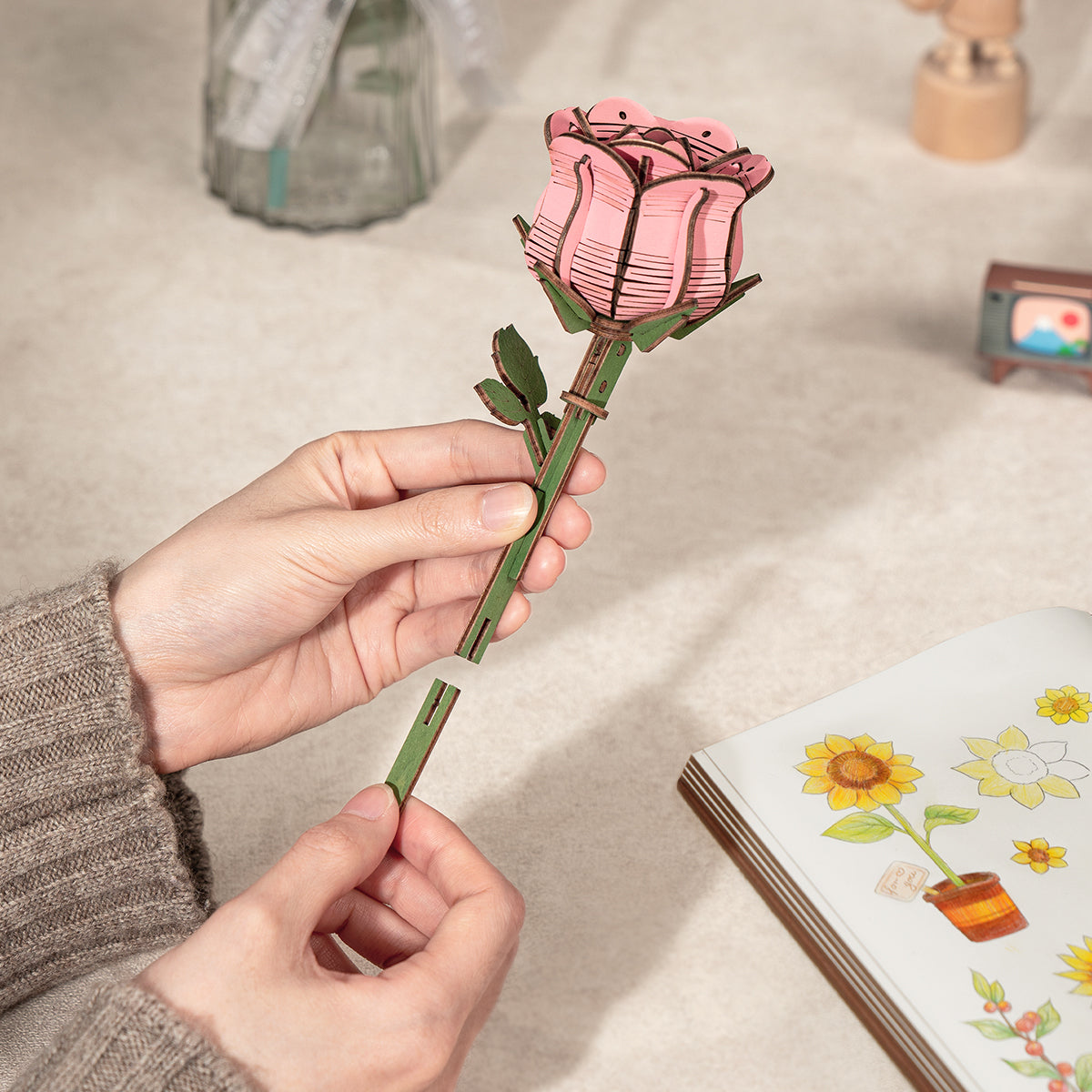
Floral and Botanical Models: Many flower kits are static, for example, the ROKR Red Rose Bouquet AF02J or the solo flower Rowood Red Carnation TW052. However, some include lighting and movement, such as the ROKR Blooming Bouquet Box AF01D and the ROKR Starry Camellia Lamp AF01S.
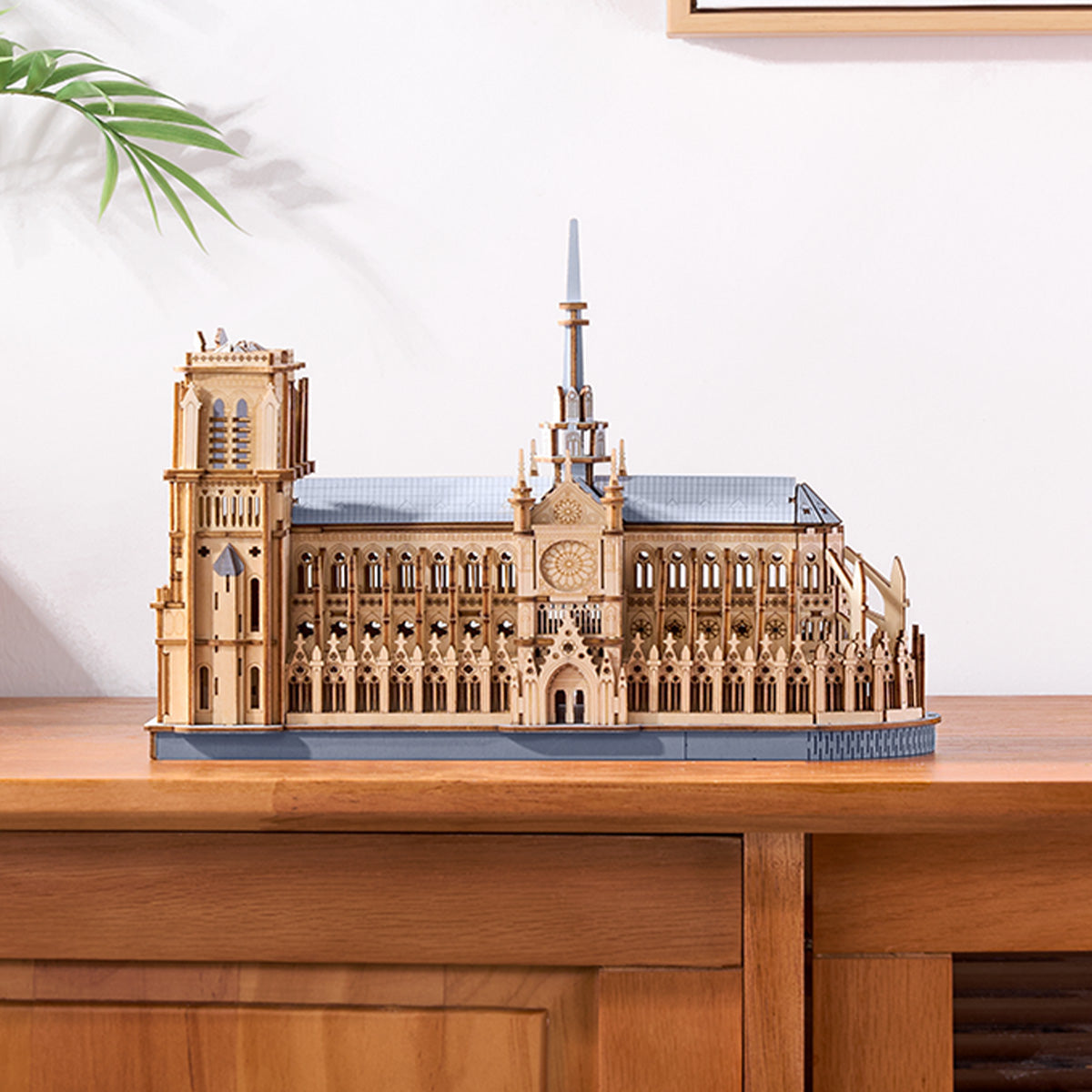
Architecture and Landmarks: Craftsmanship, cultural detail, and nostalgia fill your space with these beautiful displays. Just make sure you have the space before you start building. For example, the Rolife Night of the Eiffel Tower TGL01 stands at 21 inches and includes lighting, while the Rolife Eiffel Tower Plus TGC02 is static, but 40 inches tall and has a base approximately 17 inches wide on each side.
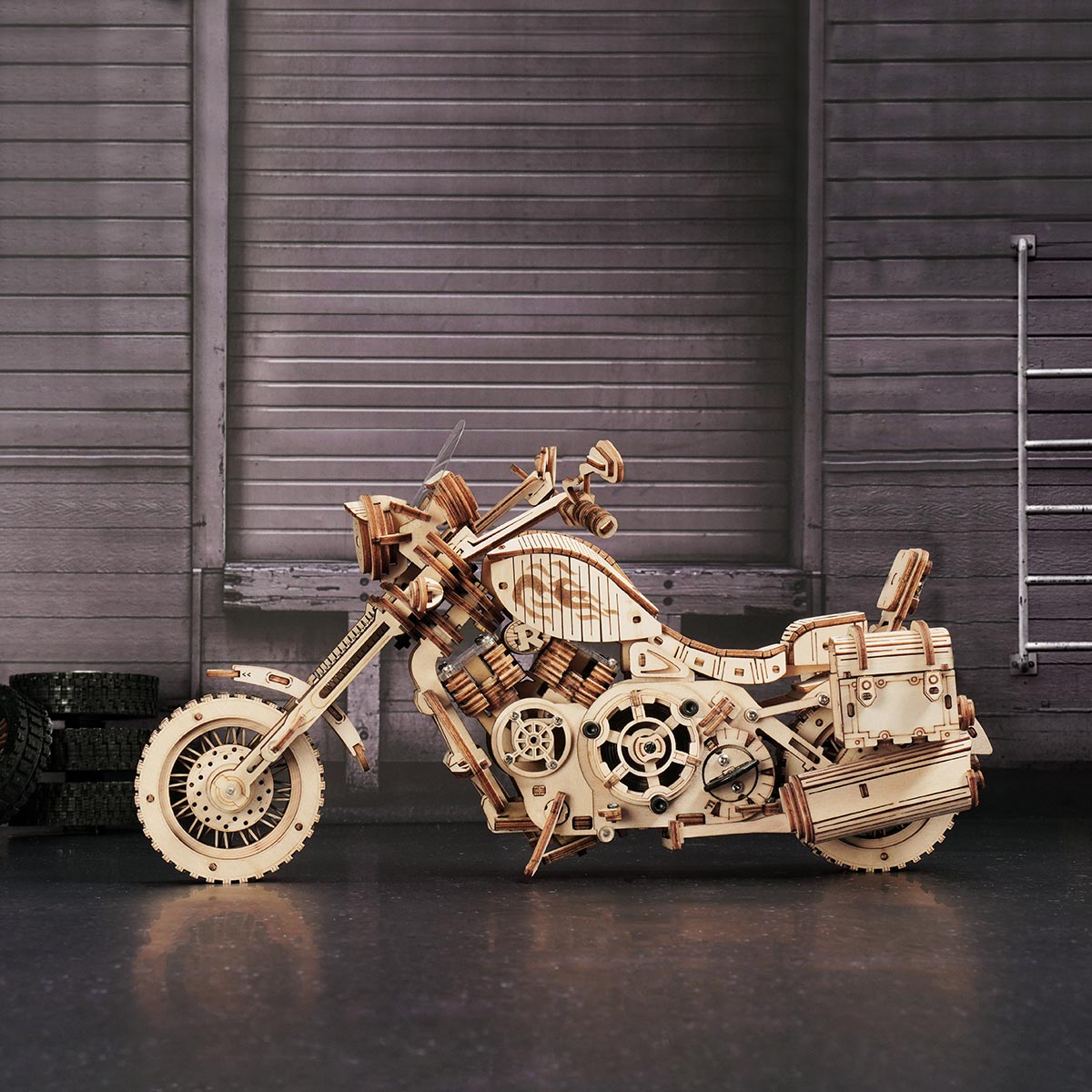
Vehicles and Transportation: So you like cars. Vintage, or modern? Static, like the ROKR 1:18 Scale Model Army Jeep MC701, or interactive, like the ROKR Steam Engine LKA01 and ROKR Racing Car LK505? Read the product description so you’ll know if your chosen kit involves a motor or behaves the way you want it to.
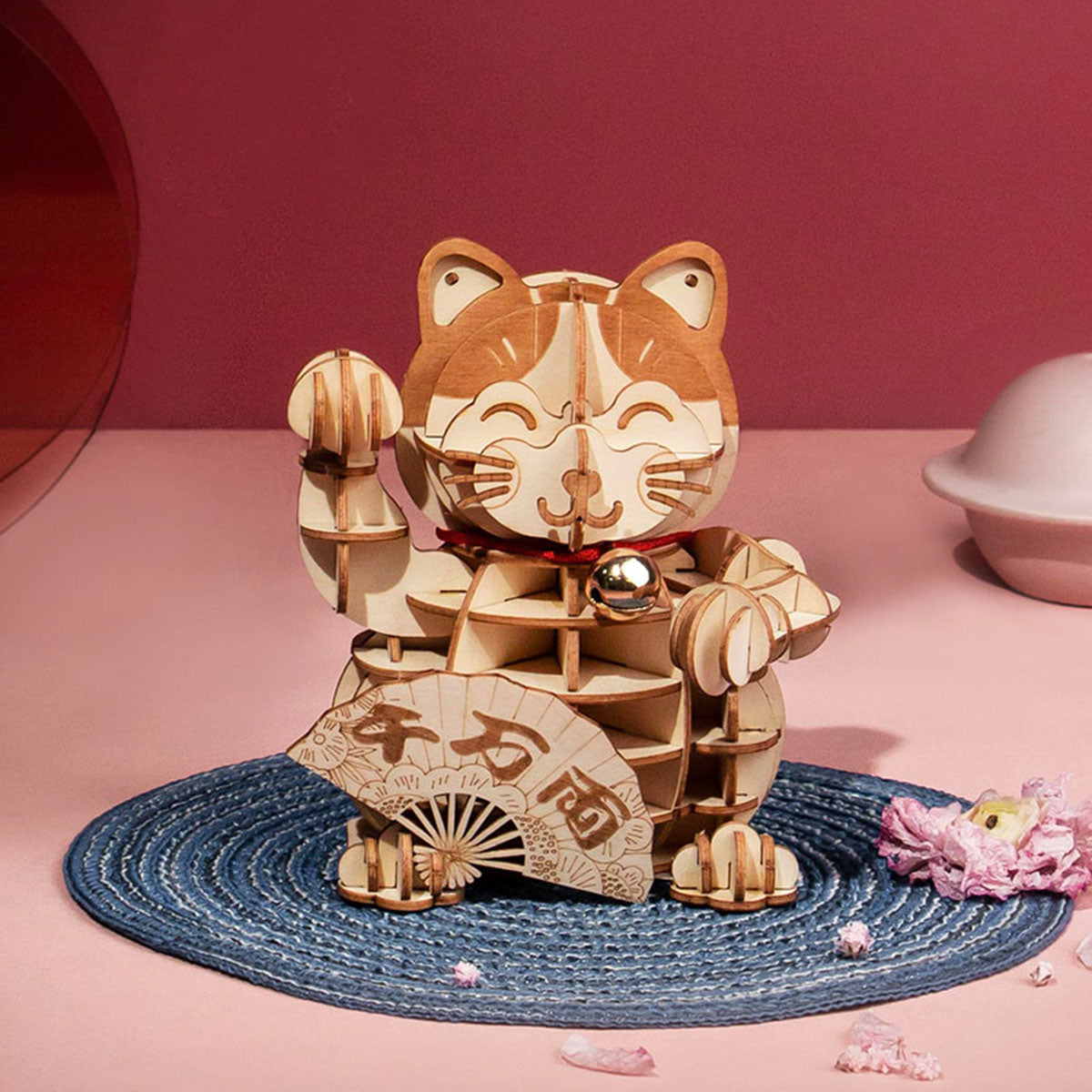
Animals and Wildlife: This theme appeals to both adults and younger builders. ROKR has the walking Velociraptor LD01, which runs on a spring-loaded mechanism, but also has mechanical species like the fierce Storm Beetle MI03 and the graceful Manta Ray MI06 that use high-torque planetary gear electric micro-motors.
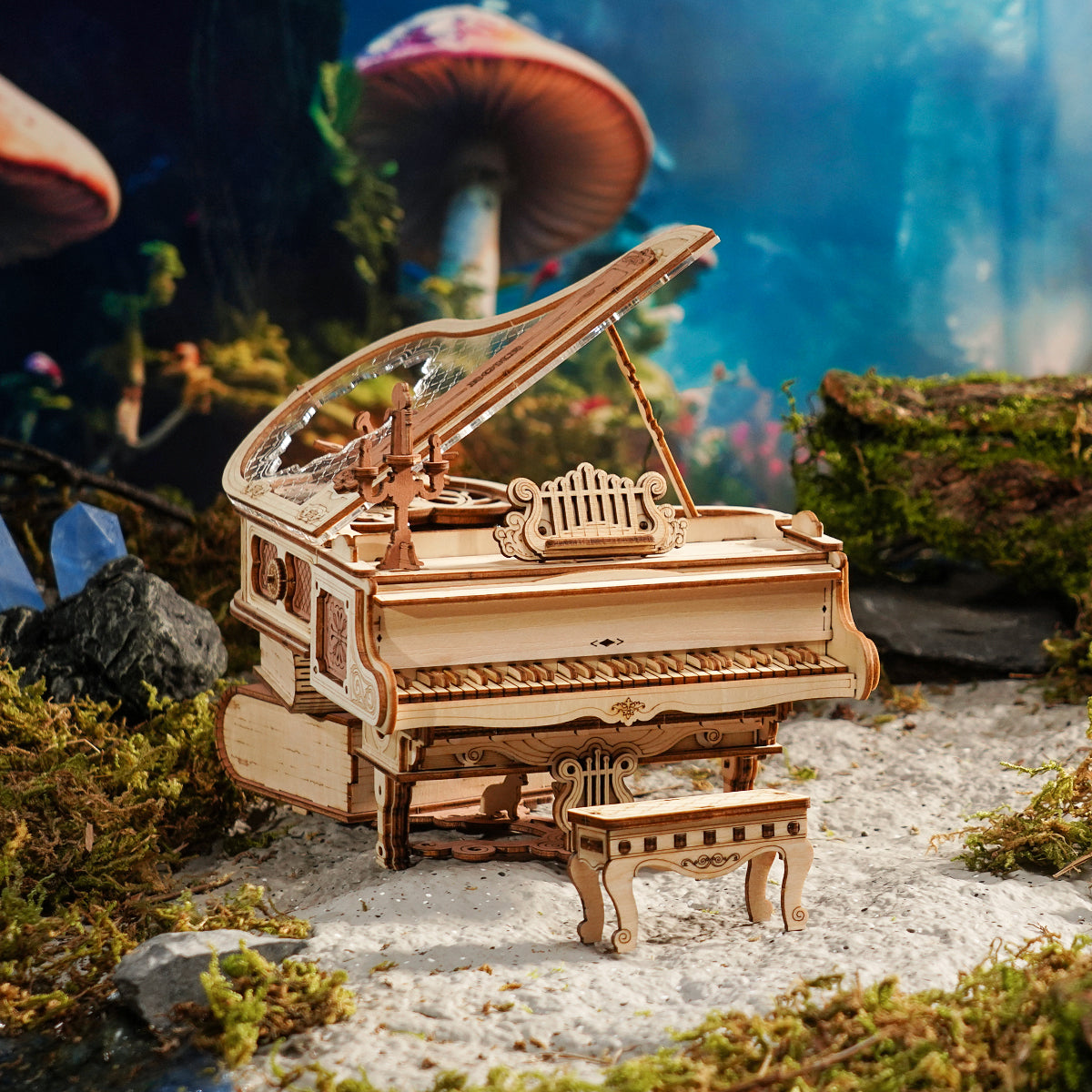
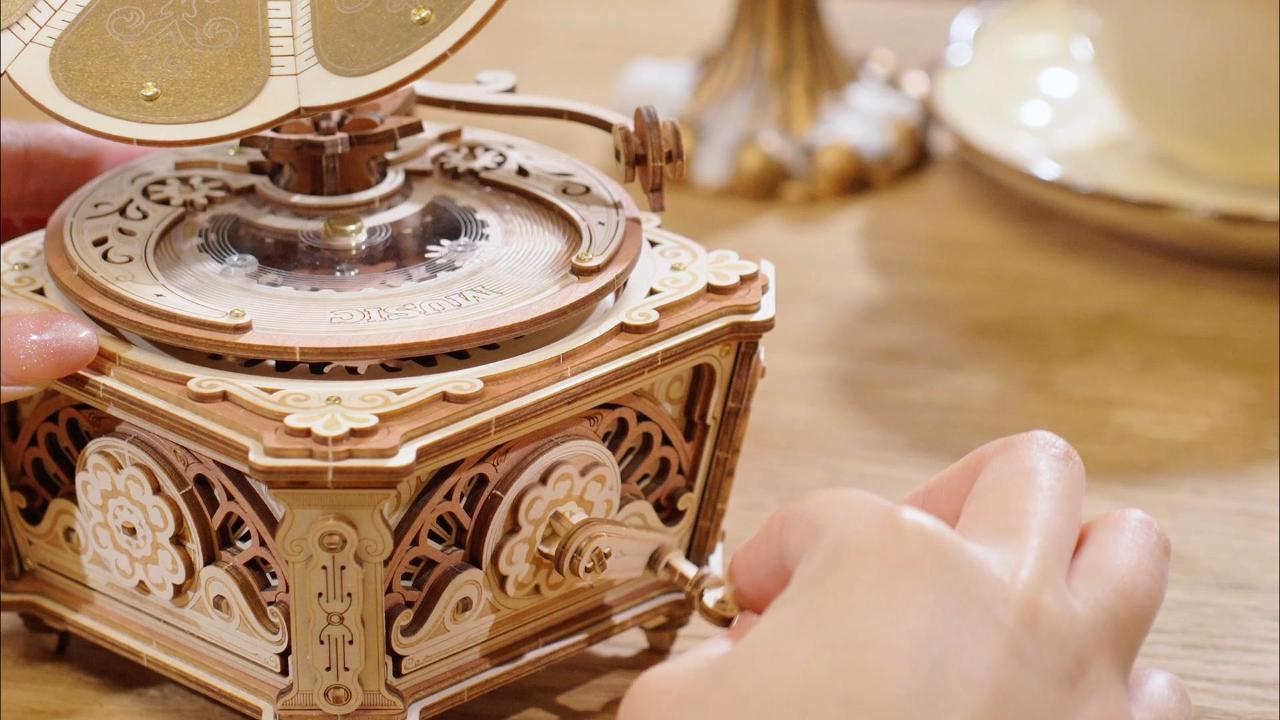
Musical Instruments and Music Boxes: For your auditory and model-building pleasure, these kits range from desk displays like the ROKR Violin Capriccio TG604K to the highly sophisticated ROKR Dream Gift Factory EAB01.
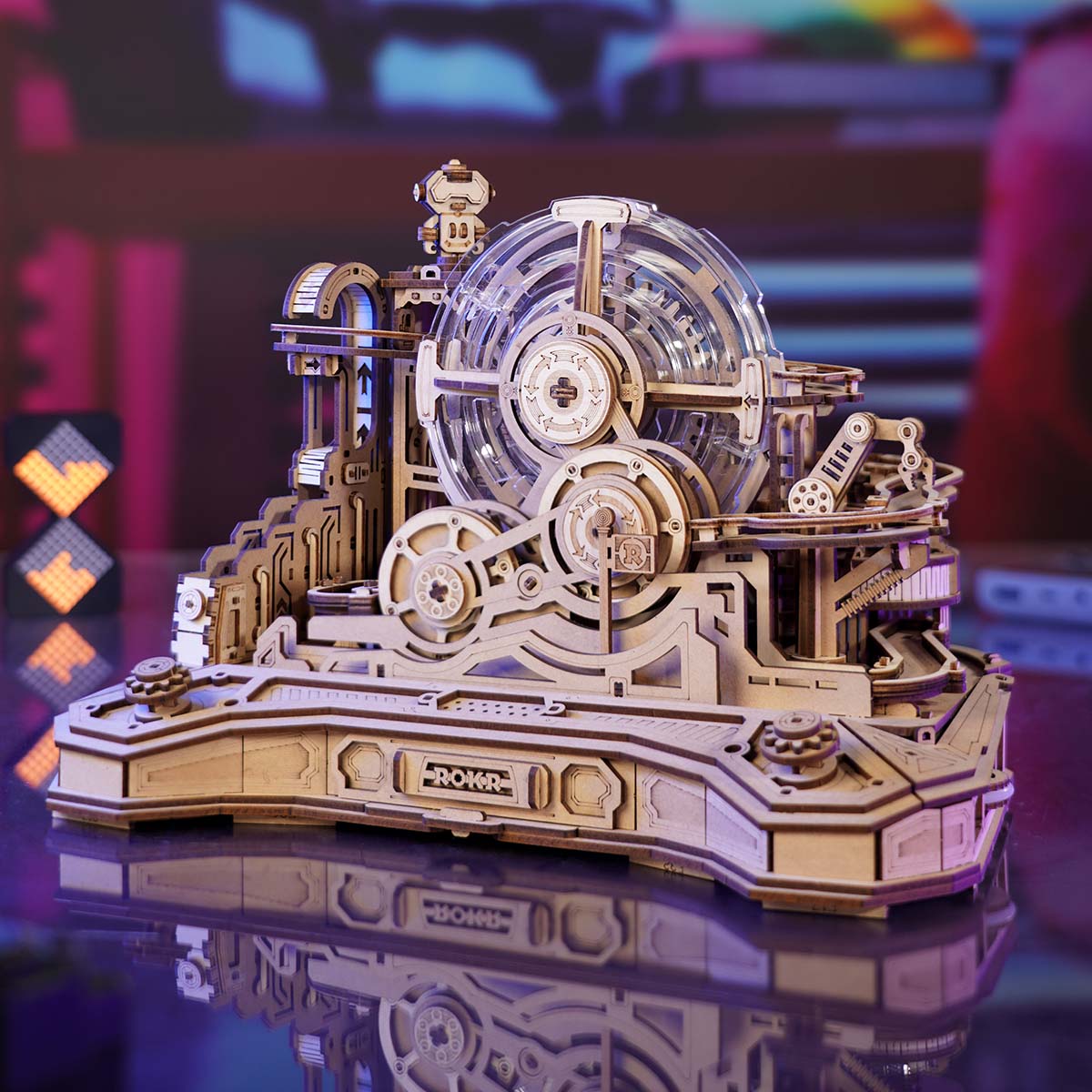
Marble Runs and Tabletop Games: This category is all about ball movement, from the gravity-fed, hand-cranked Marble Parkour LG501 to the high-octane and immersive 3D Pinball Machine EG01. Moving, interactive kits usually require waxing, sanding, and precise alignment of parts.
Mechanical and Engineering Models: This is considered the heart of the hobby and what most likely attracted you to wooden models in the first place. Fascinating machines like the ROKR Mechanical Typewriter LK703C, Vitascope Vintage Film Projector LK601, Rotating-Barrel Machine Gun LQA01, or the Space Shuttle LKA02 push the limits of what puzzles can do. They’re visible mechanics, analog magic, if you will, in the midst of a digital world.
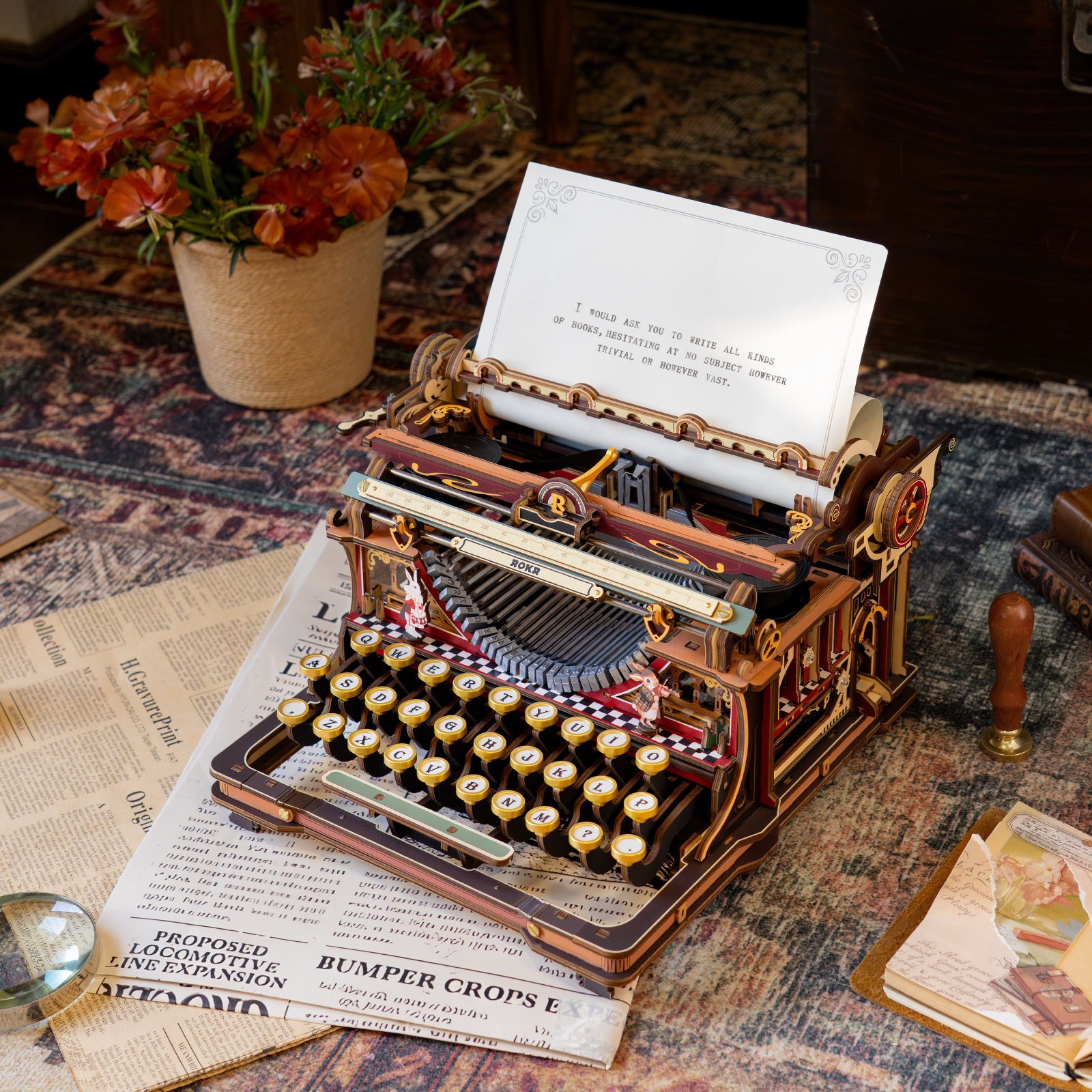
There are so many other themes, but these broad ones can become your best starting point in the hobby because interest in the subject matter is a stronger predictor of enjoyment than difficulty level alone.
Purpose
Other than interest in the kit itself, you need to know your why. Wooden models offer more than just aesthetics; they provide a mindful building experience, a creative outlet, a learning opportunity, and a sense of accomplishment that lasts long after you’re done assembling.
What do you hope to get out of this journey? Are you looking for a way to relax and unwind, a beautiful piece of home display, introducing a child to STEM concepts, or maybe shopping for a gift? Knowing your purpose will help narrow your choices and help you get the most out of this hobby.
It would also help to look at online reviews so you know what to expect. Other people’s experiences may provide the insight you need to make your final choice.
Onto the Checkout Button
A good kit doesn't just match your interests; it matches the experience, outcome, and memories you're hoping to create along the way. We hope this wooden model kit buying guide helped inform and enlighten you.
So, are you ready to fill your cart yet? Check out ROKRonline.com and feel free to use the filters available to find great kits that match your needs. And if there’s one thing you should remember out of all this, it’s that you should choose the experience, not just the model.
Happy crafting!
Quick FAQ
What should beginners look for in a wooden model kit?
Start with a theme you genuinely like, then check the estimated build time, difficulty level, workspace needs, and whether the model has moving parts or lighting.
Does piece count decide difficulty?
Not by itself. Piece count matters, but mechanism complexity, alignment, wiring, and your own patience can matter just as much.
Should I choose the model or the experience?
Choose the experience, not just the model. The right kit should match the outcome and memories you hope to create while building.
-.jpeg?w=1080&h=607)