
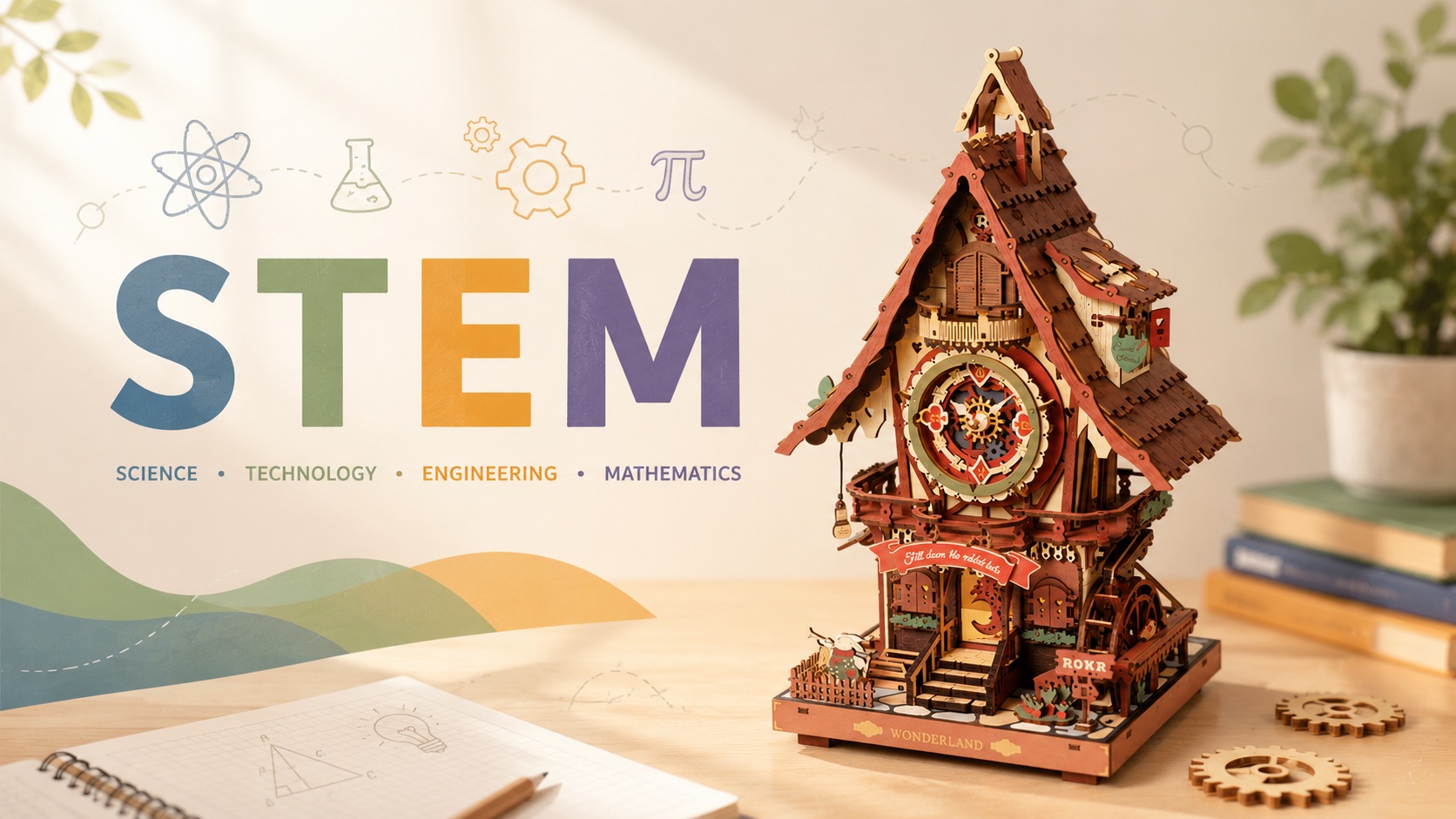
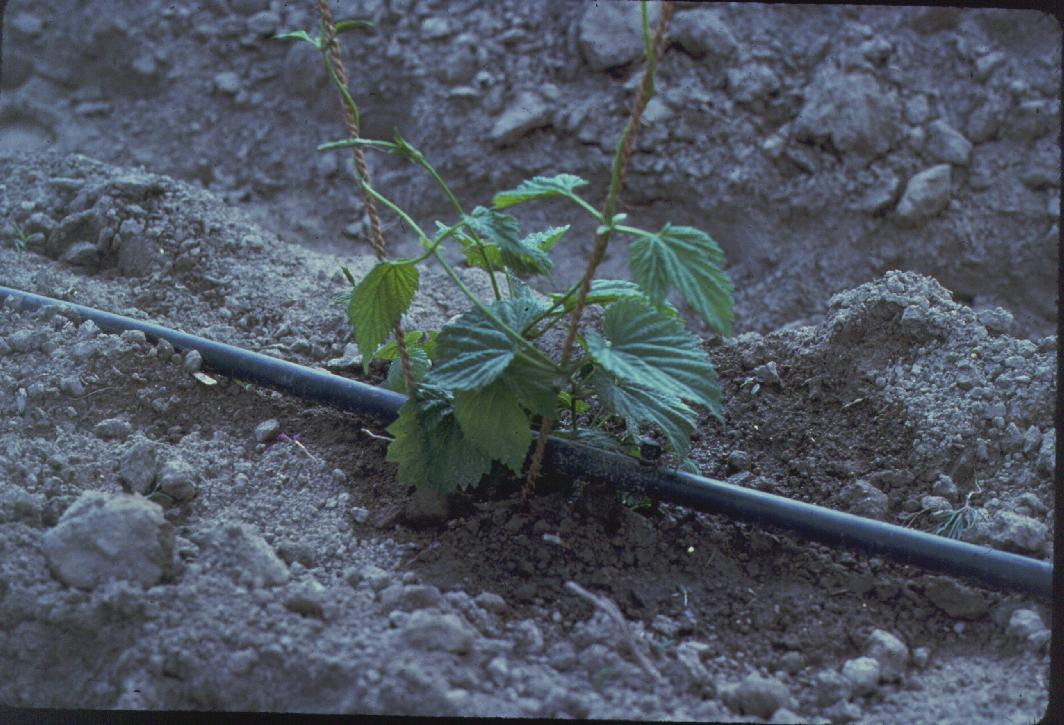
Immagina un gruppo di studenti che cerca di mantenere un giardino dall'essere secco. Devono capire come le piante assorbono acqua, misurare quanta acqua ha bisogno il giardino e progettare un sistema di irrigazione che possa funzionare in modo affidabile. Lungo il cammino, potrebbero persino utilizzare tecnologie semplici per automatizzare parte del processo.
Questo è il cuore dell'educazione STEM. Gli studenti non stanno semplicemente memorizzando fatti da materie separate. Stanno utilizzando scienza, tecnologia, ingegneria e matematica insieme per comprendere un problema reale, testare idee, comunicare con gli altri e migliorare una soluzione.
La STEM è importante perché molti lavori futuri e decisioni quotidiane richiedono alle persone di pensare attraverso le discipline. Più importante ancora, aiuta gli studenti a costruire abitudini pratiche: curiosità, pensiero basato su prove, creatività, lavoro di squadra e fiducia quando un primo tentativo non funziona.
Che cos'è l'educazione STEM?
STEM sta per Scienza, Tecnologia, Ingegneria e Matematica. Nell'educazione, la STEM combina queste quattro aree in un modo di apprendere connesso.
La scienza aiuta gli studenti a osservare, porre domande e testare spiegazioni sul mondo. La tecnologia li aiuta a utilizzare strumenti e sistemi per rendere il lavoro più efficace. L'ingegneria li aiuta a progettare e migliorare soluzioni. La matematica fornisce numeri, schemi, misurazioni e logica per prendere decisioni.
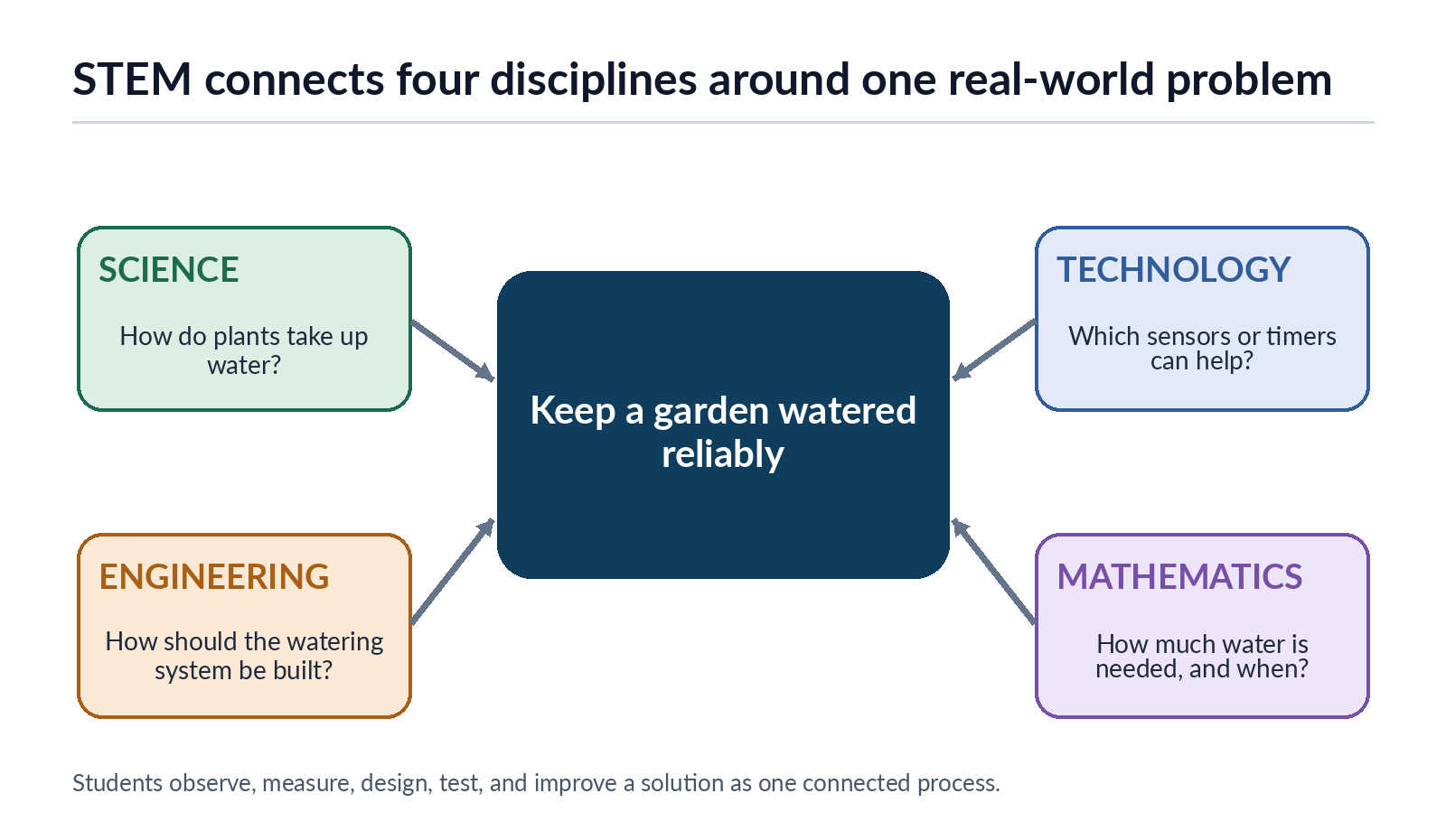
Le quattro discipline STEM contribuiscono con domande e strumenti diversi a un problema reale condiviso. Diagramma originale creato per questo articolo.
Quando queste materie lavorano insieme, l'apprendimento diventa più facile da collegare alla vita reale. Uno studente che costruisce un semplice forno solare, ad esempio, potrebbe utilizzare la scienza per comprendere il calore e la luce, la matematica per misurare angoli e dimensioni, l'ingegneria per progettare la struttura e la tecnologia per testare o perfezionare il risultato.
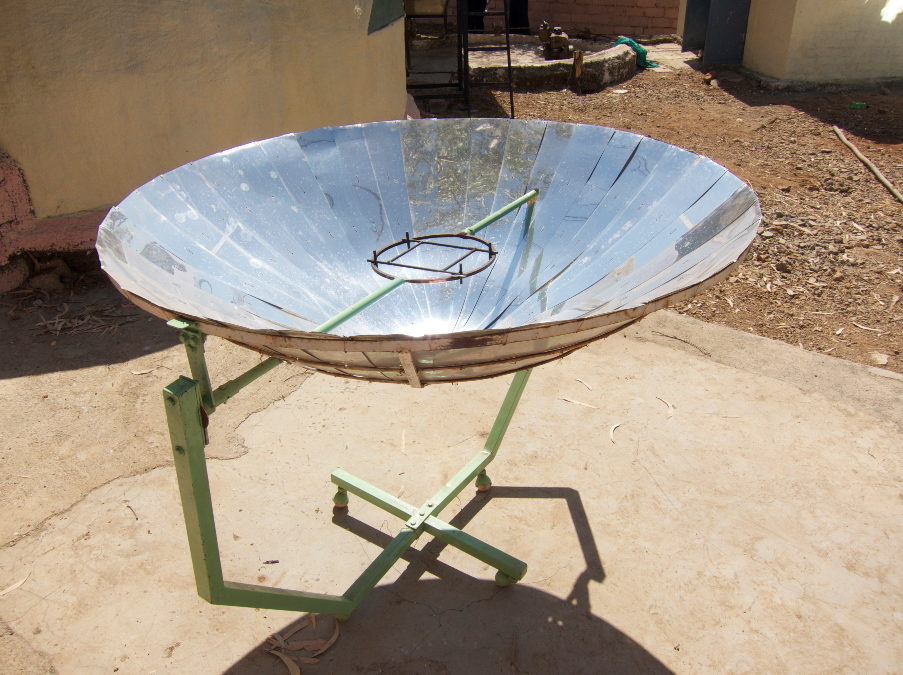
Un forno solare parabolico concentra la luce solare, rendendolo un utile esempio di scienza, misurazione, progettazione ingegneristica e test iterativi. Foto: Nadya Peek
La STEM è più forte quando gli studenti possono vedere come un'idea supporta un'altra. Un progetto non è solo un'attività scientifica o un esercizio di matematica; diventa un processo di pensiero completo.
STEM vs. Apprendimento Tradizionale
Le lezioni tradizionali spesso separano le materie. Uno studente può studiare biologia un giorno e algebra il giorno successivo senza vedere come le due si collegano. L'apprendimento STEM riduce queste barriere chiedendo agli studenti di applicare diversi tipi di conoscenza a un compito significativo.
| Apprendimento delle materie tradizionali | Apprendimento STEM |
|---|---|
| Le materie sono spesso insegnate separatamente. | Le materie sono collegate attraverso un problema o un progetto condiviso. |
| Gli studenti possono concentrarsi sulla risposta corretta. | Gli studenti testano idee, imparano dagli errori e migliorano il loro lavoro. |
| L'apprendimento può sembrare astratto. | L'apprendimento è legato a esempi del mondo reale e decisioni pratiche. |
Un progetto sulla qualità dell'acqua potrebbe includere il test dei filtri, la misurazione dei risultati, la progettazione di un sistema migliore e l'utilizzo di un'app o di un foglio di calcolo per monitorare i risultati. Il risultato è una comprensione più pratica di come funziona la conoscenza al di fuori dell'aula.
Principi Fondamentali dell'Educazione STEM
Diversi principi rendono l'educazione STEM diversa dall'apprendimento passivo.
- Apprendimento pratico Gli studenti costruiscono, testano, misurano e osservano invece di limitarsi a leggere o ascoltare.
- Risoluzione dei problemi Gli studenti identificano una sfida, esplorano possibili risposte, provano una soluzione e la perfezionano quando necessario.
- Pensiero critico Gli studenti mettono in discussione le assunzioni e usano prove invece di congetture non supportate.
- Collaborazione Gli studenti ascoltano, dividono i compiti, spiegano idee e imparano come diverse forze possono supportare un obiettivo condiviso.
- Creatività Gli studenti immaginano nuovi approcci e comprendono che una soluzione utile può derivare da diversi tentativi.
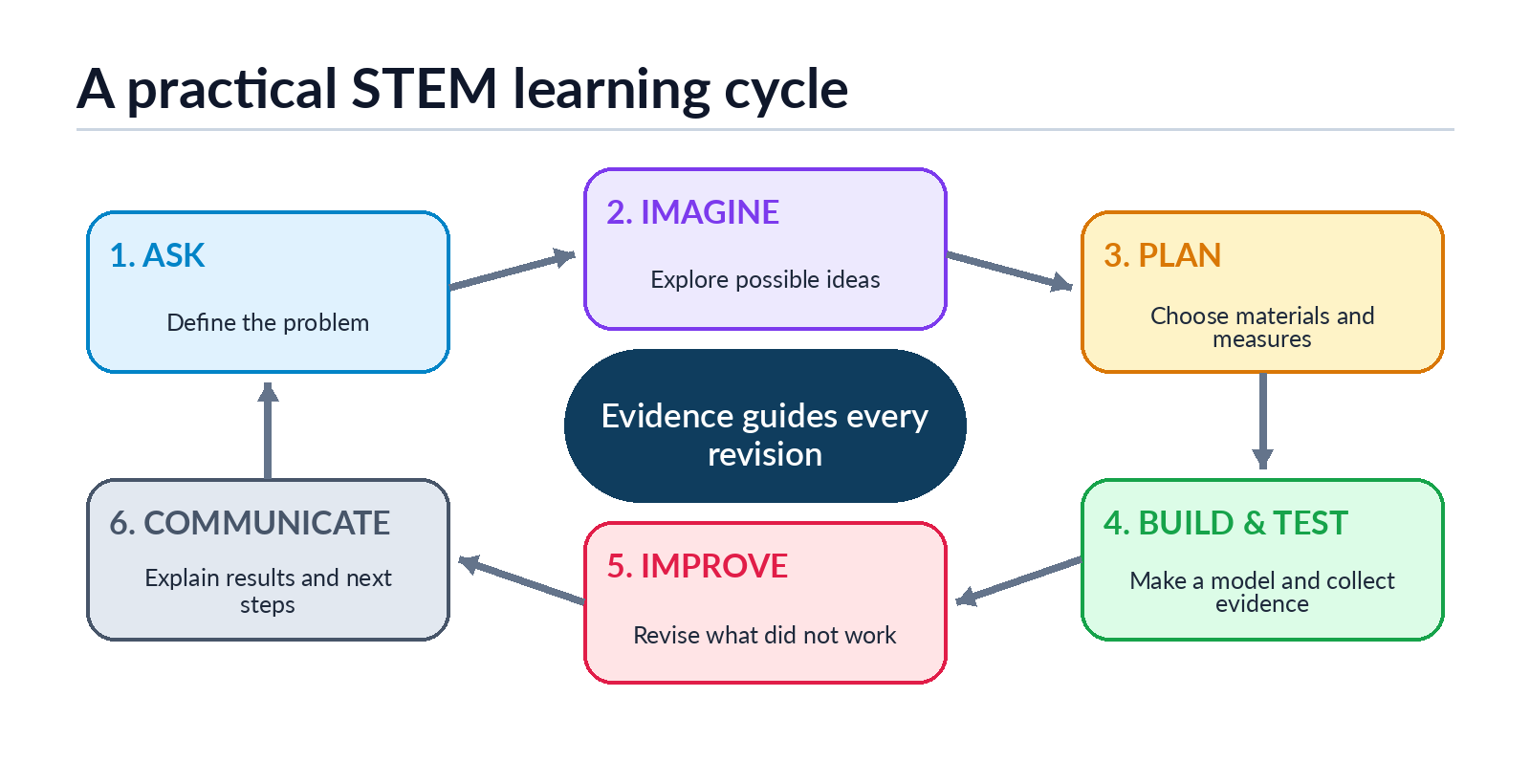
L'apprendimento STEM segue spesso un ciclo iterativo in cui le prove informano la revisione.
Questi principi trasformano l'apprendimento in un processo attivo. Gli studenti non aspettano che la conoscenza venga loro consegnata; praticano l'uso della conoscenza in situazioni che richiedono loro di pensare.
Perché l'Educazione STEM è Importante?
L'educazione STEM è importante perché offre agli studenti la pratica con il tipo di pensiero che utilizzeranno per tutta la vita. Imparano come affrontare compiti difficili, prendere decisioni con informazioni limitate e rimanere pazienti quando una soluzione necessita di revisione.
Aiuta anche gli studenti a comprendere che il fallimento è parte dell'apprendimento. Quando un modello di ponte crolla, un robot perde una linea o un esperimento sulla crescita dei semi produce risultati inaspettati, gli studenti hanno l'opportunità di chiedere perché. Quella domanda è spesso dove inizia la vera comprensione.
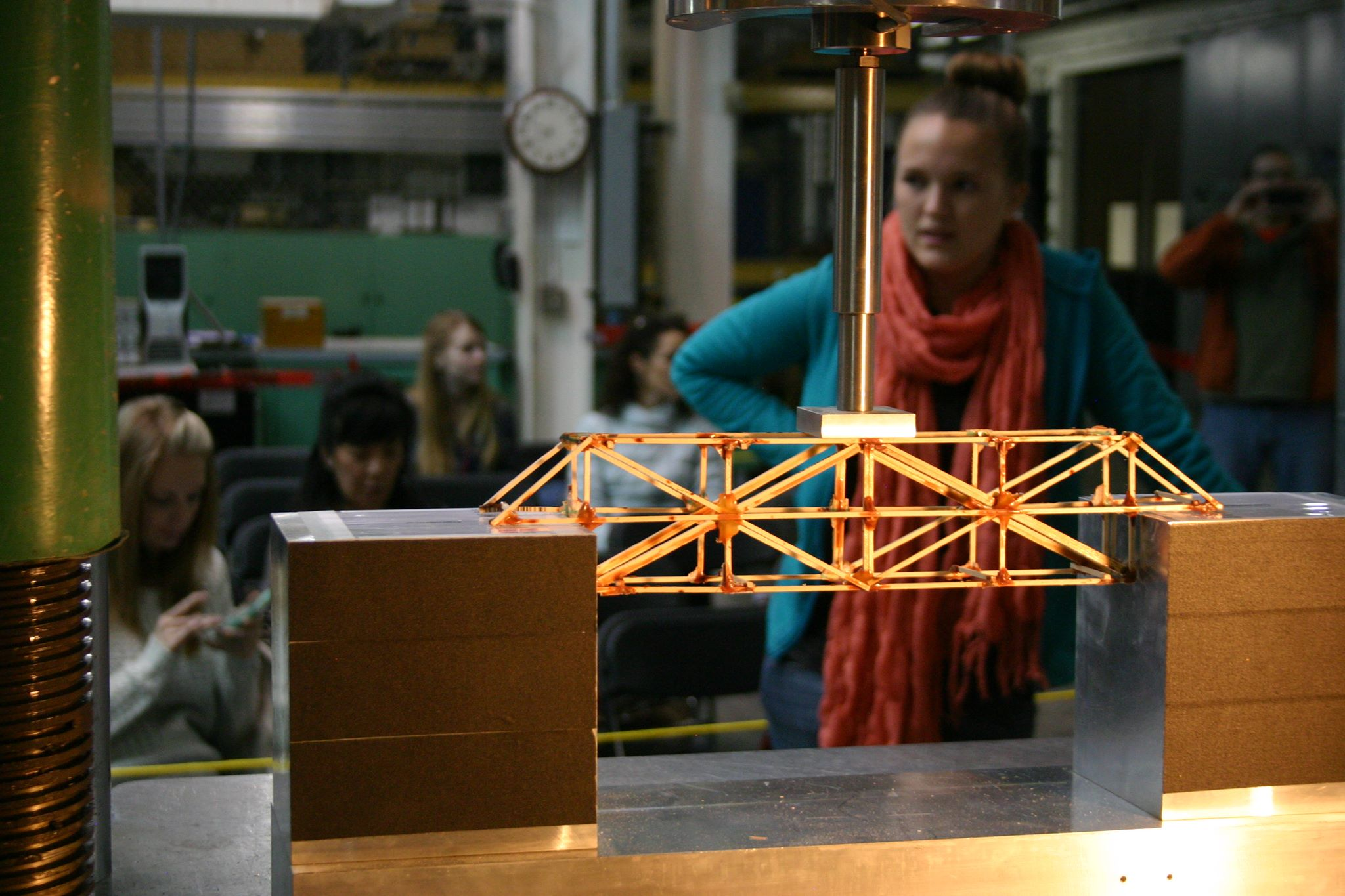
Un ponte studentesco viene testato sotto carico in una competizione di ingegneria delle scuole superiori, trasformando il fallimento e la revisione in prove visibili.
La STEM supporta anche la comunicazione. Gli studenti devono spiegare cosa hanno provato, cosa hanno notato e cosa cambierebbero. Nei progetti di gruppo, imparano ad ascoltare, condividere responsabilità e risolvere disaccordi senza perdere di vista l'obiettivo.
Per famiglie ed educatori, progetti pratici come kit di modelli meccanici o semplici sfide ingegneristiche possono rendere le idee astratte più tangibili. Offrono agli studenti un modo per vedere causa ed effetto nelle proprie mani.
Esempi del Mondo Reale di Apprendimento STEM
La STEM può apparire in molti tipi di attività scolastiche e domestiche. Progetti di codifica e robotica aiutano gli studenti a progettare istruzioni, testare sensori e regolare il loro lavoro quando il risultato non corrisponde al piano. Un robot che segue una linea o evita ostacoli può insegnare programmazione, progettazione, misurazione e pazienza allo stesso tempo.
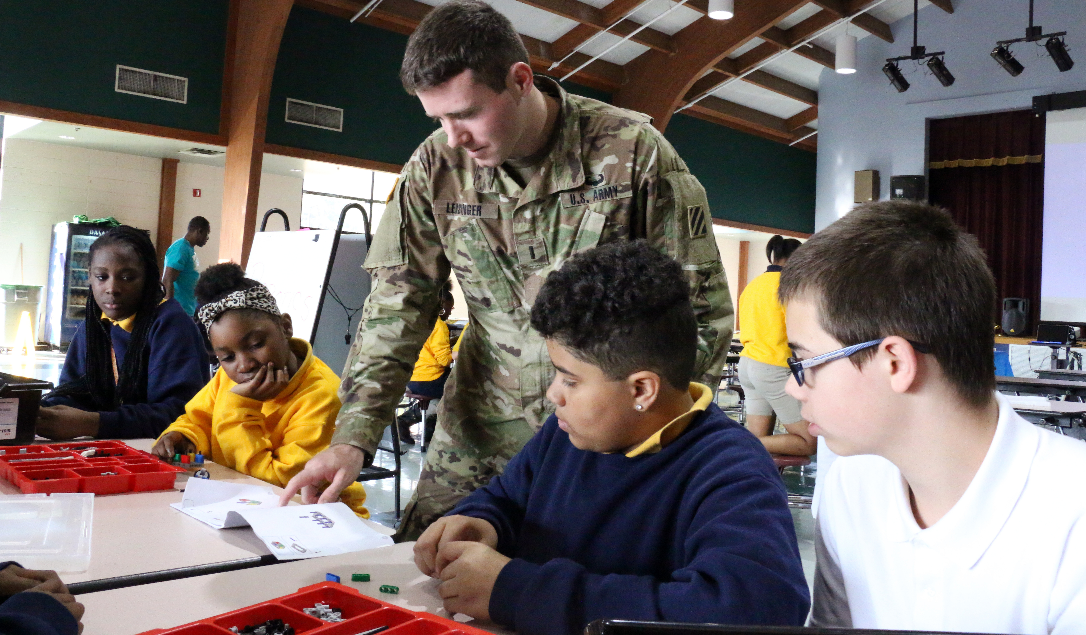
Gli studenti assemblano un'auto robotica LEGO durante un'attività STEM, combinando istruzioni, costruzione meccanica, lavoro di squadra e test.
Le sfide ingegneristiche sono un altro chiaro esempio. Gli studenti possono ricevere un set limitato di materiali e un compito, come costruire un ponte che possa sostenere peso o un veicolo alimentato da un semplice meccanismo. Pianificano, costruiscono, testano, misurano e riprogettano.
Gli esperimenti scientifici possono anche diventare più aperti. Invece di seguire passaggi solo per raggiungere un risultato noto, gli studenti potrebbero chiedere come la temperatura influisce sulla crescita dei semi, raccogliere dati, confrontare schemi e presentare ciò che hanno appreso.
La matematica diventa più pratica quando gli studenti la usano per prendere decisioni. Potrebbero allocare risorse per un progetto, monitorare le spese domestiche per comprendere il budget o leggere dati sportivi per confrontare le prestazioni. In ogni caso, i numeri diventano strumenti per il ragionamento.
Per un approccio basato sull'artigianato, puzzle di legno 3D possono supportare osservazione, sequenza, ragionamento spaziale e test accurati senza far sembrare l'esperienza un foglio di lavoro formale.
Comuni Malintesi sulla STEM
Un comune malinteso è che la STEM sia solo per studenti che vogliono diventare scienziati, ingegneri o programmatori. In realtà, le competenze STEM sono utili in molti campi. Un insegnante utilizza dati per comprendere i progressi degli studenti. Un imprenditore utilizza schemi per prendere decisioni. Un agricoltore può utilizzare la tecnologia per migliorare la pianificazione delle colture.
Un altro malinteso è che la STEM sia troppo difficile per i bambini piccoli. Una buona educazione STEM può iniziare con un gioco semplice. Impilare blocchi, confrontare forme, costruire una rampa o osservare le piante sono tutti primi passi verso il pensiero scientifico e ingegneristico.
Alcune persone presumono anche che la STEM non lasci spazio per la creatività o le abilità sociali. Un forte apprendimento STEM fa l'opposto. Gli studenti immaginano design, presentano le loro idee, lavorano con gli altri e apprendono che una soluzione utile spesso richiede sia il pensiero tecnico che la comunicazione umana.
Il Futuro dell'Educazione STEM
Man mano che la tecnologia cambia il modo in cui le persone vivono, lavorano e apprendono, l'educazione STEM continuerà a crescere in importanza. Campi come la robotica, la biotecnologia, l'energia rinnovabile, la scienza dei dati e l'intelligenza artificiale stanno cambiando le competenze che gli studenti potrebbero aver bisogno in futuro.
L'alfabetizzazione digitale sta diventando parte della vita quotidiana. Gli studenti hanno bisogno di più di un uso base del computer; devono valutare attentamente le informazioni, proteggere la loro privacy, utilizzare strumenti digitali in modo responsabile e comprendere come la tecnologia influisce sulle decisioni.
L'educazione STEM sta anche diventando più interattiva. Gli studenti possono utilizzare simulazioni, laboratori virtuali, strumenti collaborativi e risorse di apprendimento basate su progetti che li aiutano a esplorare idee in modi diversi.
Molti educatori ora collegano la STEM con arte, lingua e design, spesso chiamata STEAM. Questo approccio più ampio riconosce che creatività e abilità tecniche possono rafforzarsi a vicenda. L'articolo di ROKR su apprendimento STEM attraverso kit di modelli di animali 3D è un esempio di come la costruzione pratica possa rendere la scienza e l'ingegneria più facili da vedere.
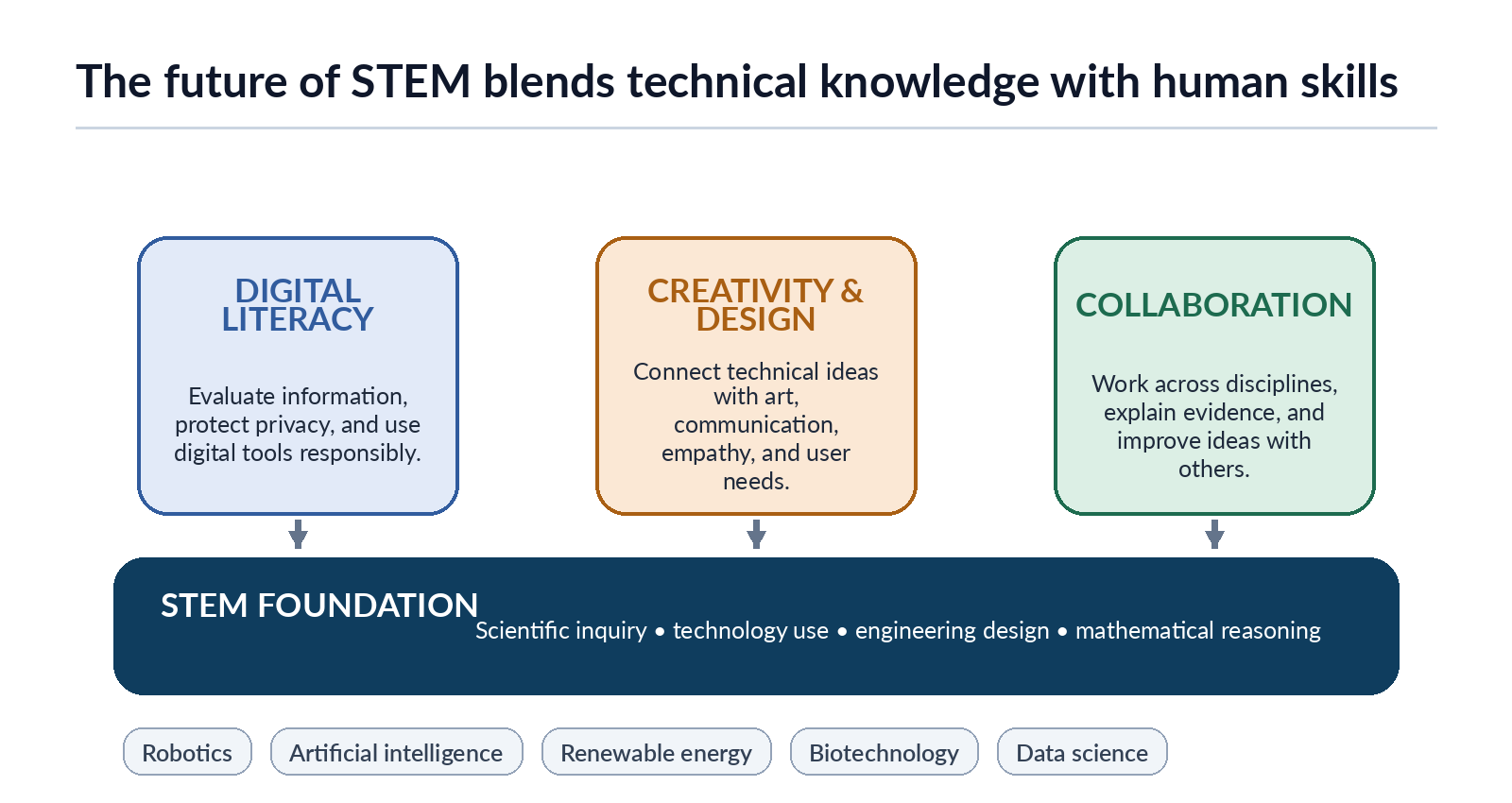
L'educazione STEM pronta per il futuro aggiunge alfabetizzazione digitale, creatività e collaborazione a una solida base tecnica.
Conclusione
L'educazione STEM riunisce scienza, tecnologia, ingegneria e matematica in modo pratico. Aiuta gli studenti a superare la memorizzazione delle informazioni e a utilizzare la conoscenza per risolvere problemi, testare idee e comprendere il mondo che li circonda.
Il suo valore non è limitato a carriere tecniche future. La STEM costruisce abitudini che aiutano le persone ad adattarsi, porre domande migliori, lavorare con gli altri e contribuire alle loro comunità. Un esperimento in aula, un compito di codifica, una sfida di design o una costruzione pratica possono tutti diventare punti di ingresso in un pensiero più forte.
Nel suo migliore, l'educazione STEM dà agli studenti il permesso di essere curiosi. Insegna loro che l'apprendimento non riguarda solo ottenere la risposta giusta, ma osservare attentamente, provare con attenzione e migliorare ad ogni tentativo.
FAQ sull'Educazione STEM
La STEM è solo per carriere tecniche?
No. La STEM supporta la risoluzione dei problemi, la consapevolezza dei dati, la comunicazione e il ragionamento pratico, che sono utili in molte carriere e decisioni quotidiane.
I bambini piccoli possono imparare la STEM?
Sì. I bambini piccoli possono iniziare con un gioco semplice, costruendo, ordinando, misurando, osservando la natura e ponendo domande su come funzionano le cose.
Come possono le famiglie supportare la STEM a casa?
Le famiglie possono invitare i bambini a costruire, misurare, confrontare, riparare, giardinare, cucinare, monitorare osservazioni e discutere perché un risultato...È successo.