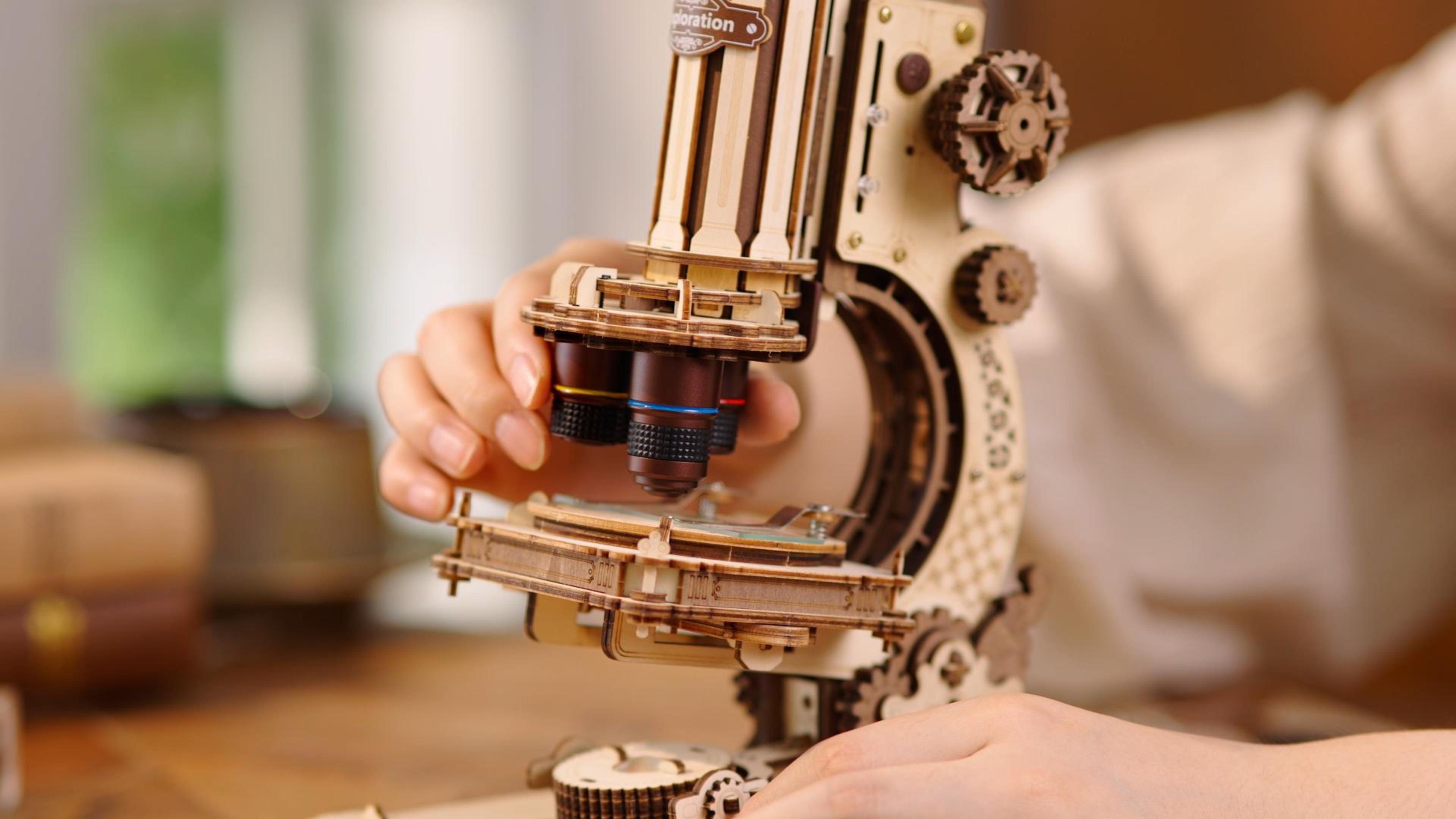
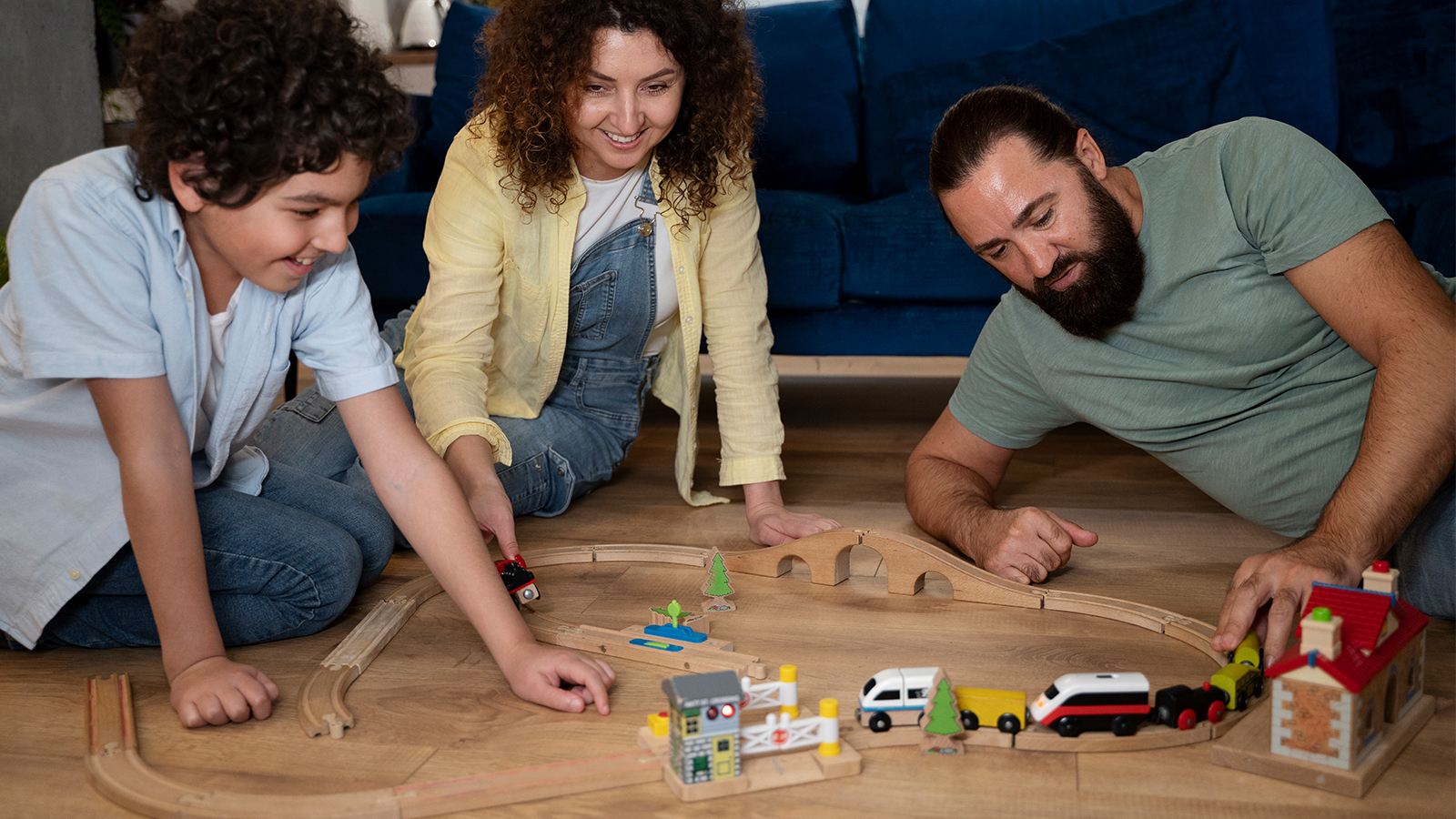
Less screen time does not have to mean a stricter house or a long list of banned apps. For many families, the better question is simpler: what can we do together that gives everyone something real to touch, test, and talk about?
That is where at-home STEM activities can help. STEM is not only a school subject. It is a way of noticing how things work, making a prediction, trying an idea, and improving it after something goes wrong. If your family has already explored what STEM education means, the next step is bringing that thinking into ordinary afternoons at home.
A good screen-free STEM activity does not need to look like a lesson. It can start with a marble, a pendulum, a gear, a folded paper bridge, or one curious question at the kitchen table.
Why Less Screen Time Works Better With a Replacement
Families often talk about reducing screen time as if the main goal is taking something away. In practice, it works better when the replacement is concrete. A shared build gives hands a job. A small experiment gives curiosity a direction. A model on the table gives the family something to return to after dinner, homework, or weekend errands.
The strongest at-home STEM activities usually have three qualities: they are easy to start, they make cause and effect visible, and they invite conversation. The activity does not need to be complicated. It only needs enough structure for someone to ask, "What do you think will happen if we change this?"
- Hands first Choose activities where family members move, sort, balance, build, sketch, or test something physically.
- Small questions Begin with one question instead of a lecture, such as why a marble speeds up or why a pendulum keeps swinging.
- Visible results Favor projects where a change in angle, weight, order, or structure creates an outcome everyone can see.
- Shared pace Let the activity fit the evening rather than forcing the family to finish everything at once.
Start With One Question, Not a Lesson
The easiest way to make STEM feel natural at home is to begin with a question that sounds like normal conversation. You do not need to announce a science unit. You can ask which tower will stand longer, which route will make a marble travel farther, or what shape makes a paper bridge stronger.
For younger builders, the adult can handle pacing and small parts while everyone still gets to predict, observe, and explain. For older kids, teens, and adults, the challenge can become more open-ended: improve the design, make a failure log, compare two approaches, or explain the finished build to someone else.
| At-home STEM idea | What the family practices | Simple conversation prompt |
|---|---|---|
| Marble run or track test | Gravity, speed, friction, cause and effect | Which change made the marble move differently? |
| Pendulum or balance toy | Motion, rhythm, balance, repeated observation | What changes when the starting push is smaller? |
| Mechanical animal build | Biomimicry, linked motion, structure, patience | How does nature inspire the mechanical design? |
| Paper bridge or tower | Load, shape, stability, redesign | Which part failed first, and how could we strengthen it? |
Build a Marble Run and Watch Motion Happen
A marble run is one of the clearest screen-free STEM activities because the result is immediate. The marble either moves smoothly, slows down, gets stuck, drops too quickly, or needs a better route. That makes it easy for the family to talk about gravity, slope, friction, timing, and track design without turning the moment into a formal lesson.
The ROKR Marble Run collection is useful for this kind of family activity because the models are built around moving tracks and gear-driven mechanisms. The family can pause during the build to predict how a section will work, then test the finished route and compare what actually happens.
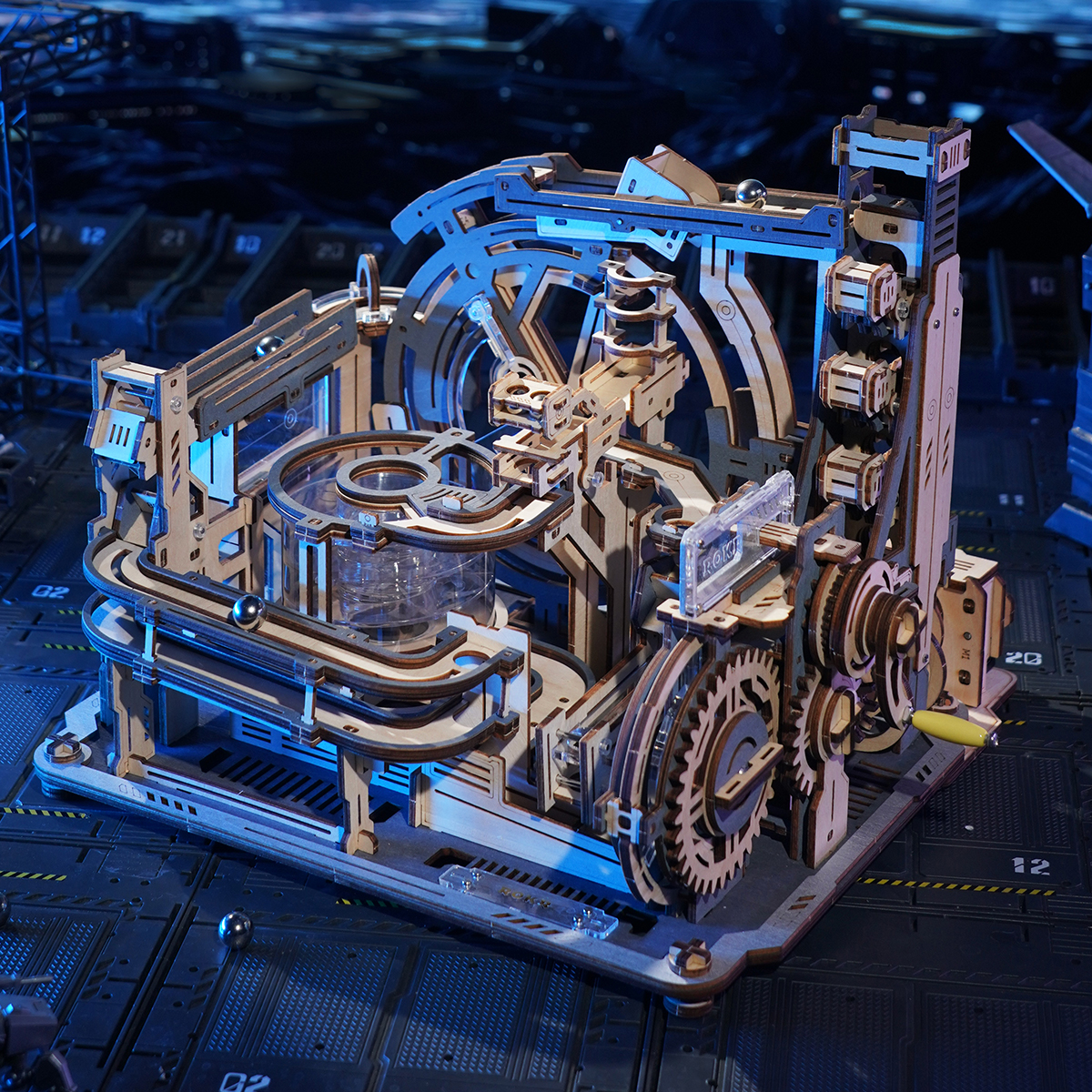
Try this family test: before running the marble, ask everyone to predict the fastest section and the section most likely to slow it down. After the test, compare the prediction with what happened.
Try a Pendulum Challenge for Balance and Rhythm
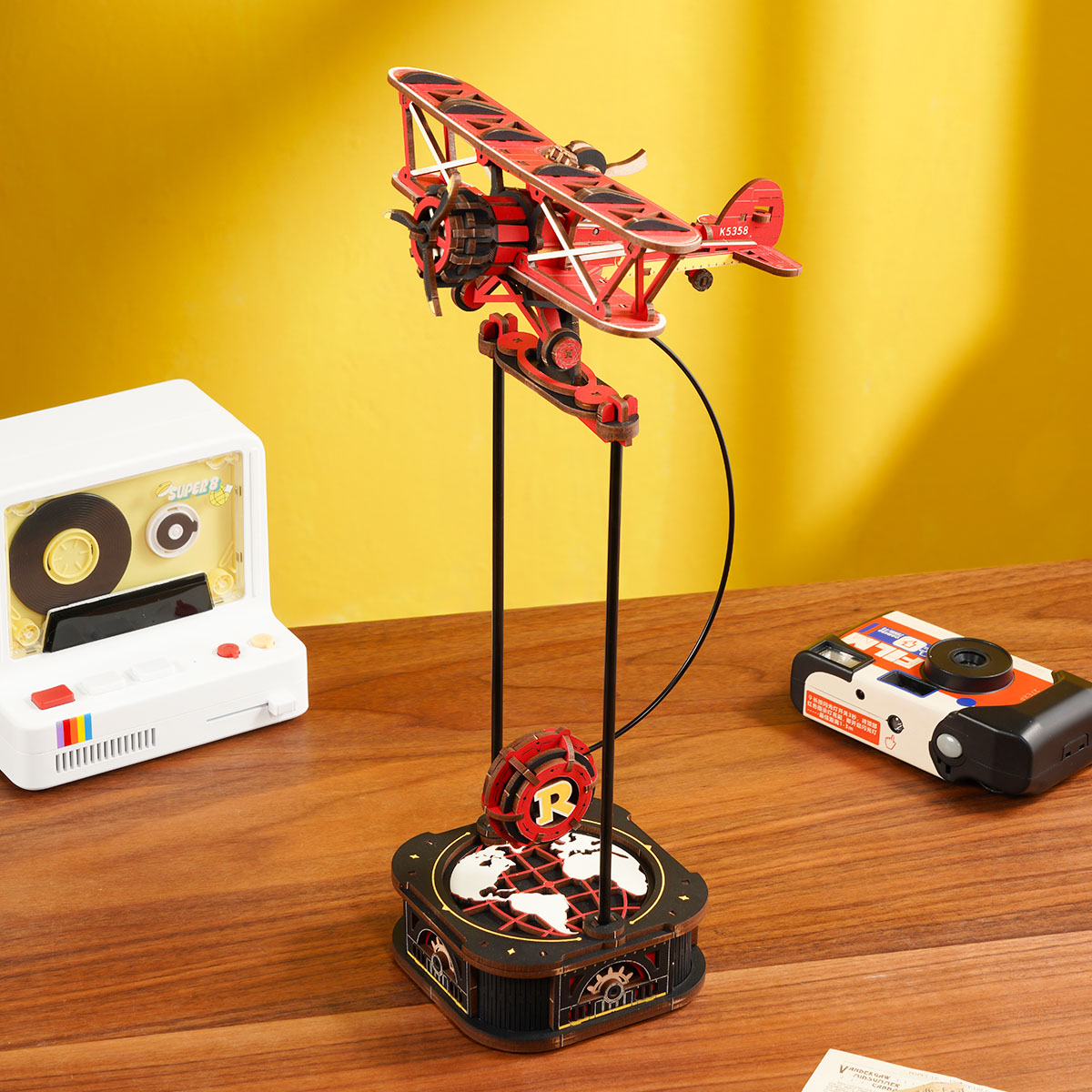
Pendulum activities are quiet, simple, and surprisingly good for family observation. A small push creates motion, and repeated watching helps everyone notice rhythm, balance, starting height, and the way energy changes over time.
The Gravity Swing series fits this idea well because the kits are built around gravity-powered swinging and balance. A model such as ROKR Sky Captain MCD01 gives families a playful object to assemble first, then observe as a desktop motion experiment.
Turn Animal Movement Into a Mechanical Build
Another strong at-home STEM direction is biomimicry: looking at nature, then asking how a mechanical design borrows from it. Animal-inspired models can make that question feel tangible because families can compare real movement with linked parts, gears, fins, wings, or body shape.
ROKR's Mechanical Models collection is a natural place to look when the family wants a build with movement and display value. For a more focused animal angle, the existing guide to 3D animal model kits for STEM learning can help connect the idea of animal movement with engineering curiosity.
.jpeg?w=1200&h=1200)
Make Testing Visible With a Family STEM Log
A family STEM log does not need to be formal. One notebook page is enough. Write down the question, the prediction, the test, and the result. The goal is not to make the activity feel like homework. The goal is to show that a failed guess can be useful evidence.
This habit is especially helpful for screen-free time because it gives the activity a beginning, middle, and ending. Instead of drifting from one idea to another, the family can point to what changed and what they learned.
- Ask one testable question before the activity starts.
- Make a quick prediction and let everyone give a reason.
- Build or adjust one part of the project.
- Test it once, then test it again after one small change.
- Write the result in one sentence and decide what to try next time.
A Simple Screen-Free STEM Plan for the Weekend
If your family wants less screen time but does not want a complicated schedule, choose one activity and build the weekend around it. A single project can create several small STEM moments if you spread it across planning, building, testing, and display.
Friday: Choose the Project and Make a Prediction
Pick one project that matches the family's energy level. A paper bridge works for a quick start. A marble run, pendulum toy, or mechanical model works better when the family wants a longer build. Before opening the kit or gathering materials, ask what everyone expects to happen.
Saturday: Build Slowly Enough to Notice
Let the build breathe. Pause when a mechanism appears, when two pieces depend on each other, or when the instructions ask for careful alignment. Those pauses are where STEM thinking often happens: how does this part affect the next part?
Sunday: Test, Explain, and Display
Run the marble, push the pendulum, compare the animal model with a real creature, or retest the paper bridge. Then ask one person to explain what changed from prediction to result. A finished build can stay on display as a reminder that the family made something together instead of only watching something apart.
FAQ
Are STEM activities only for kids?
No. The best at-home STEM activities can involve children, teens, and adults at different levels. One person may assemble, another may predict, and another may test or explain the result.
How long should an at-home STEM activity take?
It can take ten minutes or several evenings. A quick paper structure test is enough for a weekday, while a mechanical model or marble run can become a longer weekend project.
What if the family does not finish a kit in one sitting?
That can be part of the benefit. Stopping after a clear step gives the family a reason to return, review what was built, and continue with more patience the next time.
Screen-free STEM works best when it feels like family life, not extra homework. Start small, ask better questions, test what you can see, and let a finished build become proof that curiosity can live on the table, not only on a screen.