
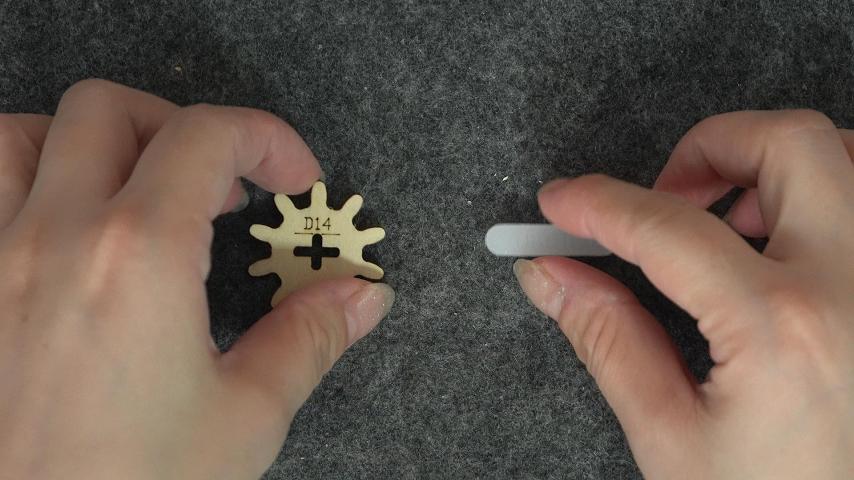
Remember the excitement of getting your first 3D wooden puzzle? You probably dove right in, connecting piece after piece until it all came together. The result looked great — until the gears squeaked or the drawers stuck.
That’s because your puzzle missed a little spa treatment. Just a few minutes of sanding and waxing at the start can completely transform how smoothly everything fits and moves.
Quick takeaway: sanding is for removing tiny rough edges, while waxing is for reducing friction on moving parts. Use both lightly, and always follow the lubrication marks in your manual.
Why Sanding and Waxing Matter
Many beginners don’t realize how important these two simple steps are. At first, sanding and waxing might sound like extra work — but they’re actually the secret to a flawless build.
3D wooden puzzles are laser-cut with sharp, precise edges and tight joints. While this gives them perfect alignment, it also means friction can build up once the model is assembled. That’s when squeaks, stiffness, or even breakage can occur.
A quick sanding smooths out the tiny burrs left from cutting. A touch of wax on the moving parts — like gears or sliders — reduces resistance and helps everything glide effortlessly. Together, they make your puzzle run beautifully once completed.
Tools You Need for Sanding and Waxing
You don’t need to set up a full-on carpenter’s workshop to sand and wax your puzzle. A tiny toolkit will do the job. Here’s your starter pack:
- Fine-Grit Sandpaper: Perfect for removing rough edges and smoothing surfaces. (One sheet of sandpaper is included in your ROKR kit!)
- Cotton Swabs or Small Brushes: For reaching tight spots like gears or joints.
- Microfiber Cloth: Ideal for buffing and getting that clean, smooth finish.
- Wax or Substitute: The kit does not include wax, but you can easily prepare some yourself. Regular beeswax works great — and even a birthday candle can serve as a handy substitute.
- Optional: A nail file or emery board — a convenient tool for stubborn or delicate spots.
Keep this kit handy, and suddenly sanding and waxing will stop being the “extra work” and become part of the fun. It’s like setting up a little puzzle spa station.
Best Waxes For 3D Puzzles
For 3D wooden puzzles, you need a specific kind of polish or wax. If you ever use oily sprays or furniture polish, those can damage the wood or gum up the works. So the best kinds to use are:
Avoid oily sprays: furniture polish and oily lubricants can stain wood, collect dust, or gum up tight mechanisms. If you are unsure, test on spare material first and use the smallest amount possible.
| Wax option | Best use | What to watch |
|---|---|---|
| Beeswax | Everyday gears, sliders, and joints | Use a very light rub and buff off excess. |
| Petroleum jelly | Emergency substitute for moving parts | Apply sparingly so it does not attract dust. |
| Wood lubricant | Complex models with more moving sections | Choose dry or silicone-based options and avoid soaking the wood. |
| Lube stick | Clean, compact model-kit lubrication | Still test first and avoid over-application. |
Beeswax
Beeswax is the natural favorite and the top choice of puzzle enthusiasts for 3D wooden puzzles. It's very easy and safe to handle and gives you just the right kind of slip without the grease. A light little rub on your gears and sliding joints is all you need to stop those squeaks and reduce the friction.
Petroleum Jelly
The thing about petroleum jelly is that it's really handy. Petroleum jelly or Vaseline in a pinch, used on the moving part, is very effective in reducing the squeaks and helping the gears turn without any resistance.
Wood Lubricant
Usually, silicone-based or dry, these lubricants effectively reduce friction and give your 3D wooden puzzles a professional finish. These are the best for the complex puzzles, though they may cost you a bit extra.
Lube Stick
You can also get lube sticks, which are compact and easy-to-use blocks of wax from the market. These are convenient, fuss-free, and clean, made just for the puzzles and model kits.
The Sanding and Waxing Process
- Remove the piece carefully. Press or cut it out cleanly so the edge is not torn.
- Sand only the rough areas. Use a few gentle strokes, especially on moving or visible edges.
- Apply wax only where needed. Focus on gears, hinges, sliders, and the parts marked in the manual.
- Wipe away excess. A soft cloth keeps the part clean and prevents buildup.
- Test the movement. Check the mechanism before closing it inside the model.
Sanding comes first. Gently smooth the edges of each piece as you remove it from the board — especially those that will move or show on the final build. You’re not reshaping the wood, just softening roughness. It’s quick, relaxing, and helps you get familiar with every piece before assembly.
Next is waxing. Apply a thin layer of wax or lubricant to moving areas like gears, hinges, and sliders. A little goes a long way. Afterward, wipe away any excess with a soft cloth. Done correctly, you’ll notice how effortlessly the parts move together.
Assembling Your 3D Wooden Puzzle
This is where all the prep pays off.
Once sanded and waxed, your puzzle pieces will slide and click together easily — no forcing, no squeaks, no frustration. Each turn feels satisfying, almost mechanical, like assembling a small work of art.
It’s important to note that our instruction manuals clearly indicate which specific parts require lubrication. Always follow those markings rather than guessing — not every piece needs waxing, and using too much wax can have the opposite effect.
Builder tip: if a part feels tight, stop and inspect the edge before forcing it. A few careful sanding strokes are safer than pushing until a tab bends or breaks.
Tips to Get the Best Sanding and Waxing Results
Sanding and waxing may seem quite simple steps, but here are a few tips and tricks that can help you get them right the first time.
- Practice sanding and waxing on the extra or spare wooden pieces first.
- Remember, sanding isn't about grinding wood. It’s about knocking off tiny burrs. Just a few light strokes will do the trick. If you go too far, you may risk loosening the fit.
- Sand and wax each piece right after removing it from the board. (Not all puzzle pieces need waxing; follow the manual closely to identify parts that must be waxed.)
- Keep the puzzle pieces away from direct sunlight and damp corners in the house; for more long-term care advice, see our guide to storing your 3D wooden puzzle.
- If you run out of wax, a small birthday candle works perfectly in its place.
FAQ
Do all 3D wooden puzzle pieces need wax?
No. Wax only the moving parts or the areas marked for lubrication in the manual. Waxing every piece can create residue and reduce fit quality.
Can I sand too much?
Yes. Sanding should remove tiny burrs, not reshape the part. Too much sanding can loosen tabs and make joints less secure.
What can I use if my kit does not include wax?
Beeswax is a reliable choice, and a small birthday candle can work as a simple substitute when used lightly.
Should I wax before or after assembly?
Wax moving parts as directed during assembly. It is easier to reach gears, hinges, and sliders before the mechanism is fully enclosed.
Wrap Up
Once you get in the practice of sanding and waxing, you’ll see it's not an extra step. It’s the prep that makes the whole experience so satisfying.
Instead of fighting with stiff joints and squeaking gears, you can literally glide through the process and smoothly click and turn every piece. When you’ve finally perfected the masterpiece, proudly display it on your shelf as a project you perfected.
Cut the puzzle drama with a dab of sand and wax today, and check out a wide range of 3D wooden puzzle options at ROKR today.