
A practical beginner checklist for choosing easy 3D puzzle kits with confidence.
The 3D puzzle hobby has grown far beyond a niche craft. You might have seen finished models on social media, watched build videos online, or noticed a puzzle kit in a local gift shop and thought, "Could I actually build that?" If you are curious but do not want your first project to feel overwhelming, the answer is to choose the kit with the right kind of challenge.
A good beginner kit is not always the smallest box on the shelf. It is a kit with clear instructions, manageable parts, a satisfying finished result, and a difficulty level that lets you learn without feeling lost. Use this guide as a simple buying checklist before you pick your first ROKR or Rowood project.
What Makes a 3D Puzzle Beginner-Friendly?
Product pages and kit boxes usually give you several clues before you start building. For beginners, the most useful details are piece count, difficulty rating, estimated build time, recommended age, and whether the model includes gears, motors, wiring, or lighting. None of these signals should be judged alone. The best first kit is the one where the signals work together.
| Signal to Check | Beginner-Friendly Range | Why It Matters |
|---|---|---|
| Piece count | Often around 200 pieces or fewer, with simple exceptions | Fewer parts usually means less sorting, less fatigue, and an easier first win. |
| Difficulty rating | Easy or beginner-friendly | The rating usually reflects more than size, including part shape, fit, sequence, and precision. |
| Estimated build time | A few hours or less for a first project | A shorter build helps new builders stay relaxed and finish while motivation is high. |
| Mechanism type | Static display, simple motion, or gentle gravity-based movement | Beginners can learn alignment and pressure control before moving into complex gears or circuitry. |
| Instructions and part labels | Clear illustrated manual and labeled laser-cut sheets | Good instructions reduce guessing, which is where many first-build frustrations begin. |
| Finished use | Desk decor, flower display, wall art, or playful moving toy | A model you want to display gives you more reason to slow down and enjoy the process. |
As a first-timer, it is smart to avoid kits with complicated circuitry or advanced mechanical assemblies until you understand how wooden pieces release from the board, how tightly they should fit, and when light sanding is helpful. You do not need to avoid movement altogether, though. A simple pendulum or display model can still feel lively without asking you to tune a demanding mechanism.
Beginner Mistakes to Avoid
The easiest way to enjoy your first kit is to choose for confidence, not just ambition. A dramatic model might look tempting, but the first build should teach you the rhythm of assembly.
- Do not choose the biggest model first. Large kits can be wonderful later, but beginners usually learn faster from a smaller project they can complete comfortably.
- Do not judge by piece count alone. A 200-piece kit with moving parts may be harder than a similar-size decor kit with repeated, simple layers.
- Do not ignore reviews and finished photos. Builder comments can reveal whether a kit feels straightforward, delicate, or more precise than expected.
- Do not rush part removal. Push pieces out gently, keep tiny parts organized, and sand only when the manual or fit suggests it.
- Do not start with complex motors or dense gear trains. Save those for when you already know how much pressure, alignment, and patience the hobby asks for.
Easy ROKR Kits Worth Considering
ROKR and Rowood both offer approachable projects for new builders, from decorative flowers to playful pendulum toys. Instead of treating these as a strict ranking, think of them as different first-build personalities.
Bloom Craft
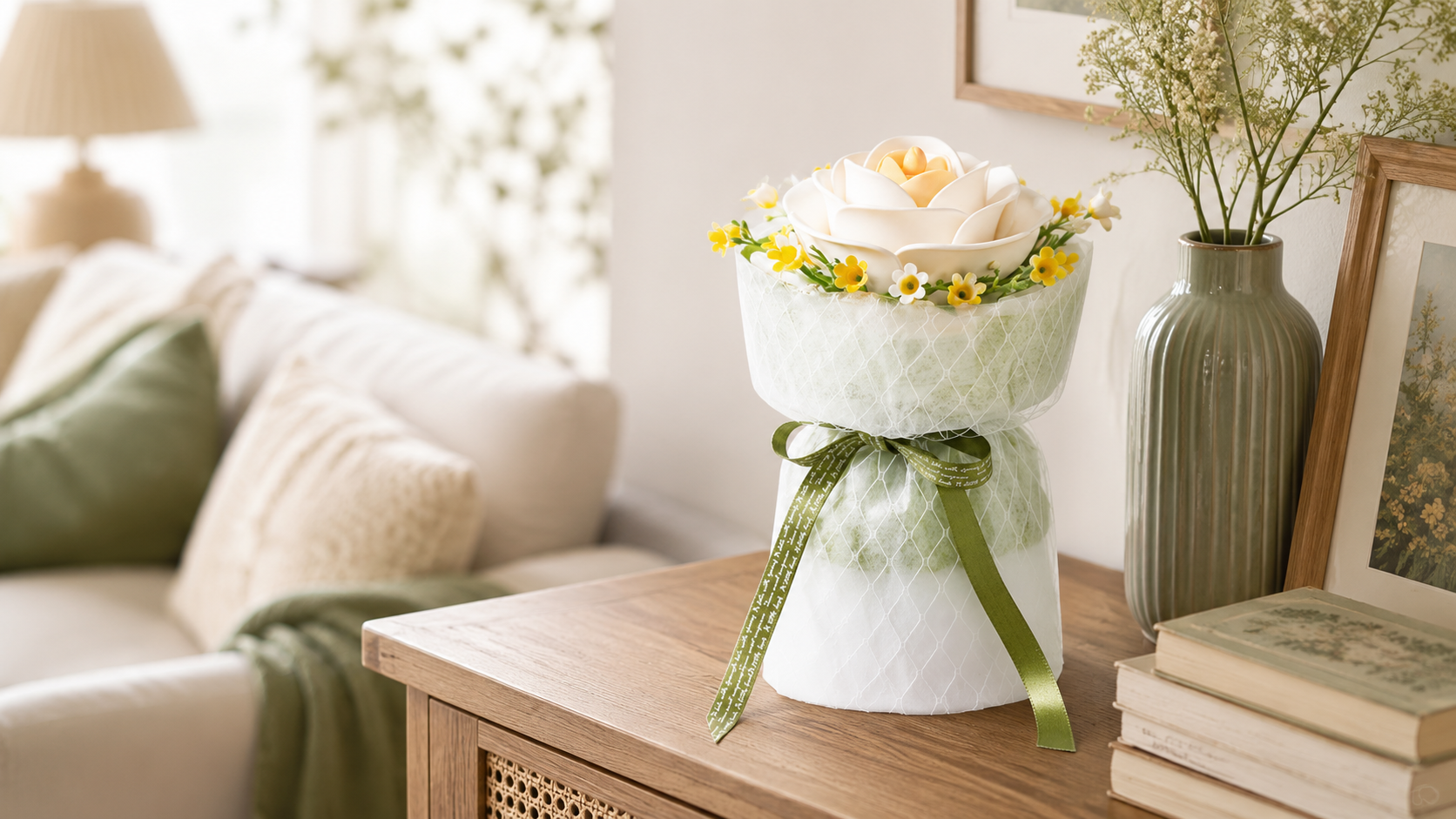
If you like nature, flowers, or relaxing decor, the Bloom Craft style is one of the gentlest starting points. Beginner-friendly flower models such as ROKR White Camellia AF011, Rowood Pink Dahlia TW131, and Rowood Purple Iris TW121 are usually more about shaping, layering, and display than complicated motion. Many are around 100 pieces or fewer, so they give beginners a clear sense of progress.
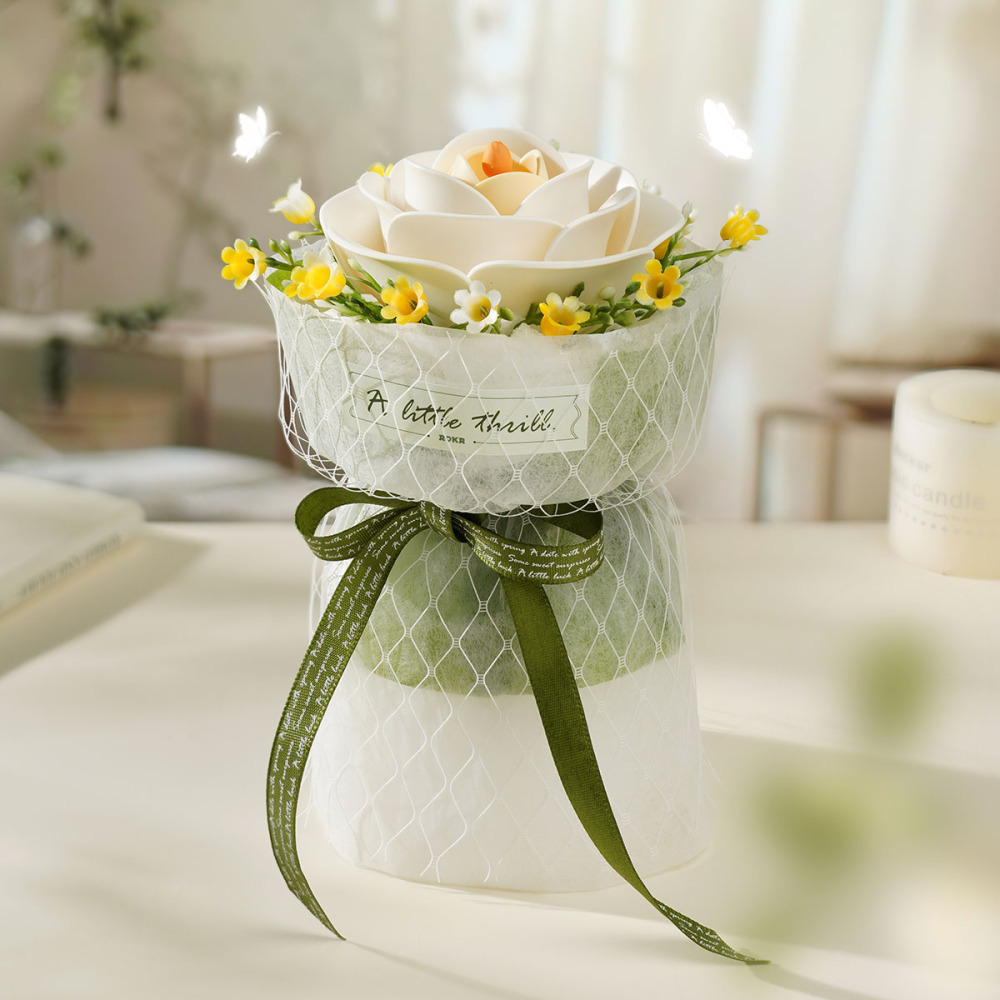
Other flower options, including ROKR Purple Rose Bouquet AF021, Rowood Poinsettia TF001, Rowood Red Carnation TW052, Rowood Pink Rose TW041, and Rowood Pink Tulip TW082, can also work well when you want a decorative project with a softer learning curve. Browse the flower collection if your ideal first kit is something you can place in a vase, on a shelf, or beside a desk lamp.
Gravity Swing Series
The Gravity Swing series is a friendly introduction to movement. These colorful pendulum toys do not rely on motors, batteries, or complex mechanical systems. Instead, they use gravity to create a swinging motion, which makes them approachable for beginners and fun for young STEM learners.
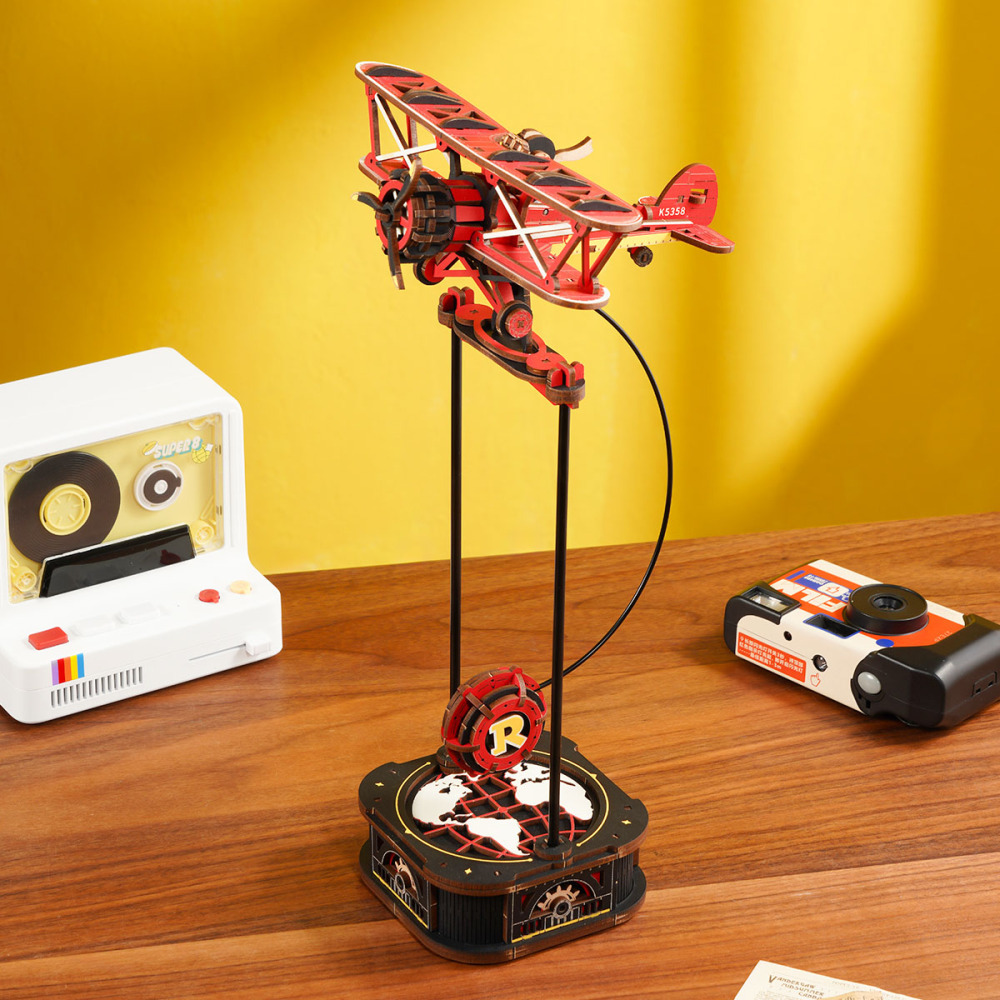
The collection includes Sky Captain MCD01, Road Tripper MCD03, Ocean Fisher MCD02, and Santa on Skis MCD06. They suit builders who want a playful desk display and a small taste of physics without jumping into a full mechanical model.
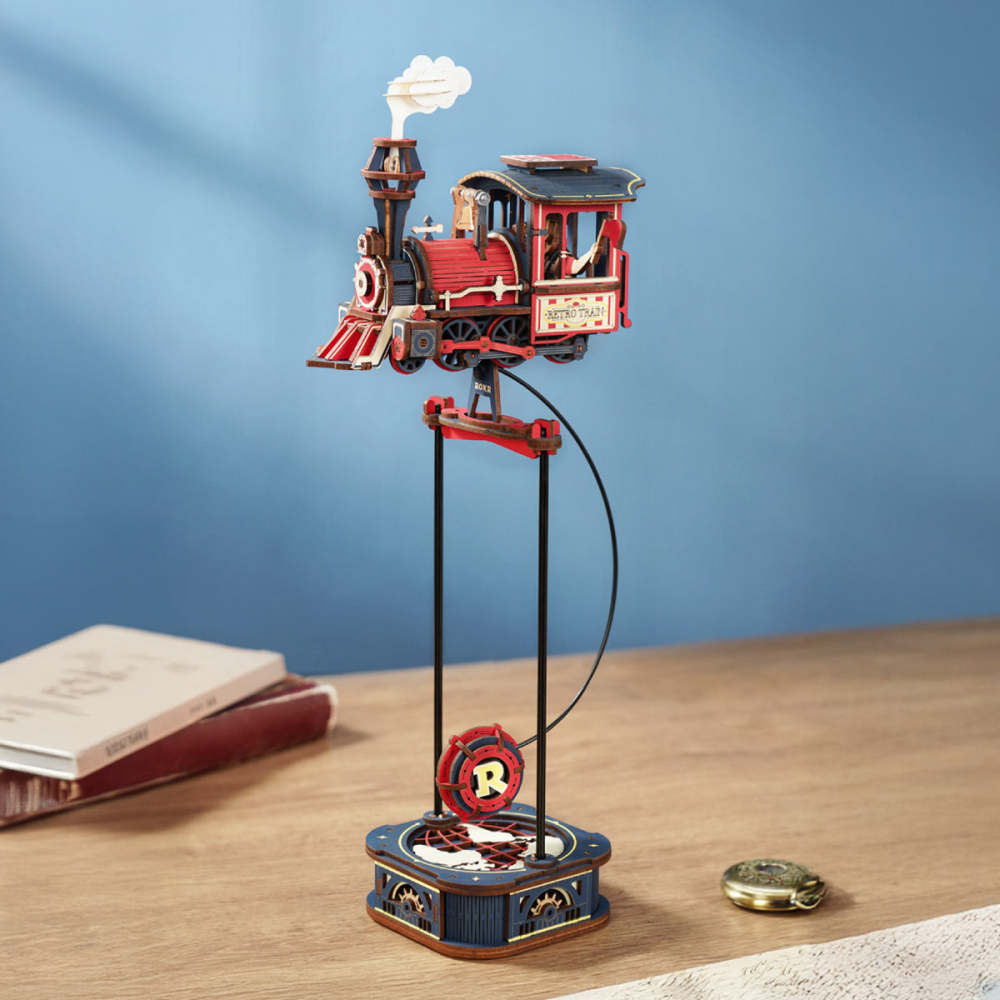
Power Express MCD07 is a useful example of reading the whole checklist, not just the piece count. Its 2/5 difficulty rating and estimated 3-hour assembly time point to an approachable project that still deserves an unhurried session. A gentle push sets the vintage train rocking, with no motor or electrical setup to manage.
For builders drawn to a nautical scene, Lucky Trawler MCD08 offers the same 2/5 difficulty rating and estimated 3-hour build. Its snap-fit assembly needs no glue, and a gentle push starts the boat rocking. Both kits fit the simple-motion step in the learning path below, with time to check fit and balance as you go.
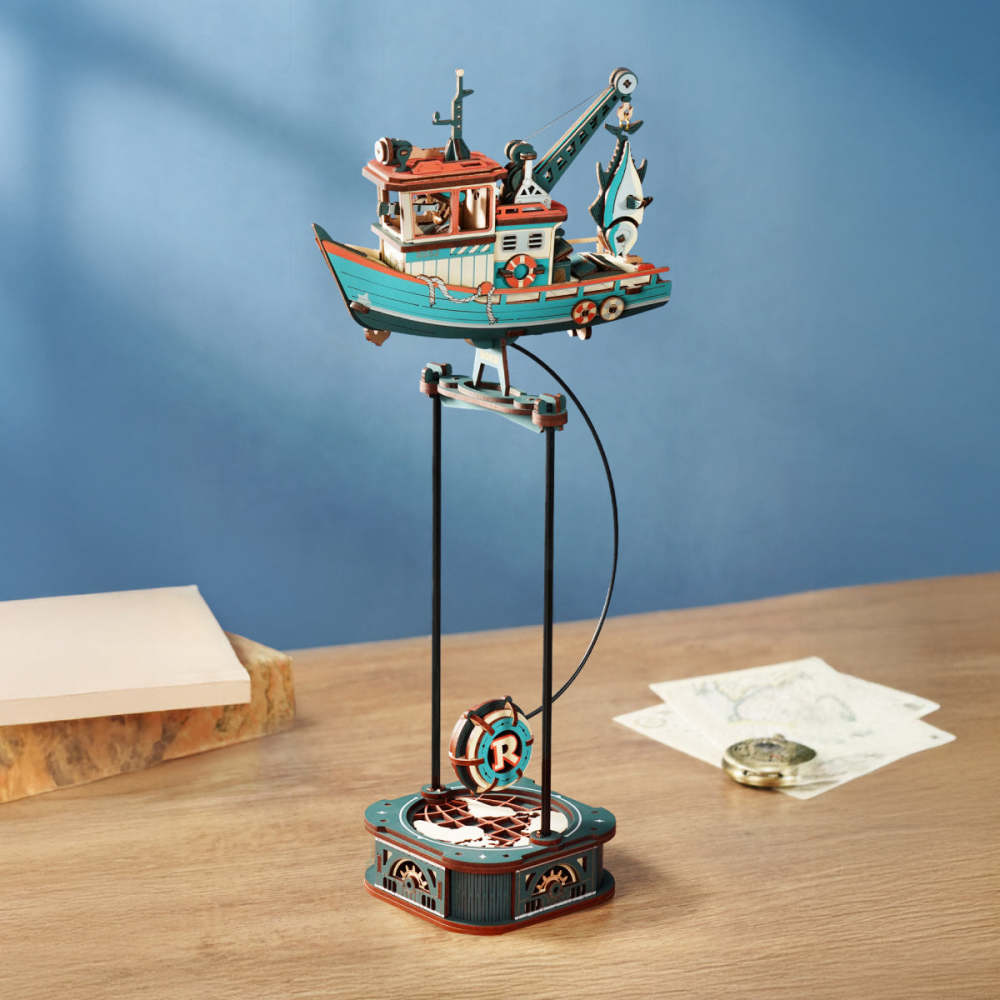
Plan for the finished model, too. Power Express stands about 38 cm tall and Lucky Trawler about 36 cm. Allow clear space around the moving parts, and treat the 3-hour estimate as a guide: a first build may take longer. If you want a shorter session, one of the small static models elsewhere in this guide may be a better match.
Rowood Wooden Wall Art Series
If you want something that feels more like home decor, Rowood Wooden Wall Art kits are a good beginner-plus choice. They are framed, layered scenes inspired by classic paintings, and the LED element is usually more approachable than it sounds because the lighting is handled with simple strip placement rather than complicated wiring.
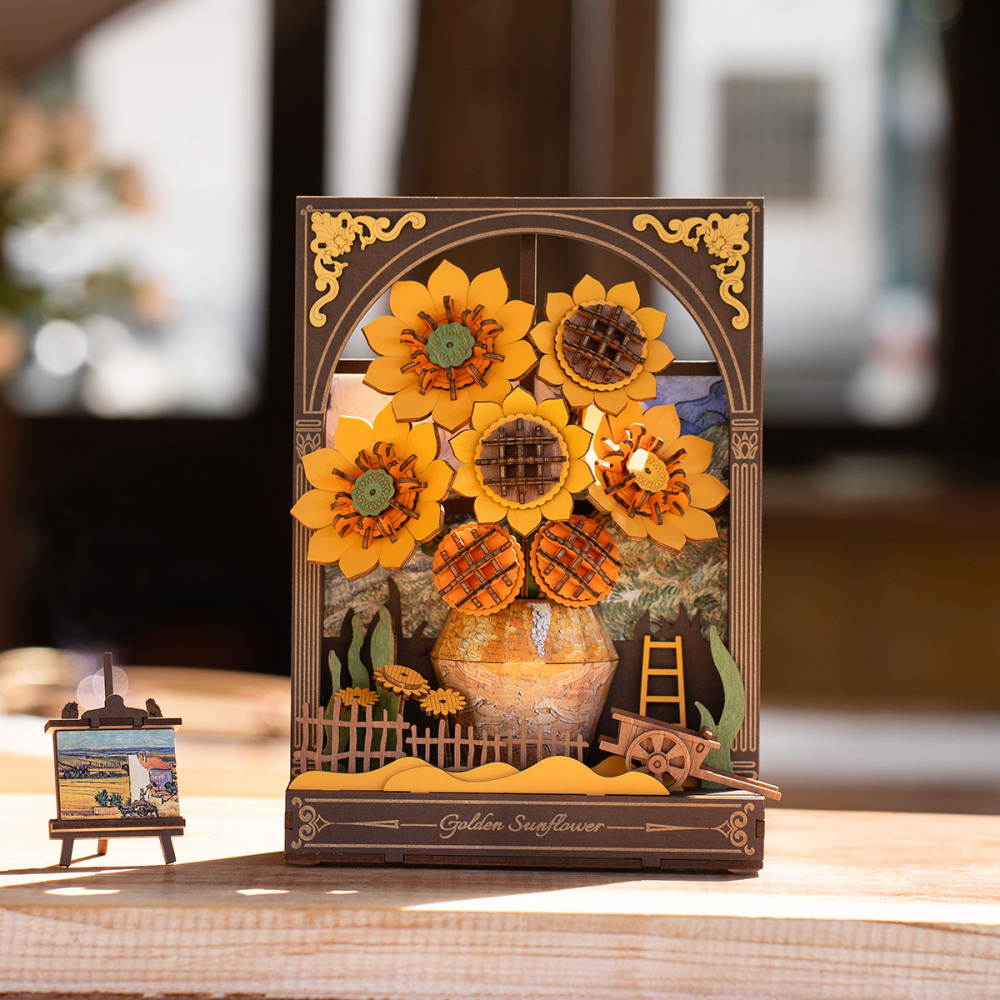
Rowood Golden Sunflower TH002, Rowood The Starry Night TH003, and Rowood Glittering Water Lily TH001 are best for beginners who are comfortable following a sequence carefully and want a finished piece that can brighten a room.
ROKR Perpetual Calendar LK201
ROKR Perpetual Calendar LK201 is a practical introduction to the hobby. It gives beginners a useful desk object rather than a purely decorative model, and the reward is easy to understand: a wooden calendar you can set manually by rotating its dials. It is a good choice if you like vintage charm, office decor, or a compact project with a functional finish.
Violin Capriccio TG604K and Electric Guitar TG605K
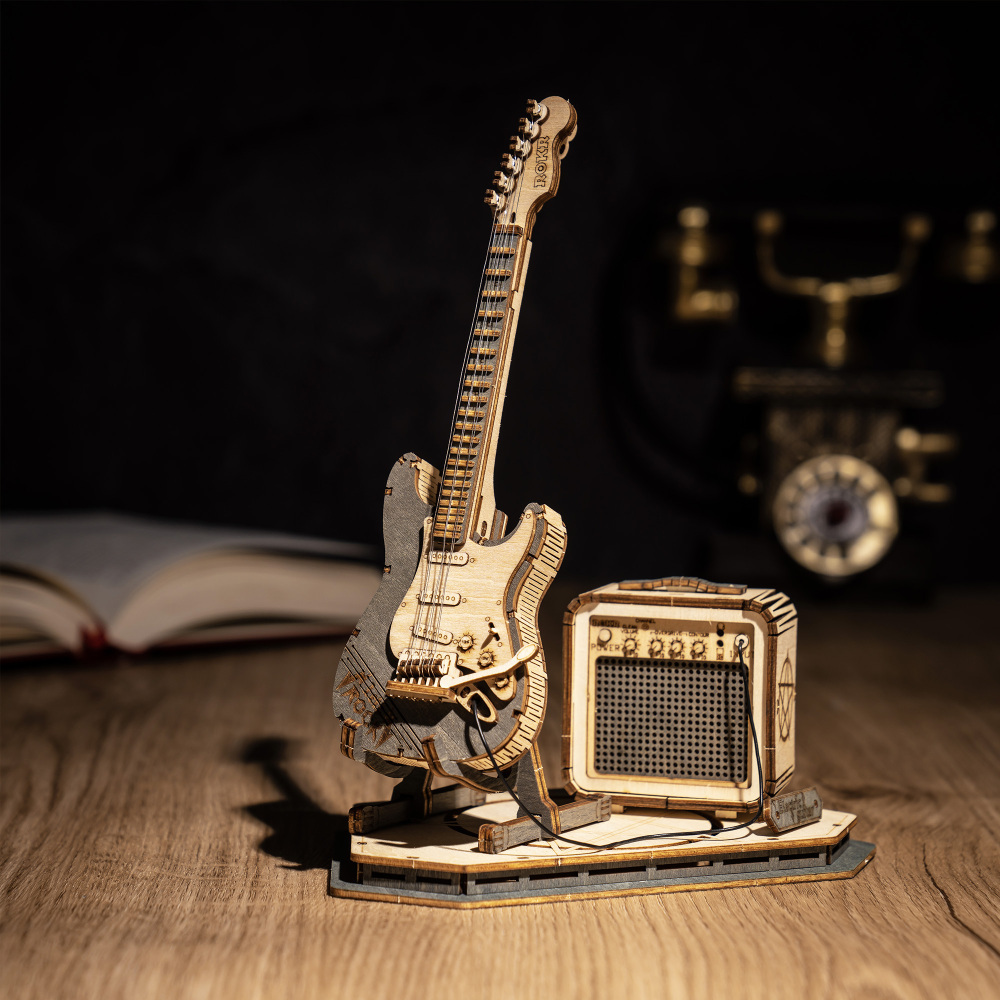
Music-themed display kits are another approachable route. ROKR Violin Capriccio TG604K has 62 pieces and introduces elegant shaping, hollow-carved details, and careful assembly at a calm pace. ROKR Electric Guitar TG605K has 140 pieces and rewards builders with a miniature rock-inspired display, complete with a platform and amplifier-style detail.
A Simple First-Build Path
If you are still unsure where to begin, use a progression rather than trying to choose the perfect kit in one step.
- Start with a static decor kit. A flower model or small musical instrument helps you learn part removal, alignment, and gentle pressure.
- Try simple motion next. A Gravity Swing kit adds movement without the stress of motors or dense gear systems.
- Move into beginner-plus decor. Wall art or a practical desk model can introduce layering, lighting, or functional parts.
- Save complex mechanical kits for later. Once you understand fit and sequence, more advanced mechanical models will feel exciting instead of intimidating.
This path keeps the hobby enjoyable because each kit teaches one new skill at a time. You can still choose by theme, but the build experience grows with you.
Support That Helps Beginners Keep Going
Beginner-friendly design is not only about the kit itself. Clear manuals, labeled laser-cut sheets, product photos, and customer support all matter. If a piece breaks or goes missing, ROKR's part replacement support can help you recover the build instead of abandoning the project.
It also helps to look at the official Beginner's Guide, customer reviews, and community build photos before you start. You will see how other builders organize parts, handle tight fits, and pace their projects. That kind of reassurance is valuable when your first kit has a delicate stem, a tiny hinge, or a part that needs a little extra patience.
FAQ
What is a good piece count for a beginner 3D wooden puzzle?
Around 200 pieces or fewer is a helpful starting point, but piece count is not the only rule. A lower-piece kit with clear instructions and simple structure is usually better than a larger kit with advanced gears, wiring, or tight mechanical timing.
Should beginners avoid mechanical 3D puzzles?
Beginners do not need to avoid all movement, but they should be selective. Simple gravity-based or manually adjusted models are easier than kits with dense gear trains, motors, or complex circuitry.
Are LED wooden puzzles hard for beginners?
Some LED kits are beginner-plus rather than difficult. If the lighting uses simple strips and clear placement steps, it can be manageable. If the kit includes complicated wiring paths or moving parts near the lighting, save it for later.
What should I do if I break or lose a piece?
Pause the build and check the manual first, because some kits include spare pieces or alternate part sheets. If the part is essential, use ROKR's replacement support rather than forcing an unstable repair.
Starting Out Strong
ROKR is known for brilliantly engineered mechanical models, but the brand also offers a wide range of easy, progressive kits for newcomers. When you compare difficulty rating, piece count, build time, recommended age, support resources, and finished photos, you can choose a project that matches your comfort level and still feels exciting.
The best beginner kit is the one that gives you a real finish, a little pride, and enough curiosity to start the next build. Choose something you genuinely like, set aside unhurried time, and let the first project teach your hands what this hobby feels like.