A maioria dos kits ROKR, Rolife e Rowood é projetada para se encaixar sem cola, portanto, o adesivo funciona melhor como um backup, auxílio de reparo ou ferramenta criativa de acabamento.
Aqui está a verdade: a maioria dos kits ROKR, Rolife e Rowood é projetada para se encaixar sem uma única gota de cola. Essa é parte do apelo do design de encaixe.
Mas a vida acontece:Uma peça se quebra durante a montagem., você não está satisfeito com o acabamento fosco de uma peça, ou simplesmente quer reforçar seu kit. É hora de usar cola como uma solução de backup, kit de reparo e ferramenta criativa em um.
Robotime revela qual cola realmente faz o que, para que você pare de adivinhar e comece a construir.
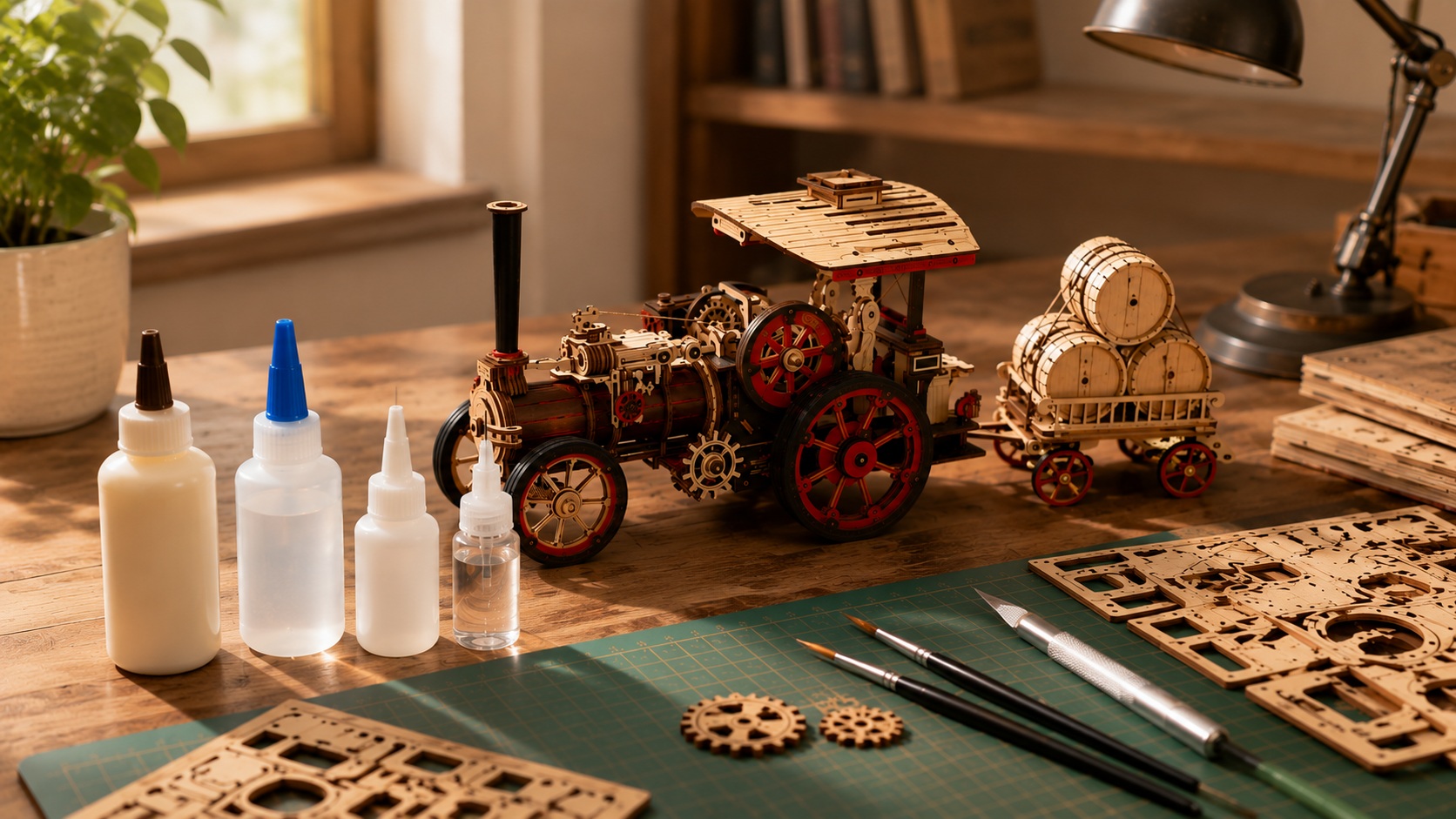
Tubos, garrafas e outras coisas do gênero.
Aqui está um resumo sobre os adesivos que você pode usar em seus kits.
| Tipo de cola | Melhor uso | Tempo de fixação ou cura | Estilo de fixação |
|---|---|---|---|
| Cola PVA / cola adesiva | Vínculos gerais de madeira para madeira e papel, usados levemente | Tempo de secagem: 15 a 30 minutos; tempo de cura: um dia inteiro. | Força moderada; baixa flexibilidade; principalmente permanente |
| Supercola | Pequenos enfeites e reparos rápidos | Ativa em segundos | Forte, quebradiço, permanente |
| Epóxi | Ligações de alta resistência, pequenas folgas e rachaduras. | De 5 minutos a 24 horas, dependendo do tipo. | Forte, baixa flexibilidade, permanente |
| cola quente | Soluções rápidas e contenções temporárias | Segundos por minuto | Baixa a moderada resistência; quebradiço ao longo do tempo; semi-permanente |
| Cola para madeira | Placas de MDF, compensado e juntas estruturais de madeira. | De 5 a 10 minutos para firmar; a cura completa leva um dia. | Alta resistência, baixa flexibilidade, permanente |
| Adesivos especiais | Plástico transparente, tecido, adereços, plástico com plástico, efeitos UV ou materiais mistos | O tempo de espera varia de imediata a 1 ou 2 dias. | Varia de cera temporária a ligações flexíveis permanentes |
PVA (acetato de polivinila / cola adesiva)
Exemplos:Aleene’s, Bearly Art, Scotch (3M), Anita’s, Art Glitter Glue
PVA é barato, incolor e tolerante para iniciantes. Ele se absorve bem nas fibras de madeira porosas, tornando-o ótimo para ligações gerais de madeira a madeira. No entanto, não é muito resistente à água, e algumas variantes são laváveis, embora a maioria cure permanentemente. A versão líquida funciona em papel também, mas use com moderação, pois umidade excessiva pode fazer o papel deformar ou enrugar.
- Preparar e curar
- De 15 a 30 minutos para firmar, um dia inteiro para curar.
- Força
- Força moderada
- Flexibilidade
- Baixa flexibilidade após a cura
- Segurar
- Em sua maioria permanente
Dica:Use uma camada fina e uniforme, não afogue a junta. É melhor aplicar com um pincel para ter controle.
Supercola (cianoacrilato)
Exemplos:Gorilla, Loctite, BSI (Bob Smith Industries), Starboard, Krazy Glue, Citadel, Army Painter
A cola de gratificação instantânea. Esta cola une em segundos, mantém-se forte e resiste bem à água e ao calor, embora o calor extremo possa degradá-la com o tempo. É ótima para pequenos enfeites, pois você não precisará prendê-los. Tenha cuidado para não colar seus dedos, e use a variante em gel se não quiser cola super fluida.
- Preparar e curar
- Ativa em segundos
- Força
- Forte
- Flexibilidade
- Frágil
- Segurar
- Permanente
Dica:Fica embaçado. Mantenha longe do plástico transparente, a menos que você queira janelas embaçadas.
Epóxi
Exemplos:Gorilla Epóxi de 5 Minutos, Epóxi Loctite, Devcon, Zap Z-Proxy, J-B Weld KwikWeld
A opção de alta resistência. Forte, resistente à água e ao calor, e capaz de preencher pequenas lacunas e fissuras que outras colas não conseguem. Vem em duas partes que precisam ser misturadas, e você precisará prender as partes enquanto o adesivo cura.
- Preparar e curar
- 5 minutos a 24 horas de tempo de configuração, dependendo do tipo
- Força
- Forte
- Flexibilidade
- Baixa flexibilidade
- Segurar
- Permanente
Dica:Misture as proporções exatas. Fazer isso a olho é como você acaba com uma bagunça pegajosa que nunca endurece completamente.
Cola quente
Exemplos:Surebonder, Gorilla, AdTech, Dremel e Bosch
Rápido, conveniente e com aderência instantânea. Infelizmente, não é a opção mais durável; cria um volume perceptível que pode desalinhar peças pequenas com cuidado. Também se torna quebradiço com o tempo, portanto, é mais adequado para consertos rápidos do que para algo permanente.
- Preparar e curar
- Segundos a um minuto para definir
- Força
- Força baixa a moderada
- Flexibilidade
- Torna-se quebradiço com o tempo.
- Segurar
- Semi-permanente
Dica:Ótimo para retenções temporárias, não é bom se você quiser que a ligação dure.
Cola para madeira (resina alifática / cola de carpinteiro)
Exemplos:Titebond, Gorila, Elmer, FastCap 2P-10
Formulado especificamente para fibras de madeira, este adesivo é mais resistente à água do que seu primo, PVA. É a escolha ideal para placas de MDF e compensado, e pode suportar peso estrutural real.
- Preparar e curar
- De 5 a 10 minutos para firmar, a cura completa leva um dia.
- Força
- Alta resistência para juntas de madeira
- Flexibilidade
- Baixa flexibilidade após a cura
- Segurar
- Permanente
Dica:Prenda enquanto seca para a ligação mais forte. A cola para madeira recompensa a paciência.
Cimento de silicone transparente para cristal de relógio
Exemplos:G-S Hypo, Rocket, Stella, Gorilla, Tamiya
Este é o especialista do grupo e foi desenvolvido para plásticos transparentes para janelas, espelhos ou qualquer coisa onde a clareza importa. É sua arma secreta para manter as partes transparentes realmente transparentes.
- Preparar e curar
- O tempo de secagem varia conforme o produto.
- Força
- Força moderada
- Flexibilidade
- Flexível
- Segurar
- Fixação semipermanente a permanente
Dica:Use com moderação apenas nas bordas; um pouco faz uma grande diferença.
Adesivos Sensíveis à Pressão (Cera Adesiva / Cera de Museu)
Exemplos:QuakeHold!, Ready America, Sara, TackyWax, Quake Wax, Blu-Tack
Este adesivo é para o construtor que deseja reposicionar itens sempre que a inspiração surgir. A cera nunca endurece completamente, então é perfeito para móveis ou adereços dentro de uma cena com a qual você ainda não está 100% comprometido.
- Preparar e curar
- Adere instantaneamente, mas não forma uma ligação verdadeira.
- Força
- Baixa resistência
- Flexibilidade
- Altíssima flexibilidade
- Segurar
- Temporário, totalmente reversível
Dica:Ideal para encenar uma cena antes de você se comprometer com algo mais permanente.
Cimento Plástico (Poly Cement)
Exemplos:Tamiya, Mr. Cement, Testors, Revell, Plastruct
A arma não tão secreta do hobbyista. Ela não aparece com frequência no topo desta lista porque a maioria dos kits não a exige, mas quando você está unindo duas peças de plástico, nada mais se compara. Em vez de ficar entre as peças como a cola, ela realmente derrete ligeiramente as superfícies de plástico para que se fundam, soldando-as juntas sem volume adicional.
- Preparar e curar
- Seca rapidamente e cura completamente em poucas horas.
- Força
- Ligação forte e perfeita
- Flexibilidade
- Baixa flexibilidade
- Segurar
- Permanente
Dica:Trabalhe em um espaço ventilado e verifique se o cimento é adequado para o seu tipo de plástico antes de aplicar.
A ventilação e a compatibilidade dos materiais são importantes. Para vapores fortes ou adesivos à base de solvente, como cimento plástico, abra uma janela e teste a compatibilidade antes de aplicar a cola em uma peça finalizada do kit.
Resina UV / Cola UV
Exemplos:JDiction, Let’s Resin, Green Stuff World, Sophie & Toffee
Se você gosta de truques de mágica, esta cola é para você. Ela permanece líquida até ser exposta à luz UV, momento em que cura em menos de um minuto. Ótima para simular efeitos de água, e você pode misturar cor para um visual de líquido tingido, o que a torna incrivelmente útil para qualquer cena envolvendo lagoas, rios ou aquela bebida ou poça suspeitamente realista.
- Preparar e curar
- Conjuntos em menos de um minuto, mas apenas uma vez expostos à luz UV
- Força
- força moderada a alta
- Flexibilidade
- Flexibilidade moderada
- Segurar
- Permanente
Dica:Mantenha-o fora da luz solar direta enquanto trabalha, ou ele curará antes de você estar pronto.
Cola para tecido
Exemplos:Aleene’s, Tear Mender, Beacon Fabri-Tac, Gutermann, Dritz Liquid Stitch
Construído para peças de couro e têxteis, como pequenas roupas de cama ou cortinas. Permite que o tecido continue se movendo e caindo naturalmente, em vez de se tornar rígido e quebradiço. É lavável, flexível e não manchará o material.
- Preparar e curar
- Define em 3 a 10 minutos, cura completamente em 1 a 2 dias
- Força
- Força moderada
- Flexibilidade
- Flexível
- Segurar
- Semipermanente, lavável
Dica:Aplique uma camada fina apenas nas bordas para manter a drapeado natural do tecido intacto.
Colas especiais alfanuméricas
Exemplos:B-7000, E6000
O superdotado desta lista. Originalmente projetado para reparos em telas de smartphones, tornou-se um favorito em cantinhos de leitura por um bom motivo. Ele seca completamente transparente, permanece borrachudo e flexível mesmo após a cura, e une materiais extremamente diferentes, incluindo madeira a plástico, tecido a metal, você nomeia. Das marcas no mercado, apenas o B-7000 possui uma ponta de agulha de metal embutida que evita entupimentos entre os usos.
- Preparar e curar
- De 3 a 5 minutos para preparar
- Força
- Forte
- Flexibilidade
- Alta flexibilidade, mantém a elasticidade.
- Segurar
- Permanente
Dica:Não aplique em excesso, pois camadas pesadas podem deformar materiais delicados, especialmente papel ou folhas de acrílico.
Antes de ir
- Limpe à medida que avança.Limpe o excesso de cola imediatamente. Cola seca é uma dor de cabeça muito maior do que cola molhada.
- A viscosidade deve ser adequada à tarefa.Cola líquida em uma superfície vertical é apenas a maneira da gravidade de rir de você.
- Controle seu aplicativo.Para gotas pequenas e precisas, mergulhe um palito de dente na cola em vez de espremer diretamente do frasco. Para superfícies planas, espalhe uniformemente com um cartão ou pincel fino. Sempre que um kit vier com seu próprio aplicador, use-o, pois foi projetado para essa tarefa exata.
- Faça testes antes de se comprometer.Experimente a cola em um pedaço de sucata primeiro e sempre faça um ajuste seco das suas peças antes de adicionar qualquer adesivo. Não há botão de desfazer uma vez que a maioria deles se fixa.
- Ventile o ambiente.A maioria das colas nesta lista libera vapores, algumas de forma mais agressiva do que outras (olhando para você, cimento plástico). Abra uma janela.
Armado com esta lista, você nunca mais precisará adivinhar ao passar pelo corredor de colas. Escolha a certa, aplique-a com um pouco de paciência, e seuQuebra-cabeça 3D de madeiraOu seu kit em miniatura lhe agradecerá por isso.
Perguntas frequentes rápidas
Os kits ROKR precisam de cola?
A maioria dos kits ROKR, Rolife e Rowood é projetada para se encaixar sem cola, mas o adesivo pode ajudar em reparos, reforços, acabamentos ou detalhes criativos.
Qual a melhor cola para peças de plástico transparente?
O cimento de silicone transparente ou cristal de relógio é a escolha especializada para janelas, espelhos e plásticos transparentes onde a clareza é importante.
O que devo fazer antes de aplicar a cola?
Primeiro, ajuste as peças a seco, teste a cola em um pedaço de sucata, controle a aplicação e ventile seu espaço de trabalho.