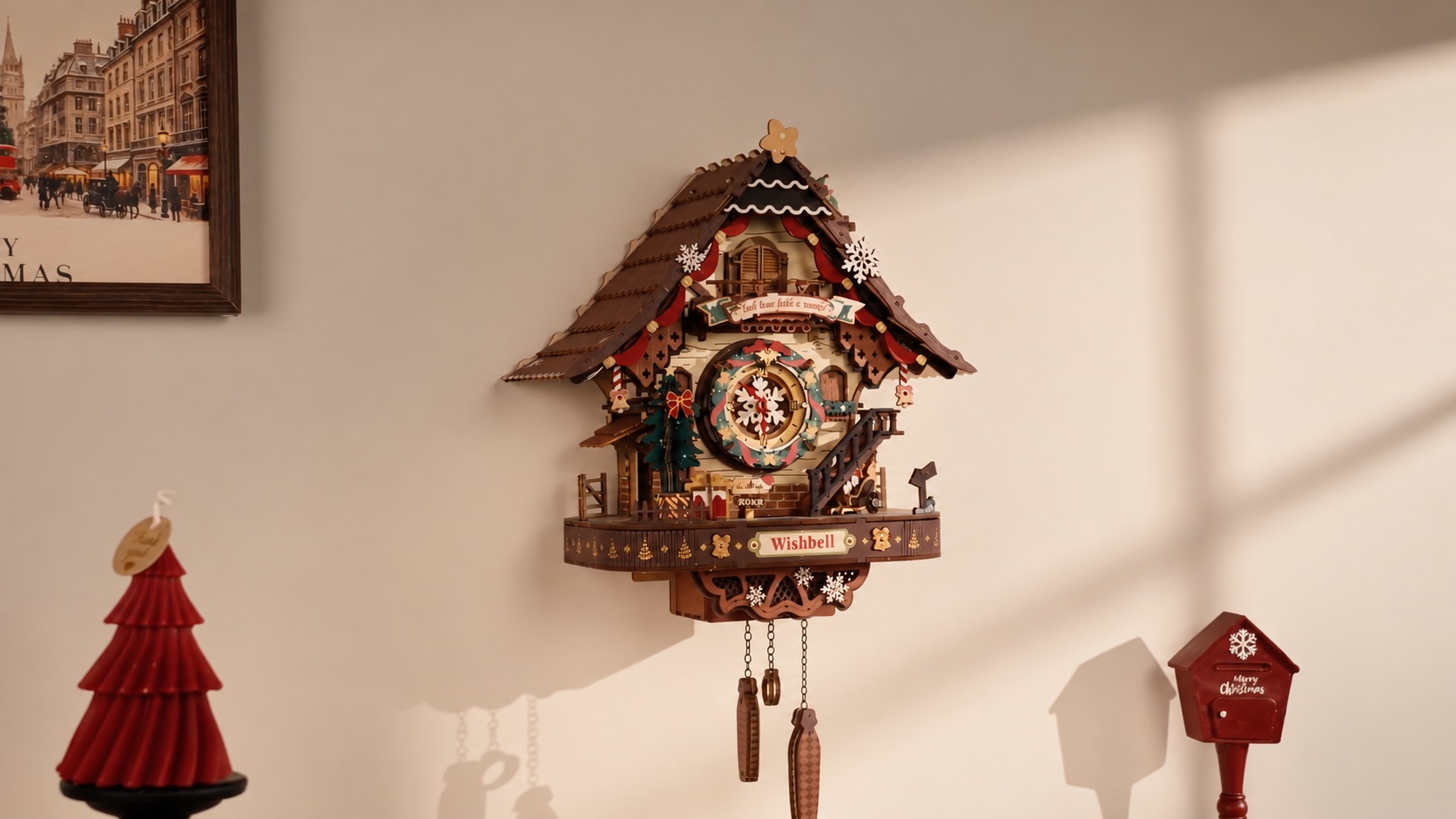
Tu primer kit de modelo mecánico de madera debería sentirse emocionante, no agotador. La mejor opción no siempre es la caja más grande, el modelo terminado más dramático o el kit con más piezas móviles. Un buen primer kit le da al constructor suficiente desafío para sentirse orgulloso, mientras aún deja espacio para seguir las instrucciones, manejar las piezas y disfrutar del resultado final.
La edad puede ayudar a reducir la elección, pero no debería ser la única regla. Dos personas de la misma edad pueden tener niveles de paciencia, control manual, confianza con herramientas e interés en detalles mecánicos muy diferentes. Por eso, la forma más inteligente de elegir es mirar primero al constructor, luego verificar el número de piezas del kit, el tiempo de construcción, el nivel de dificultad, las piezas pequeñas, las necesidades de energía, la interacción y el valor de exhibición.
Si estás comparando opciones de ROKR, comienza con la amplia colección de Modelos Mecánicos, luego usa la guía a continuación para decidir qué tipo de construcción se adapta a la persona que sostiene las piezas.
Un primer kit de modelo mecánico de madera debería ofrecer una recompensa clara: movimiento visible, un objeto terminado satisfactorio o un proceso de construcción que enseñe paciencia sin sentirse punitivo.
Comienza con el Constructor, No Solo con la Edad
Las categorías de audiencia a continuación son puntos de partida útiles, pero no son etiquetas de edad estrictas. Piensa en ellas como perfiles de constructor. El kit adecuado depende de cuán cuidadosamente el constructor pueda seguir los pasos, cuán cómodo esté con las piezas pequeñas y si quiere un modelo móvil, una pieza de exhibición o un proyecto más largo.
| Perfil del constructor | Mejor primera dirección | Qué observar antes de elegir |
|---|---|---|
| Niños mayores | Ensamblaje mecánico simple con apoyo de un adulto | Piezas pequeñas, lectura de instrucciones, paciencia y si un adulto puede estar cerca para los pasos más difíciles. |
| Adolescentes | Estructuras mecánicas, vehículos, cajas de música y circuitos de canicas | Si el constructor quiere movimiento, sonido, rieles, una forma de vehículo o un modelo terminado más decorativo. |
| Adultos | Modelos complejos, modelos de exhibición y modelos funcionales | Tiempo de construcción disponible, interés en mecanismos detallados y dónde se exhibirá el modelo terminado. |
| Constructores experimentados | Altos conteos de piezas, tiempos de construcción más largos y estructuras de transmisión complejas | Si quieren un verdadero desafío con muchos pasos, alineación cuidadosa y más piezas móviles. |
Verifica el Conteo de Piezas y el Tiempo de Construcción Juntos
El conteo de piezas importa, pero no cuenta toda la historia. Un kit con muchas piezas grandes y repetidas puede sentirse a veces más fácil que un kit más pequeño con piezas muy delicadas o alineación mecánica ajustada. El tiempo de construcción funciona de la misma manera. Un proyecto más largo puede ser relajante para un aficionado adulto, pero puede sentirse agotador para alguien que quiere una primera victoria.
Para un primer kit de modelo mecánico de madera, busca un equilibrio: suficientes piezas para que el modelo terminado se sienta significativo, pero no tantas que el constructor pierda impulso antes de que el mecanismo se una. Si el constructor es más joven o nuevo en el ensamblaje práctico, elige un kit que se pueda completar en unas pocas sesiones enfocadas en lugar de un empujón largo.
Usa la Dificultad como una Señal Práctica
El nivel de dificultad no se trata de quién es "bueno" o "malo" en la construcción. Es una señal práctica sobre cuánta atención puede requerir el kit. Un kit amigable para principiantes generalmente tiene una progresión de pasos más clara, menos ajustes delicados y un resultado terminado que aparece antes de que la frustración se acumule. Un kit de mayor dificultad puede requerir más lijado cuidadoso, alineación más ajustada, más pruebas repetidas o más paciencia con las piezas móviles.
Aquí es donde una referencia de compra más amplia, como la guía de compra de kits de modelos de madera, puede ayudar. Para un primer kit mecánico, el objetivo no es evitar el desafío. El objetivo es elegir el tipo de desafío que el constructor realmente disfrutará.
Observa las Piezas Pequeñas y la Operación Fina
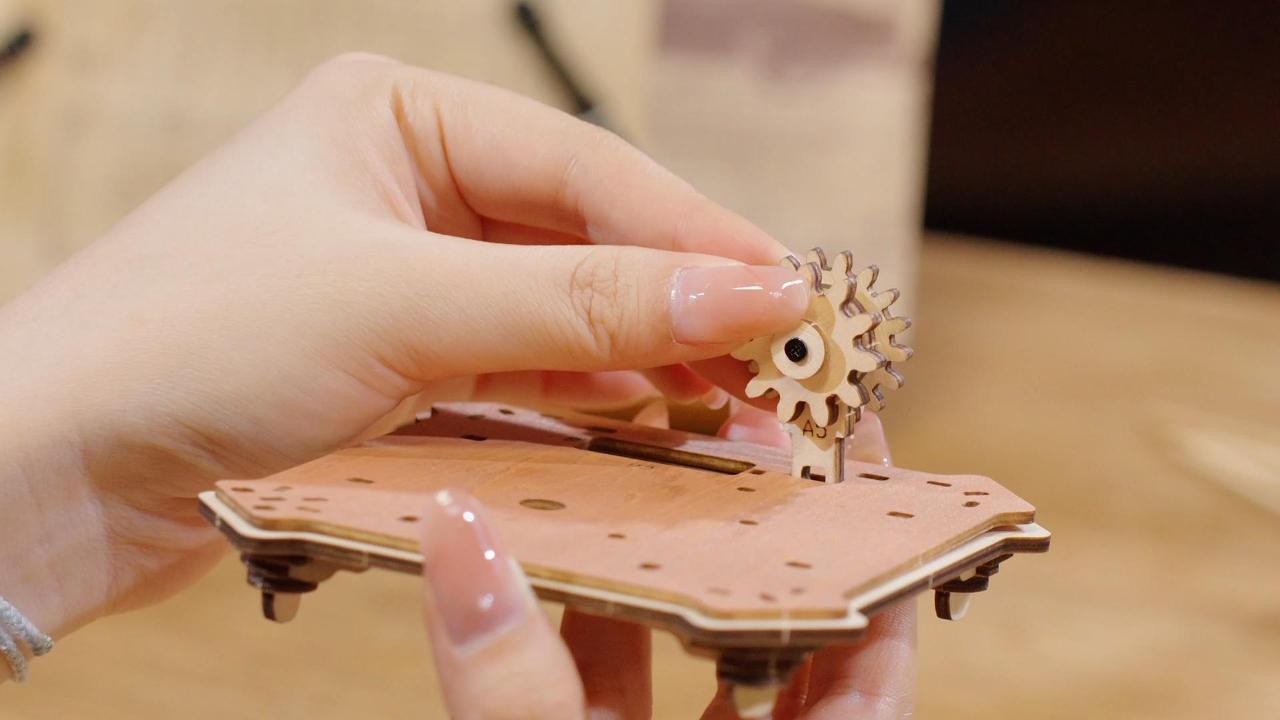
Los kits mecánicos de madera a menudo incluyen piezas que necesitan un manejo cuidadoso. Engranajes pequeños, lengüetas delgadas, ejes, piezas elásticas, piezas decorativas y estructuras en capas pueden hacer que el modelo final sea más interesante, pero también requieren paciencia. Esto es especialmente importante para los niños mayores y los constructores primerizos.
Si el constructor se frustra con piezas pequeñas, elige un kit con una estructura más simple y un camino de ensamblaje más visible. Si al constructor le gusta el trabajo detallado, un modelo con más operación fina puede ser una buena opción. La pregunta no es si las piezas pequeñas son buenas o malas. La pregunta es si coinciden con las manos, la capacidad de atención y la ayuda disponible del constructor.
Verifica las Baterías y Necesidades de Energía
Algunos kits de modelos mecánicos de madera son puramente manuales. Otros pueden usar baterías, luces, música, motores o movimiento motorizado. La energía puede hacer que el modelo terminado sea más interactivo, pero también agrega una capa práctica: el constructor puede necesitar instalar componentes cuidadosamente, verificar la polaridad o entender cuándo el modelo necesita baterías u otra fuente de energía.
Para un primer kit, las características motorizadas son mejores cuando el constructor está emocionado por el resultado y cómodo siguiendo los pasos adicionales. Si el constructor principalmente quiere un ensamblaje tranquilo, un modelo manual puede ser más fácil. Si quieren que la pieza terminada se mueva, se ilumine o juegue un papel en un escritorio o estante, un modelo motorizado o interactivo puede valer la atención adicional.
Decide Qué Debe Hacer el Modelo Terminado
Un primer kit debe elegirse teniendo en cuenta el modelo terminado. Algunos constructores quieren interactuar con el modelo después del ensamblaje. Otros quieren una pieza de exhibición que se vea bien en una habitación. Algunos quieren un modelo que enseñe cómo funcionan los engranajes, rieles, manivelas o mecanismos musicales. Estos son diferentes objetivos, y apuntan a diferentes familias de kits.
- Modelos interactivos Elige estos cuando el constructor quiera girar, rodar, mover, probar o observar un mecanismo después del ensamblaje.
- Modelos de exhibición Elige estos cuando el objeto terminado necesite verse fuerte en una estantería, escritorio o pared de colección.
- Modelos funcionales Elige estos cuando al constructor le guste ver una idea mecánica realizar una acción clara.
- Modelos enfocados en el aprendizaje Elige estos cuando el proceso importe tanto como el resultado, especialmente para la paciencia, las pruebas y la iteración.
Empareja la Familia del Kit con el Constructor
Una vez que conozcas el perfil del constructor y el objetivo final, elegir la familia del kit se vuelve más fácil. Los adolescentes que disfrutan del movimiento y la causa-efecto pueden disfrutar de un circuito de canicas, donde la construcción terminada da retroalimentación inmediata a medida que las bolas viajan a través de los rieles. Los constructores que disfrutan del movimiento decorativo y el sonido pueden preferir una caja de música mecánica. Los adolescentes y adultos que les gustan las máquinas, los viajes o los diseños específicos de épocas pueden mirar rompecabezas de modelos de vehículos.
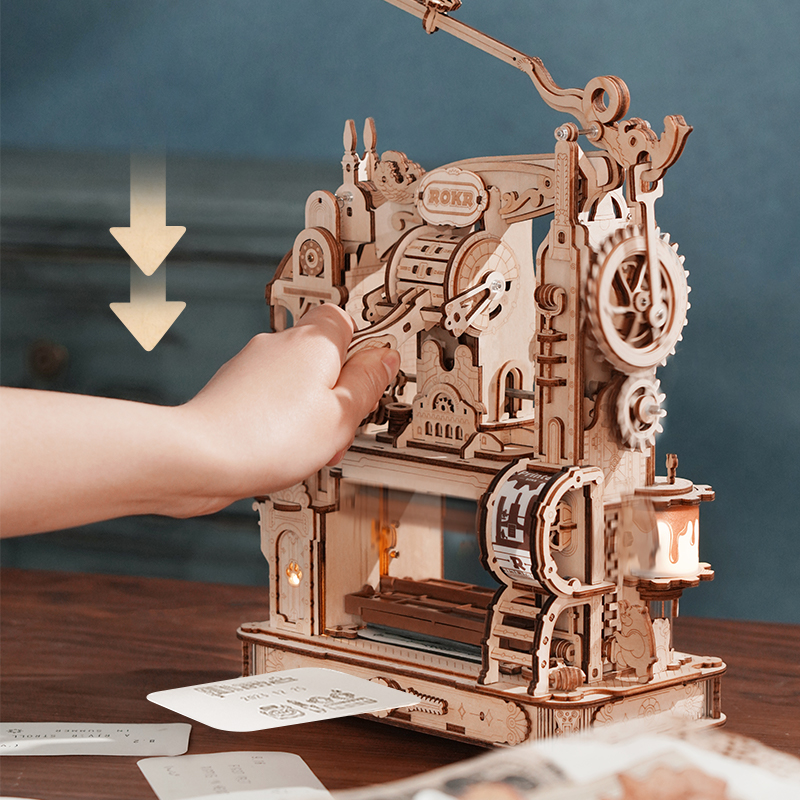
Para adultos y constructores experimentados, los kits de estilo invención mecánica pueden ser especialmente satisfactorios porque conectan el ensamblaje con la lógica de ingeniería visible. Estos kits a menudo recompensan la alineación cuidadosa y la paciencia, por lo que se adaptan a constructores que disfrutan de las pruebas y pequeños ajustes. La misma idea aparece en el artículo sobre kits de modelos mecánicos, paciencia, pruebas e iteración: la construcción enseña a través de la verificación repetida, no solo a través de la finalización.
Una Lista de Verificación Práctica para el Primer Kit
Antes de elegir, usa esta lista de verificación rápida. Mantiene la decisión fundamentada en la experiencia real de construcción en lugar de solo en la foto del producto.
| Pregunta | Por qué importa | Respuesta amigable para principiantes |
|---|---|---|
| ¿Cuántas piezas hay? | El conteo de piezas afecta el tiempo, la organización y la paciencia. | Elige suficientes piezas para que se sienta gratificante, pero no tantas que la primera construcción se vuelva agotadora. |
| ¿Cuánto tiempo tomará el ensamblaje? | Un primer kit debe ajustarse al tiempo disponible del constructor. | Elige un kit que se pueda construir en unas pocas sesiones enfocadas. |
| ¿Cuál es el nivel de dificultad? | La dificultad sugiere alineación, trabajo detallado y pruebas. | Comienza moderado a menos que el constructor ya disfrute del ensamblaje complejo. |
| ¿Hay piezas pequeñas? | Las piezas pequeñas requieren organización, cuidado y a veces ayuda de un adulto. | Para los niños mayores, elige un kit que un adulto pueda supervisar cómodamente. |
| ¿Necesita operación fina? | Algunos mecanismos necesitan ajustes cuidadosos para funcionar sin problemas. | Empareja la operación fina con la paciencia y el control manual del constructor. |
| ¿Necesita baterías o energía? | Las características motorizadas añaden emoción y configuración adicional. | Elige kits motorizados solo cuando el constructor quiera esa interacción adicional. |
| ¿Se puede usar o mover el modelo terminado? | La interacción puede hacer que la construcción terminada sea más gratificante. | Elige movimiento si al constructor le gusta probar y jugar después del ensamblaje. |
| ¿Se verá bien en exhibición? | El valor de exhibición importa cuando el modelo se quedará afuera después de la construcción. | Elige un tema que al constructor aún le guste después de que el proyecto esté terminado. |
Errores Comunes al Elegir el Primer Kit que Debes Evitar
El error más común es elegir el modelo terminado más impresionante sin pensar en la primera experiencia del constructor. Un kit grande y complejo puede ser maravilloso, pero puede no ser el primer paso correcto. Otro error es elegir solo por edad. La edad ayuda, pero la paciencia, el interés y la comodidad con la motricidad fina importan tanto como.
También evita ignorar el modelo terminado. Si el constructor quiere algo que se mueva, una exhibición estática puede sentirse menos satisfactoria. Si el constructor quiere un objeto de escritorio tranquilo, un modelo altamente interactivo puede ser más de lo que necesita. El primer kit debe coincidir tanto con el proceso de construcción como con la vida posterior a la construcción.
Si estás comprando para otra persona, haz una simple pregunta primero: ¿quieren construir algo que se mueva, algo que se vea bien en exhibición o algo que enseñe cómo funciona un mecanismo?
Recomendación Final
Para niños mayores, comienza con un kit mecánico simple y apoyo de un adulto. Para adolescentes, considera vehículos, cajas de música, circuitos de canicas o estructuras mecánicas que den una recompensa clara después del ensamblaje. Para adultos, elige un modelo con un valor de exhibición más fuerte, mecánicas más ricas o un tema funcional. Para constructores experimentados, busca kits de mayor conteo de piezas.Cuentas, tiempo de construcción más largo y estructuras de transmisión más complejas.
El mejor primer kit de modelo mecánico de madera es el que se adapta a las manos del constructor, al tiempo, la paciencia y el objetivo del modelo terminado. Elige el modelo que haga que el constructor quiera seguir adelante, no solo el que se vea más impresionante en la caja.
Preguntas frecuentes
¿Cuál es un buen primer kit de modelo mecánico de madera?
Un buen primer kit tiene un camino de construcción claro, un número de piezas manejable, un tiempo de ensamblaje razonable y un modelo terminado que el constructor disfrutará usar o exhibir.
¿Debería elegir por edad o dificultad?
Usa la edad como punto de partida, luego verifica la dificultad, las piezas pequeñas, el tiempo de construcción y si el constructor tiene la paciencia para pasos mecánicos finos.
¿Son buenos los kits motorizados para principiantes?
Pueden serlo, si el constructor quiere luces, música, movimiento u otra interacción y se siente cómodo siguiendo los pasos de ensamblaje adicionales.
¿Qué importa más: el número de piezas o el tiempo de construcción?
Ambos importan. El número de piezas afecta la organización, mientras que el tiempo de construcción afecta la paciencia y el impulso. Un primer kit debería sentirse completo sin volverse abrumador.