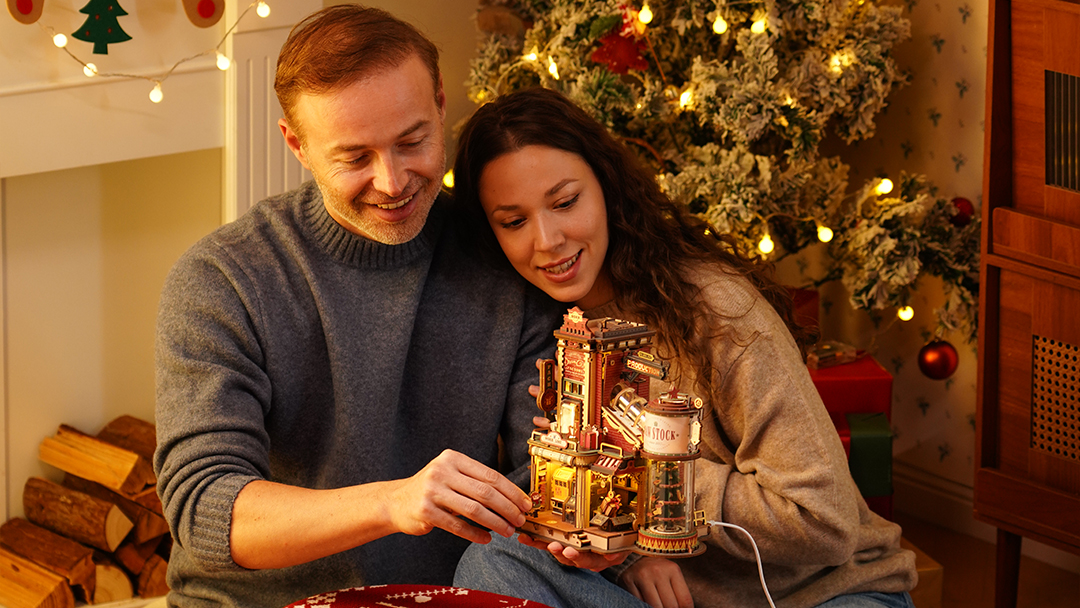
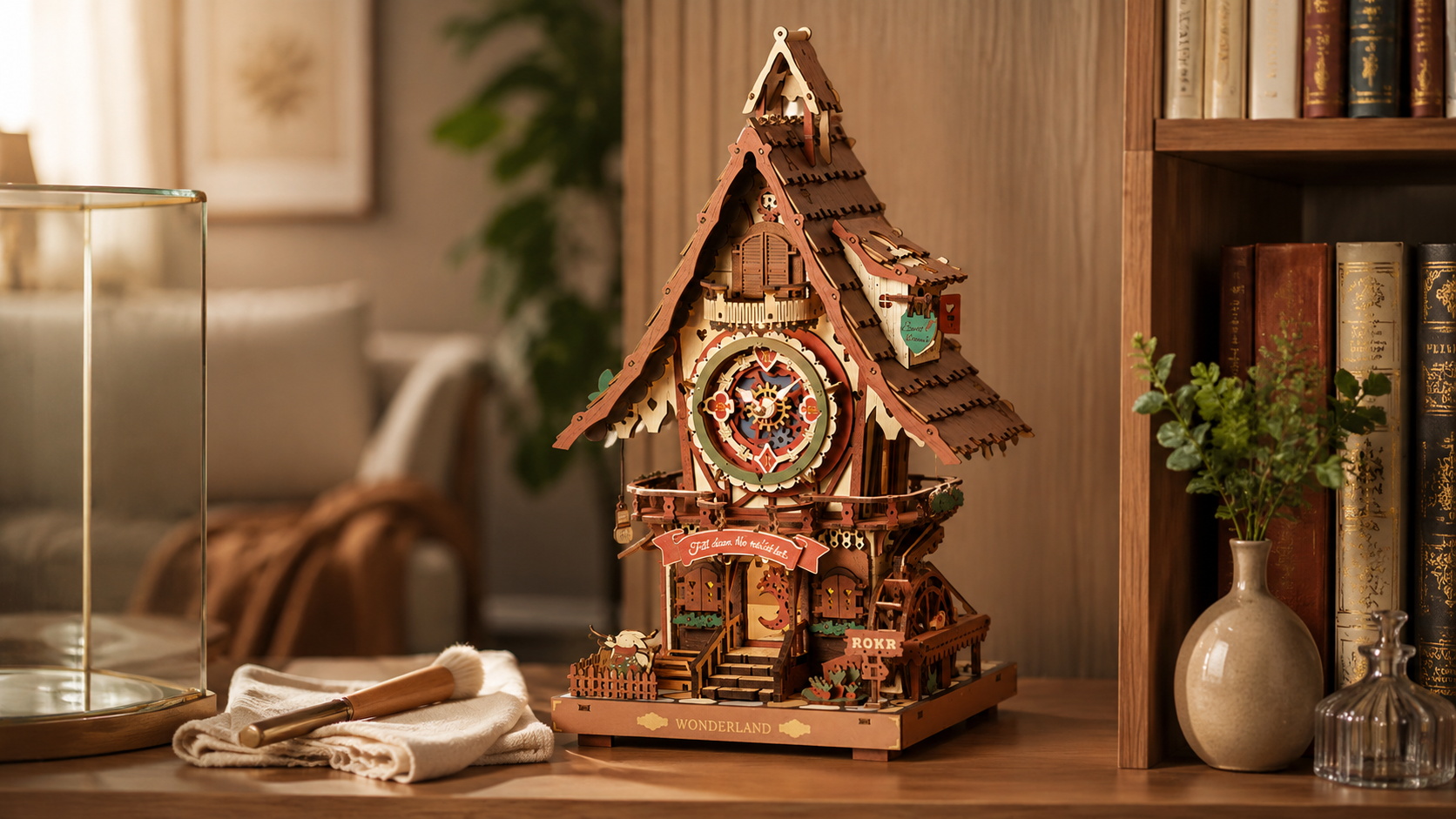
You opened the box, pressed out the pieces, snapped everything together, and celebrated the moment your 3D wooden puzzle finally came to life. After hours of building, there is one more stage that completes the cycle before you begin the next kit: choosing how to display and care for the finished model.
A good display does more than make the model look impressive. It protects the wood, keeps delicate details away from accidental bumps, and lets you enjoy the memory of the build every time you pass by.
Showcase Your Handmade Masterpiece
Start with the location. The best display spot should feel intentional, stable, and easy to appreciate from a normal viewing angle. A finished wooden model can be sturdy once assembled, but small rails, gears, masts, flowers, and decorative tips still deserve gentle protection.
Use these display basics before you decide where the model will live:
- Choose a steady platform. Use a flat shelf, desk, cabinet top, or stand that does not wobble or slope, especially for larger mechanical models.
- Keep it near eye level. Place the model at eye level or slightly below so viewers can enjoy the details without leaning over it.
- Give it visual space. Avoid a busy background, crowded shelf, or cluttered tabletop that competes with the model's silhouette.
- Protect it from contact. Floating shelves, glass cabinets, acrylic covers, and dustproof display boxes help keep the model away from little hands, paws, and daily traffic.
- Rotate your display. If you have several finished builds, rotate them by season, theme, or room so your shelves stay fresh instead of overcrowded.
Use Light Without Stressing the Wood
Lighting can make gears, rails, floral details, and miniature scenes easier to see, but it should be gentle. Direct sunlight can fade or dry wood over time, and overly warm lamps may be unkind to delicate parts or nearby finishes.
Position the model where its best features are visible, then test the light from a few angles. If your model has built-in LEDs, avoid placing another bright light directly against that glow. A soft side light often works better than a harsh spotlight.
| Display Choice | Best For | Watch Out For |
|---|---|---|
| Open shelf | Easy viewing, frequent enjoyment, and quick dusting. | More exposure to dust, bumps, and direct sunlight. |
| Glass cabinet or acrylic cover | Long-term dust protection and a cleaner display look. | Limited space for oversized or tall models. |
| Desk or workroom display | Keeping a favorite build close while you work or craft. | Cables, drinks, tools, and daily movement around the model. |
| Themed shelf grouping | Showing several builds as a collection. | Clutter if models are packed too tightly together. |
Manage Cabled Puzzle Models
Some finished models, such as the ROKR Dream Gift Factory or ROKR Blooming Bouquet Box, use Type-C charging or powered features. Cables can be handled discreetly so they do not distract from the display.
Try these simple cable-management habits:
- Use a 90-degree adapter so the cable drops behind the model instead of sticking straight out.
- Run adhesive wire clips along the back of the furniture to hide the cable path.
- Place a power bank or rechargeable battery pack inside, behind, or under the model when the design and space allow it.
- For a permanent shelf, route the cable through a small hole in the platform so the wire can pass to a lower level.
- Use a smart plug or multi-port USB hub when several powered models share the same display area.
Keep the Model Clean and Crisp
Once displayed, do not forget about the model. A few light maintenance habits will help it stay clean, sharp, and functional. This matters most for models with moving gears, fine railings, or open decorative layers where dust can settle.
- Dust regularly. Use a soft brush, makeup brush, blower, or microfiber cloth, and pay attention to the spaces between gears, railings, and decorative details.
- Lift from the base. When moving tall models, support them from the strongest lower structure instead of holding masts, tips, flowers, or other delicate elements.
- Keep moisture away. Avoid bathrooms, damp basements, open windows during rain, and any place where the model may absorb humidity.
- Use finish carefully. If you paint, stain, seal, or varnish the model, apply very light coats so moving pieces and tight tolerances are not affected.
- Save useful leftovers. Keep the original box, instruction manual, assembly tools, and spare parts in case you need future repairs.
Store a Finished 3D Puzzle Safely
Sometimes a finished model needs to be put away. You may be waiting for a new shelf, an acrylic display case, a move to a new home, or a replacement part. Temporary storage should still protect the shape of the model.
For more detailed storage advice, ROKR's guide to storing your 3D wooden puzzle is a useful companion to this display-focused checklist.
- Give it enough room. Do not pack the model into a cramped space where heavy objects can press against it and warp or snap parts.
- Use a labeled box. If you do not have a permanent display place yet, a clean labeled box protects the model from dust and accidental impact.
- Add soft support. Use tissue, foam, or clean cloth around empty spaces so the model does not slide during movement.
- Disassemble with a plan. If you want to rebuild it later, take it apart section by section and store related pieces together for easier identification.
What to Do With Too Many Finished Projects
Many builders start with one kit and quickly discover that one finished model becomes a growing collection. If you have run out of shelf space, you do not have to keep every project on display forever.
Consider gifting, selling, or trading models you no longer want to display. You can pass a finished piece to a friend or family member, share it with someone who loves handmade decor, or join a builder community where other hobbyists appreciate the work that went into it. Passing a model along can give it a second life while making room for your next build.
The Display Is Part of the Reward
A finished puzzle deserves more than a random corner of the room. With the right shelf, light, dust protection, and maintenance routine, your model becomes part of your living space and a reminder of the patience and focus that went into building it.
Care for it well, and the finished piece can keep doing what the best ROKR builds do: invite curiosity, spark conversation, and make you want to start the next project.
Finished 3D Wooden Puzzle Care FAQ
How often should I dust my wooden puzzle?
For open-shelf displays, a light dusting every one to two weeks is usually enough. Models inside a glass cabinet or acrylic cover may only need occasional cleaning.
Can I display a wooden puzzle in sunlight?
It is better to avoid direct sunlight. Bright sun can fade surfaces and may dry or stress wooden parts over time, especially on windowsills or very warm shelves.
Should I glue or varnish a finished model?
Only use glue, paint, stain, or varnish when you are confident it will not affect moving parts. If you apply a finish, use a very light coat and test on a less visible area first.