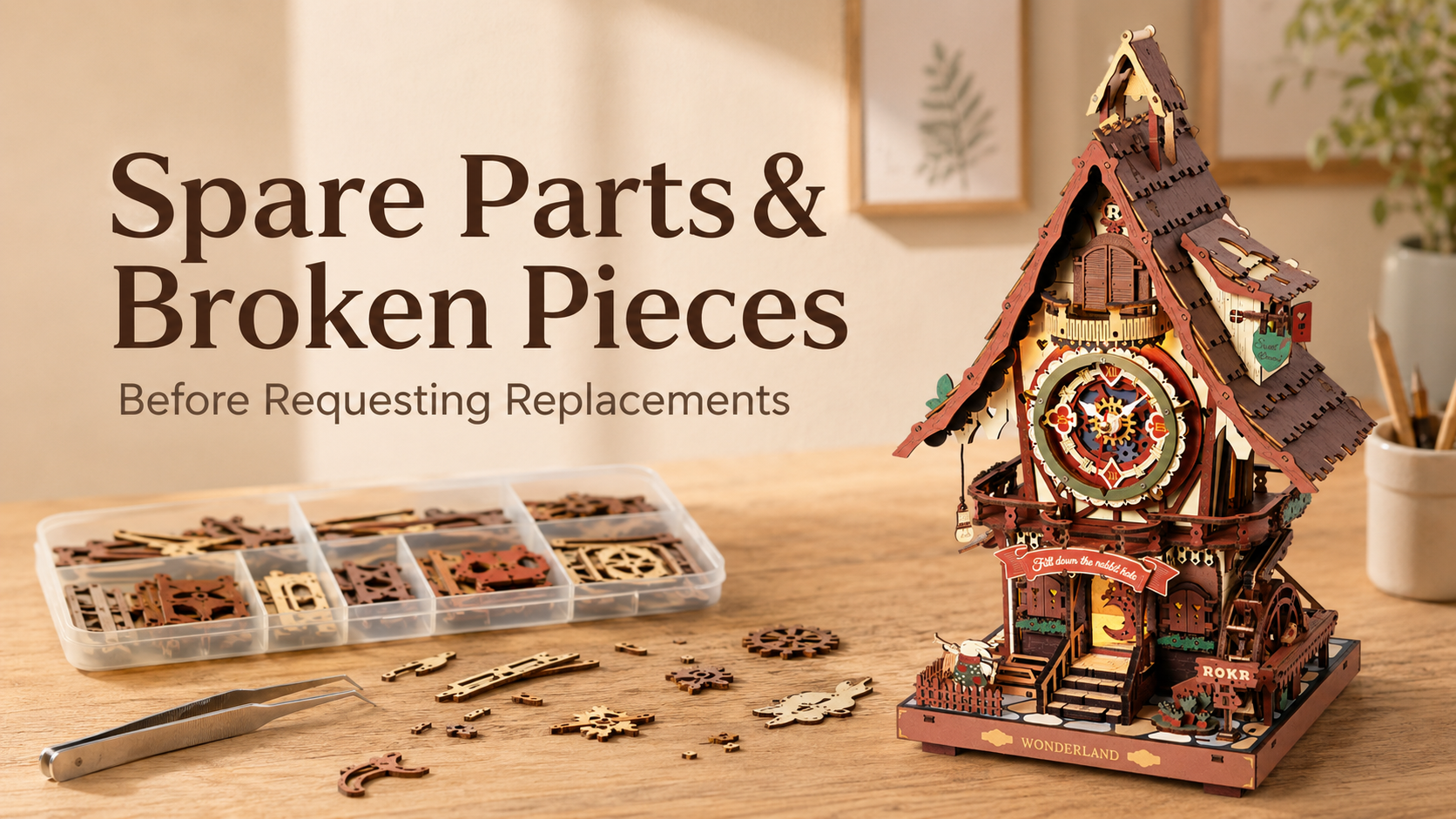
When a piece breaks or a bag of leftovers starts to pile up, the first instinct is often to contact support and wait for replacement parts. That is still the right move when a key piece is missing or badly damaged. But community builders have also shown that some problems can be solved sooner with better spare-part storage, smart reuse, and careful hand repair.
This guide pulls together two useful Robotime Community posts: one focused on organizing leftover boards and unused parts, and another showing how to rebuild a broken wooden section when the missing fragment is not in the box. The result is a practical backup plan for builders who want options before giving up on a project.
For official replacement service, start with the ROKR part replacement page. For smaller problems, the community methods below can save time, reduce waste, and keep a build moving.
Why Spare Parts Matter More Than They Look
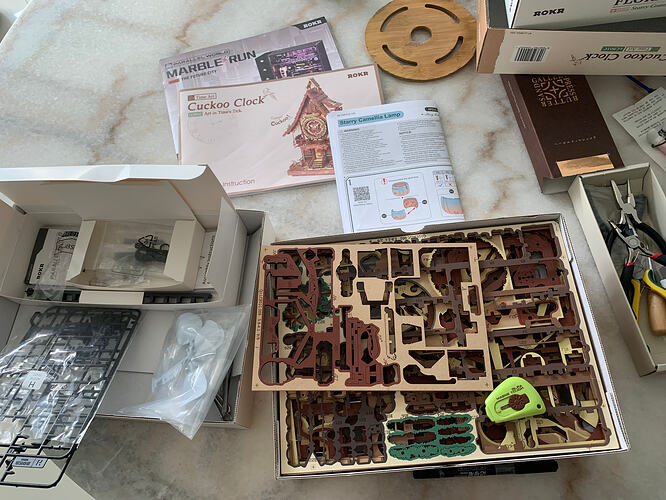
Many builders throw away the outer frames from wooden sheets as soon as a kit is finished. That keeps storage clean, but it also removes one of the easiest sources of matching material for future fixes. The community discussion around spare parts shows a middle path: you do not need to save everything, but it helps to save the pieces most likely to become useful later.
- Leftover board material can become patch material for a chipped corner, broken tab, or missing edge.
- Unused sticker backing, small wood pieces, and duplicate shapes can help with future customization or repair.
- Sorted leftovers are easier to use than random boxes, especially if you label them by kit.
Method 1: Sort and Label What You Keep
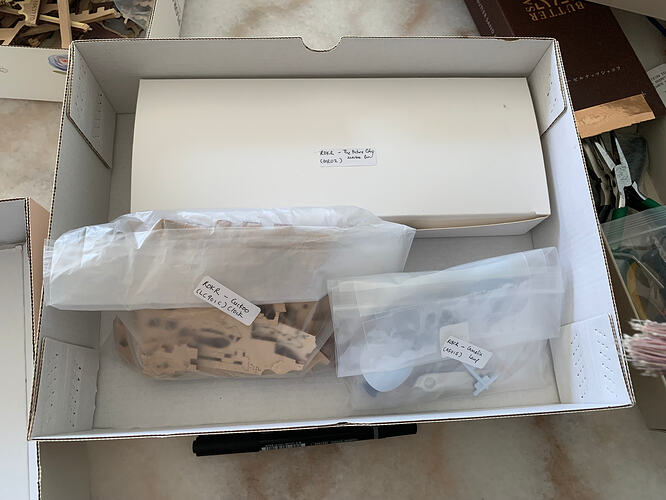
Kit_Mun's community post is simple but genuinely useful: remove the leftover pieces from the boards, separate them, and label them before they become one large mixed pile. The goal is not to archive every scrap forever. It is to keep a compact repair bank you can actually find later.
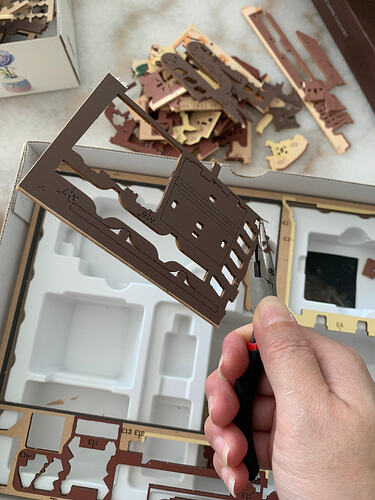
The practical detail worth borrowing is tool choice. Instead of pushing everything out by hand, use pliers on tougher leftover board sections when the wood spikes are sharp. That reduces splinters and makes cleanup less annoying.
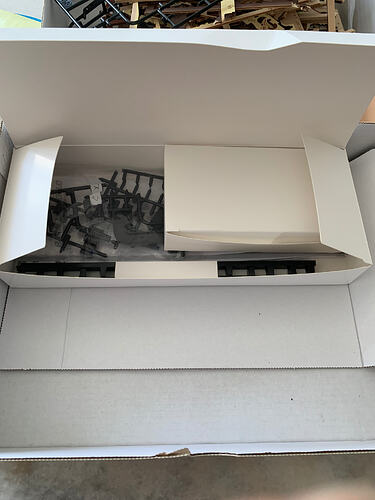
See the original spare-parts post for the full cleanup sequence and examples of how the leftovers were grouped and labeled.
What to Keep
- Small flat leftovers in matching thickness These are the most useful for future rebuilds.
- Distinctive decorative pieces or extras They may help with hidden reinforcement or cosmetic cover-ups.
- Useful backings and small support materials especially if you have already seen them solve a stubborn fit.
What You Can Throw Away
- Large empty outer frames when you truly have no space and the material is too awkward to keep.
- Damaged splinters with no flat surface that cannot become a clean patch.
- Huge volumes of mixed offcuts that are no longer identifiable and are unlikely to help with a future repair.
Method 2: Rebuild a Missing Section with Leftover Wood
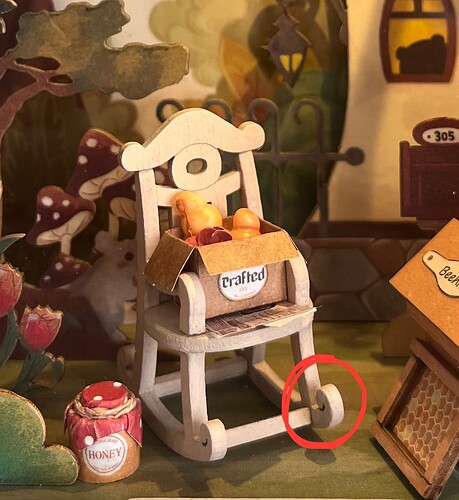
Robotime_Addiction's repair post is the stronger lesson here because it shows exactly how leftover material can become a replacement shape. In the example, a chair piece from the Rolife Secret Garden Series - Sweet Forest arrived broken, and the missing fragment was not in the bag. Instead of waiting, the builder rebuilt the missing area from leftover wood.
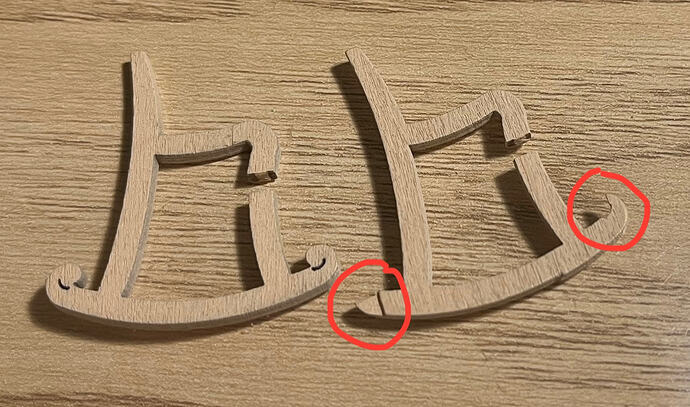
This method works because laser-cut board leftovers are often close enough in thickness and material to become a believable repair once shaped, sanded, and painted.
A Practical Repair Process
- Dry-fit the broken part first. Check how visible the damage will be once assembled and confirm the missing section is small enough to rebuild safely.
- Cut leftover wood into rough filler pieces. Attach them with super glue to build back the missing volume.
- Trace the correct shape. If there is a mirrored or duplicate part, trace that. If not, use the instruction-page part layout as a stencil reference.
- Glue the paper guide onto the rebuilt area. This gives you a sanding target instead of guessing freehand.
- Sand to final shape. Remove material slowly until the rebuilt section matches the profile of the original part.
- Cut back laser-style gaps or notches. Use a hobby knife only after the larger shape is already correct.
- Paint-match the repair. Blend the new wood color into the original finish so the patch disappears visually.
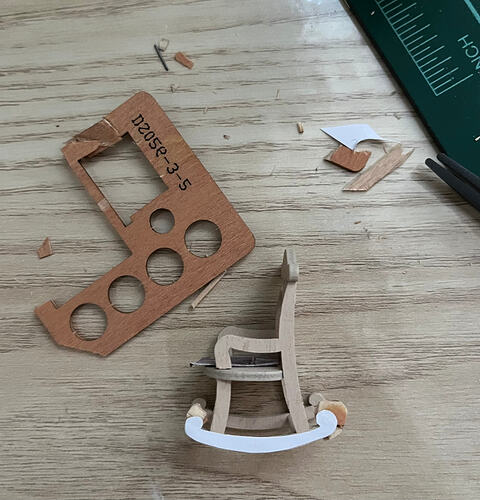
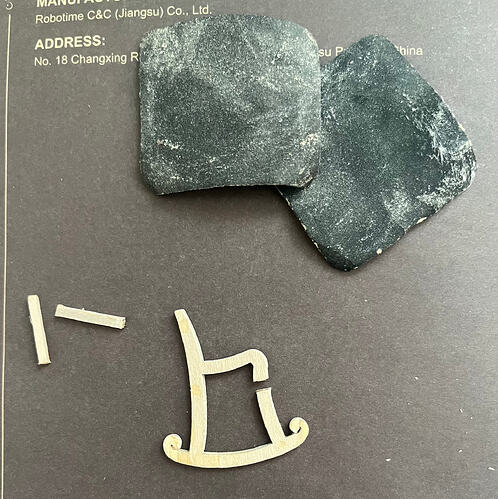
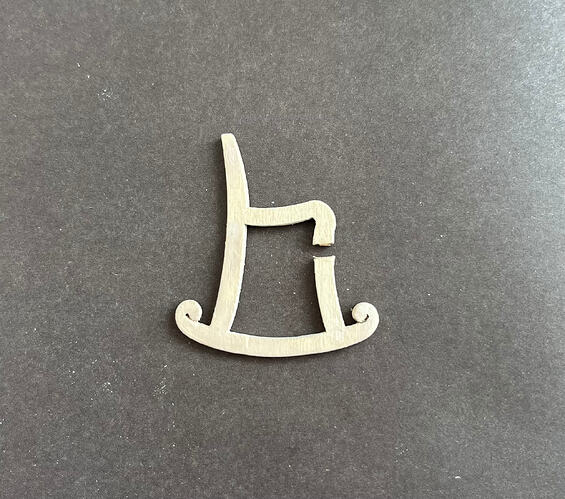
Open the original repair post to see the full before-and-after sequence, including how the repaired part looked from both sides once glued together.
When a DIY Fix Makes Sense
| Situation | Best Move | Why |
|---|---|---|
| Small chipped corner or missing edge | Use leftover wood and shape a patch | The repair can disappear after sanding and paint. |
| Decorative surface piece | Try a community-style rebuild first | Cosmetic parts usually allow more tolerance. |
| Hidden support area | Reinforce with spare material | Function matters more than perfect appearance. |
| Main structural part or moving mechanism piece | Request official replacement | Precision matters more than speed. |
| Missing printed acrylic, electronics, or specialty material | Request official replacement | Those parts are hard to recreate accurately at home. |
A Better Builder Habit: Start Saving for Future Fixes
The two community posts work best together when you read them as one workflow. First, save and label the leftovers that are most likely to help. Then, if a small break happens later, you already have matching material on hand. That is the real advantage. The repair becomes easier because the storage habit came first.
Quick Checklist Before You Request Parts
- Check whether the missing section is cosmetic or structural.
- Look for matching leftover board thickness from the same or a similar kit.
- See whether there is a mirrored part you can trace.
- Dry-fit the broken section before gluing anything permanent.
- If the part affects movement, alignment, or load-bearing fit, stop and use official replacement support.
FAQ
Should I always keep leftover wooden boards?
No. Keep the most useful flat leftovers, small spare parts, and anything likely to help with a future repair. You do not need to store every large outer frame.
Is super glue a good fix for broken wooden pieces?
It can work well for small rebuilds and patches when paired with matching leftover wood, sanding, and paint. It is less reliable for high-stress moving parts that depend on exact fit.
Can I repair a part instead of requesting a replacement?
Yes, for minor cosmetic or noncritical sections. For missing specialty parts, major structure, or mechanism pieces, the safer option is the official replacement service.
Final Thoughts
Replacement support is still the official answer when a part arrives broken or missing. But these community posts show that builders have more than one way forward. Save the right leftovers, label them well, and a small future problem may turn into a manageable repair instead of a stalled project.
For crafters who enjoy hands-on problem solving, that is part of the appeal of wooden model kits: the build does not stop at assembly. Sometimes it continues through adaptation, repair, and a little ingenuity.